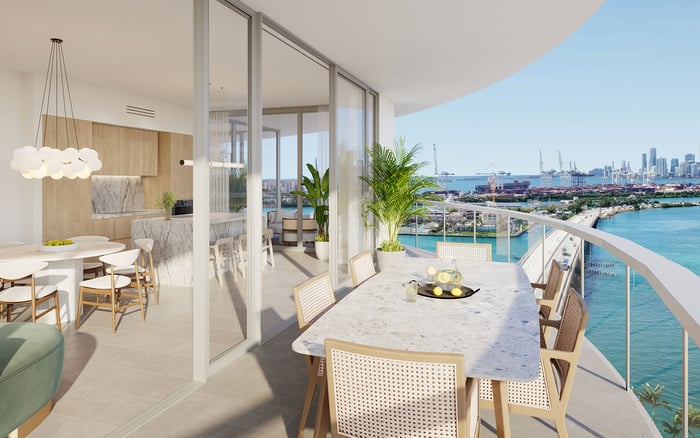
A discreet address should suit the way you intend to live. This Fort Lauderdale buyer’s guide explains how to evaluate lease minimums, rental-cap availability, guest requirements and resale approvals before committing to a condominium purchase.

A Fort Lauderdale residence should offer more than a preferred view. It should support the calendar you intend to keep: a winter season in residence, extended family visits, occasional leasing or a future sale without avoidable administrative friction. Those expectations belong in the purchase decision alongside architecture and service.
Condominium rental rules are building-specific. Declarations, bylaws, rules and amendments can establish lease minimums, rental caps, ownership waiting periods and tenant-screening requirements. Describing a residence as rentable does not establish when you can lease it, for how long or to whom.
For buyers comparing Broward addresses, including Four Seasons Hotel & Private Residences Fort Lauderdale, the discipline is the same: obtain the governing documents before making an offer. Neither branding nor a project's presentation establishes a particular unit's rental or guest permissions.
A lease minimum is the shortest permitted rental term. Examples include 30, 60 or 90 days, as well as six or 12 months. These are illustrative possibilities-not a Fort Lauderdale standard or a reliable assumption about any particular building.
Read the minimum alongside the permitted number of leases within a defined period. A building may allow a lease of a certain duration while separately limiting how often the residence can be rented. These provisions answer different questions and should be evaluated together.
Next, check for an ownership or owner-occupancy waiting period. Permission to lease eventually is not permission to lease immediately after closing.
For a seasonal buyer considering Sixth & Rio Fort Lauderdale, translate the intended annual schedule into a written diligence request. Ask management to identify the provisions governing that use rather than relying on a general assurance that rentals are allowed.
A rental cap limits the percentage of residences that may be leased simultaneously. Once that ceiling is reached, an owner may face a waiting list even though the documents permit leasing in principle.
The question is not simply whether a cap exists. Request written confirmation of the limit, current availability and waiting-list status. Ask how the queue operates and whether any leasing opportunity associated with the seller's ownership remains available to a purchaser. Do not assume continuity.
Keep three constraints separate: the lease minimum controls duration, the rental cap controls simultaneous availability, and an ownership waiting period controls when leasing may begin. Any one can prevent an otherwise plausible rental plan.
If rental income matters to the purchase, test the economics against delayed availability. Do not treat an unconfirmed leasing opportunity as assured income.
Visitor registration, residency approval and tenant approval are distinct procedures. A family member arriving for a short visit is not necessarily subject to the same process as someone occupying the residence for an extended period or under a lease.
First, establish how the building defines each category. Request the guest policy and ask what information must be submitted, when registration is required and whether an extended stay triggers a separate residency application. Do not assume a universal Fort Lauderdale guest-stay threshold.
When considering Auberge Beach Residences & Spa Fort Lauderdale, apply those questions to your household plans without assuming any particular policy. Describe visits by relatives, use while the owner is absent and longer stays clearly to management.
The goal is practical certainty before arrival-not an interpretation negotiated at the reception desk.
A condominium declaration may authorize restrictions on sales and rentals. Establish the association's approval authority from the governing documents, then obtain the current purchaser application and supporting-document requirements.
Before committing to a closing date, identify the authorized fees and decision timetable. Ask when the review period begins, what makes an application complete and how the decision will be communicated. These are diligence questions, not assumptions about a uniform process.
Do not treat 30 days as a universal Fort Lauderdale approval deadline. Establish the timing for the particular association and allow for its applicable procedure in the transaction calendar.
Transfer-approval fees also require scrutiny. A condominium association cannot charge such a fee unless approval is required and the declaration, articles or bylaws authorize the charge; statutory limits also apply. Have counsel confirm the applicable limit rather than accepting every requested amount without review.
Keep purchaser approval separate from approval of a future tenant. Completing the sale does not, by itself, resolve the residence's leasing eligibility or the screening requirements for a later occupant.
A seller's current rental privileges are not a promise of identical rights after purchase. Under Florida's 2025 condominium statute, amendments prohibiting rentals, changing rental duration or specifying or limiting rental frequency generally apply to consenting owners and owners acquiring title after the amendment takes effect.
That makes amendment history essential. Ask counsel to determine which restrictions will apply to your acquisition-not merely which restrictions the seller currently follows.
Do not substitute homeowners' association rules for condominium rules. The 2024 HOA statute allows amendments regulating rentals shorter than six months, or prohibiting more than three rentals per calendar year, to apply to all parcel owners.
For a 2026 transaction, confirm the law in effect at purchase. These distinctions reflect the 2025 condominium and 2024 HOA provisions; they do not verify every subsequent legal change.
Fort Lauderdale registration requirements can apply to condominiums advertised for stays of 30 days or less. Confirm the current municipal requirements for the proposed use before advertising or accepting a booking.
Municipal registration is separate from association approval. City permission does not override a condominium's rental restrictions, and association permission does not establish compliance with municipal requirements.
For buyers evaluating St. Regis® Residences Bahia Mar Fort Lauderdale, short-stay flexibility remains a document-specific question-not an inference drawn from hospitality branding. Verify both layers independently.
Before proceeding, assemble a single file: current governing documents and amendments, lease restrictions, written rental-cap status, guest and residency procedures, and the purchaser-approval package with authorized fees and timing.
Compare those provisions with your intended use. A restrictive residence may suit an owner seeking a settled residential environment; a buyer prioritizing leasing flexibility may need a different fit. The distinction is between a deliberate choice and an assumption discovered after closing.
For a considered approach to your next Fort Lauderdale residence, explore MILLION.
If branded residences are on your mind — as a home or as an allocation — we would be glad to share what we are seeing, privately.
Begin a quiet conversationNo single building lease minimum applies across the city. Examples include 30, 60 or 90 days and six or 12 months, but the particular condominium's documents govern.
A rental cap limits the percentage of units that may be leased simultaneously. If the cap is reached, an owner may have to join a waiting list.
Not necessarily. Ownership waiting periods, rental-cap availability and tenant-approval requirements can delay leasing even where rentals are permitted.
Obtain the declaration, bylaws, current rules and amendments. Also request the applicable rental, guest, residency and purchaser-approval materials.
No. Visitor registration, residency approval and tenant approval are distinct procedures, and the building's definitions determine which applies.
No universal citywide threshold is established in this guide. Verify whether the building requires an extended-stay guest to apply for residency.
No universal 30-day Fort Lauderdale deadline should be assumed. Obtain the particular association's decision timetable before setting the closing schedule.
No. Approval must be required, the declaration, articles or bylaws must authorize the fee, and statutory limits apply.
No. Under the 2025 condominium statute, certain rental amendments generally apply to purchasers acquiring title after their effective date, even when a nonconsenting seller is not bound.
No. Municipal registration and association permission are separate requirements, and city permission does not override the building's restrictions.