619 Brickell’s planned Nobu hospitality and longevity amenities offer an intriguing setting for aging in place. Buyers should distinguish those conveniences from clinical care, then verify emergency protocols, accessibility, service commitments and long-term costs.
For a buyer planning to remain at home through changing stages of life, luxury becomes a question of continuity. Will the residence remain comfortable as mobility changes? Can daily arrangements become easier without compromising privacy? And when something urgent happens, is there a clear plan beyond calling the concierge?
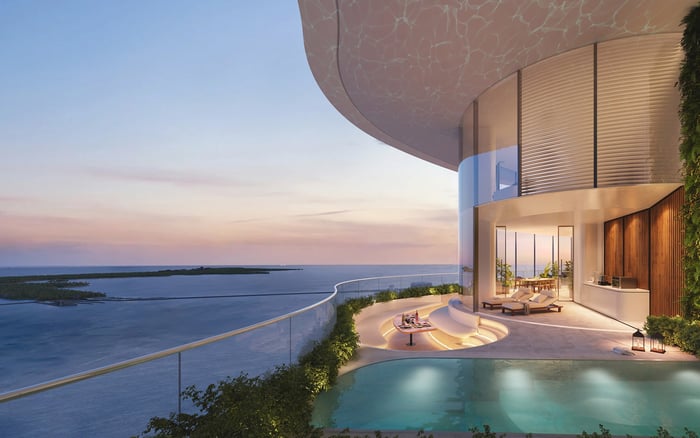
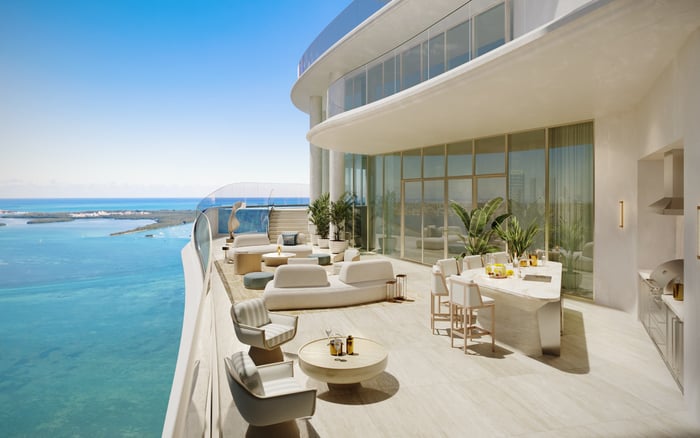
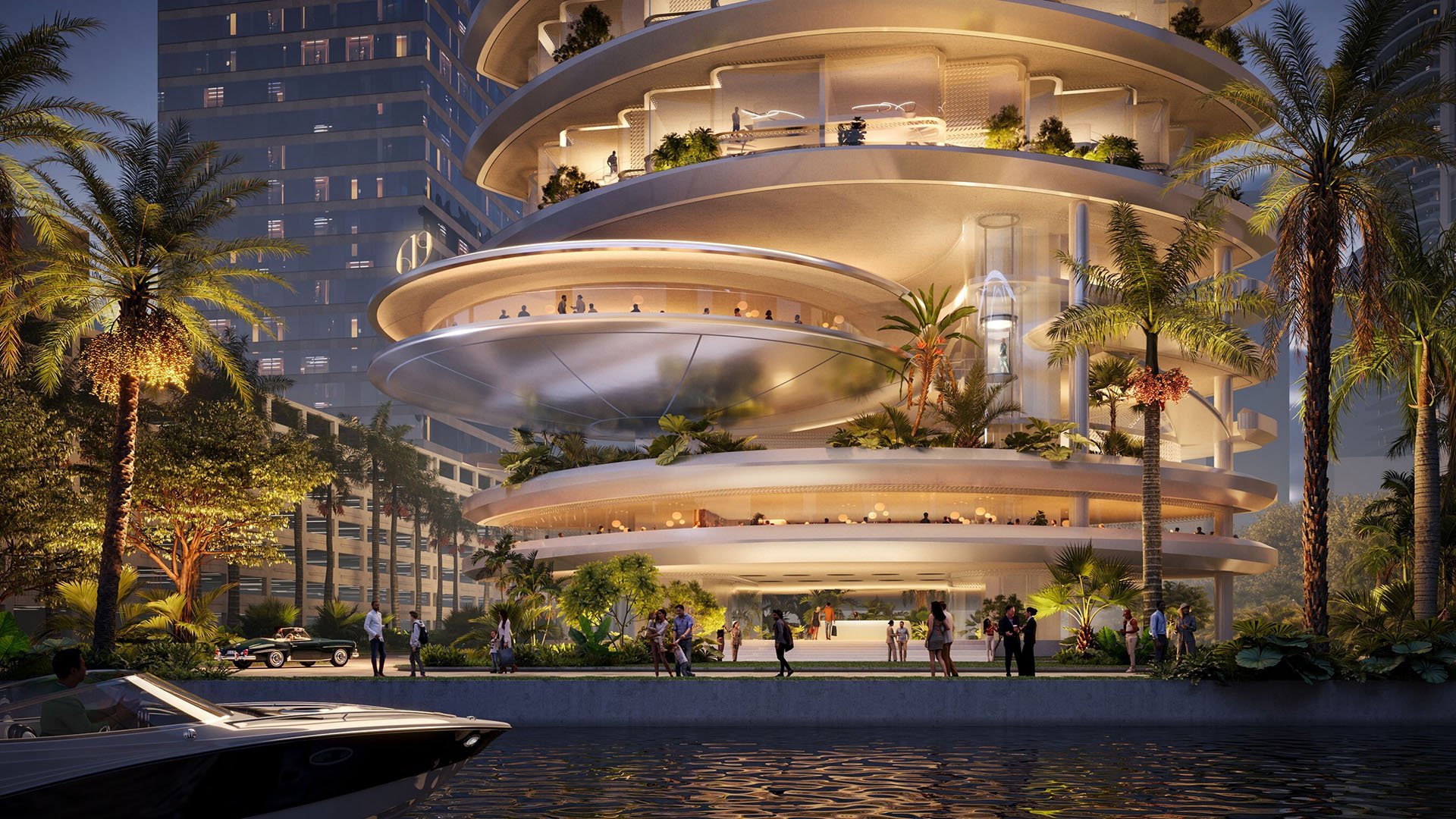
At 619 Residences by Foster + Partners + Nobu Hospitality, those questions deserve attention alongside the waterfront setting. Planned for 619 Brickell Avenue overlooking Biscayne Bay, the Nobu-branded tower brings together architecture by Foster + Partners in collaboration with Sieger Suarez and development partners 13th Floor Investments and Key International.
The proposition is compelling, but the distinctions matter: hospitality can support independence; wellness can offer convenient access to selected amenities. Neither establishes emergency medical care, personal assistance, nursing or memory care. For aging-in-place buyers, a sound purchase decision begins with that distinction.
The planned program includes a spa, wellness center and fitness facility. A Longevity Center is planned alongside the Nobu Spa across multiple floors, with proposed offerings including a hyperbaric chamber, cryotherapy and IV therapy. Additional proposed treatments include ozone treatments, infrared therapy, pulsed electromagnetic field therapy, a “Neuro-Reset” healing pod and a hammam.
An extensive treatment menu is not a medical-care commitment. The planned amenities do not establish a licensed on-site urgent-care clinic or a staffed, round-the-clock emergency medical team. Nor does the word longevity demonstrate that a treatment extends life or treats disease.
Before assigning value to these offerings, buyers should establish who will provide them, what licenses and supervision apply, and how eligibility and contraindications will be assessed. Operating hours, appointment availability and separate charges also matter. Discuss treatment suitability with a qualified clinician; inclusion in an amenity program is not a medical endorsement.
For buyers also considering The Well Bay Harbor Islands, the same evaluation applies: distinguish the appeal of wellness positioning from the precise services and clinical responsibilities documented for each property.
A neighborhood map does not establish emergency readiness. No established hospital travel time from 619 Brickell or formal building partnership supports a promise of rapid access. Hospital availability and the journey from an individual residence to treatment are separate considerations.
Request a written description of the building’s proposed emergency procedures. It should address overnight coverage, staff training, AED availability, who contacts emergency services, and how responders enter the property. Ask specifically about elevator access, entry to a locked residence and the handoff between building personnel and EMS.
These questions are particularly relevant in a tower organized into five stacked collections above a podium, each containing up to 15 residential floors. That architectural arrangement does not itself explain emergency circulation or staffing. Ask the team to walk through the proposed sequence from a resident’s call for help to responders reaching the apartment.
If a medical-concierge relationship is offered, establish whether it is contractual, optional or merely a referral arrangement. Confirm availability, scope, fees and responsibility. An introduction to a provider should never be mistaken for guaranteed treatment or response time.
Five-star concierge and lifestyle services are part of the development’s proposed offering. That language signals hospitality positioning, not a defined clinical-care service. Physician coordination, medical appointments, transportation, housekeeping and emergency-response duties require confirmation; they should not be assumed.
The useful question is not simply whether a concierge is available, but what that person is authorized and equipped to do. Ask which services building staff perform directly, which require outside vendors, and whether assistance continues overnight. Clarify charges and how personal information would be handled if appointments or outside care were coordinated.
Dining is a more concrete part of the planned offering. The program includes a ground-floor Nobu restaurant, a separate residents-only restaurant upstairs, a private residents’ dining room, a resident-only café and bar, and in-residence dining. Those options could ease the practical burden of meals. They do not establish prescribed-diet preparation or individualized nutritional care.
When comparing Cipriani Residences Brickell with 619 Brickell, request equivalent service schedules rather than relying on brand impressions. For long-term ownership, documented scope matters more than a broad promise of attentiveness.
Architectural distinction does not establish accessibility. Specific step-free showers, grab bars, wheelchair clearances and other adaptive features are not documented in the available project details. Buyers should review their selected floor plan and finish specifications rather than extrapolating from the tower’s design pedigree.
Walk through the proposed residence as a sequence of everyday movements: arrival, entry, bedroom access, bathing, dressing and reaching outdoor space. Ask an accessibility specialist to assess thresholds, clearances, controls and the practicality of future modifications. Confirm what can be changed before delivery, what requires approval later and who would bear the expense.
Proposed residential systems include circadian lighting, “medical-grade” HEPA filtration, ozone-enhanced whole-home water and low-EMF interiors. Treat these as specifications to verify, not demonstrated health outcomes. Request equipment details, maintenance requirements and replacement responsibilities. For a home intended to serve over many years, ease of upkeep deserves as much attention as the initial specification.
The November 2025 plan called for 74 stories, 300 residences and 90,000 square feet of exclusive amenities. Project details differ on scale and expected delivery. Buyers should therefore use current contractual documents to establish what is being purchased, rather than treating an early announcement as the final specification.
Have counsel review how the purchase documents address amenity changes, service obligations and completion expectations. Establish which wellness and dining components are committed, which depend on outside operators, and what recurring or usage-based fees may apply. Development backing alone is not a guarantee that a particular amenity will be delivered unchanged.
619 Brickell’s appeal lies in the potential combination of bayfront living, considered architecture and Nobu hospitality. For an independent buyer, that setting may complement a well-organized personal support network. It should not be purchased as a substitute for one.
Before committing, align three plans: the residence’s adaptability, the building’s documented services and the buyer’s own arrangements for healthcare and future assistance. A home suited to aging in place is not simply one with an impressive wellness program. It is one whose everyday comforts and operational limits are understood before they become consequential.
For a discreet perspective on South Florida residences and long-term ownership priorities, connect with MILLION.
If branded residences are on your mind — as a home or as an allocation — we would be glad to share what we are seeing, privately.
Begin a quiet conversationThe Nobu-branded residential tower is planned for 619 Brickell Avenue in Miami’s Brickell neighborhood, overlooking Biscayne Bay.
Foster + Partners designed the tower in collaboration with Sieger Suarez. The Nobu-branded project’s development partners are 13th Floor Investments and Key International.
The described program does not establish a licensed on-site urgent-care clinic or a staffed, 24/7 emergency medical team. Buyers should request written clarification of any medical-service commitments.
Plans include a spa, wellness center, fitness facility and Longevity Center. Proposed offerings include a hyperbaric chamber, cryotherapy and IV therapy, subject to verification of the final program.
The planned amenity program does not demonstrate life-extension or disease-treatment outcomes. Buyers should discuss suitability, contraindications and supervision with a qualified clinician.
Those functions are not established by the five-star concierge description. Confirm appointment coordination, transportation, hours, fees and outside-provider arrangements in writing.
Request details on staff training, AED availability, overnight coverage, EMS entry and elevator access. Clarify how responders would reach a locked residence and who manages the handoff.
No hospital travel time from 619 Brickell or formal building partnership is established in the available project details. Hospital availability alone does not guarantee response or transport times.
Step-free showers, grab bars and wheelchair clearances are not documented in the available project details. Review the selected residence with an accessibility specialist and confirm modification rules.
Confirm current specifications, completion expectations, amenity commitments and costs in contractual documents. Have counsel review provisions governing changes and distinguish included services from optional or separately charged offerings.