A buyer-focused look at 619 Brickell’s planned Foster + Partners architecture, Nobu dining, bayfront residences, wellness facilities, and household services, with the distinctions that matter before purchasing.
At 619 Brickell Avenue, the proposition extends beyond a residence overlooking Biscayne Bay. It is a planned home where architecture, dining, wellness, and household support are intended to work together. Developed by 13th Floor Investments and Key International, 619 Residences by Foster + Partners + Nobu Hospitality brings Foster + Partners and Sieger Suarez Architects into a residential collaboration with Nobu Hospitality.
Also marketed as 619 Brickell and 619 Residences by Nobu, the development is positioned as Nobu Hospitality’s first residential project in Miami. Its appeal rests on the relationship between private domestic space and an extensive proposed service program. For buyers, the essential question is how that relationship will translate into daily life-not how many amenities appear in a presentation.
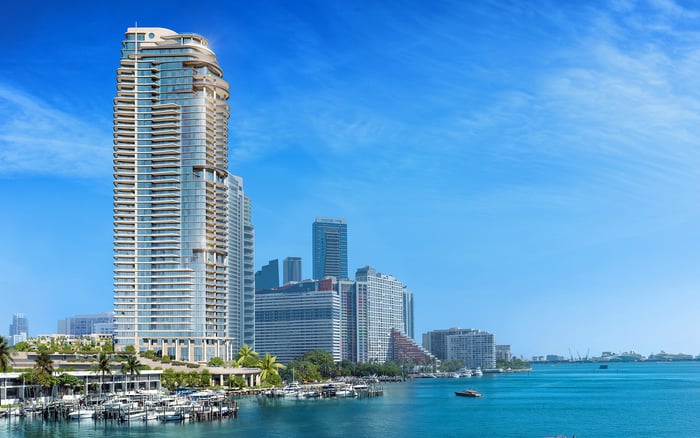
Foster + Partners is designing the tower in collaboration with Sieger Suarez Architects. Plans describe approximately 74 to 75 stories and 296 to 300 residences, with one configuration specifying 75 stories and 296 homes. Buyers should treat those figures as provisional until confirmed in current developer-approved offering documents.
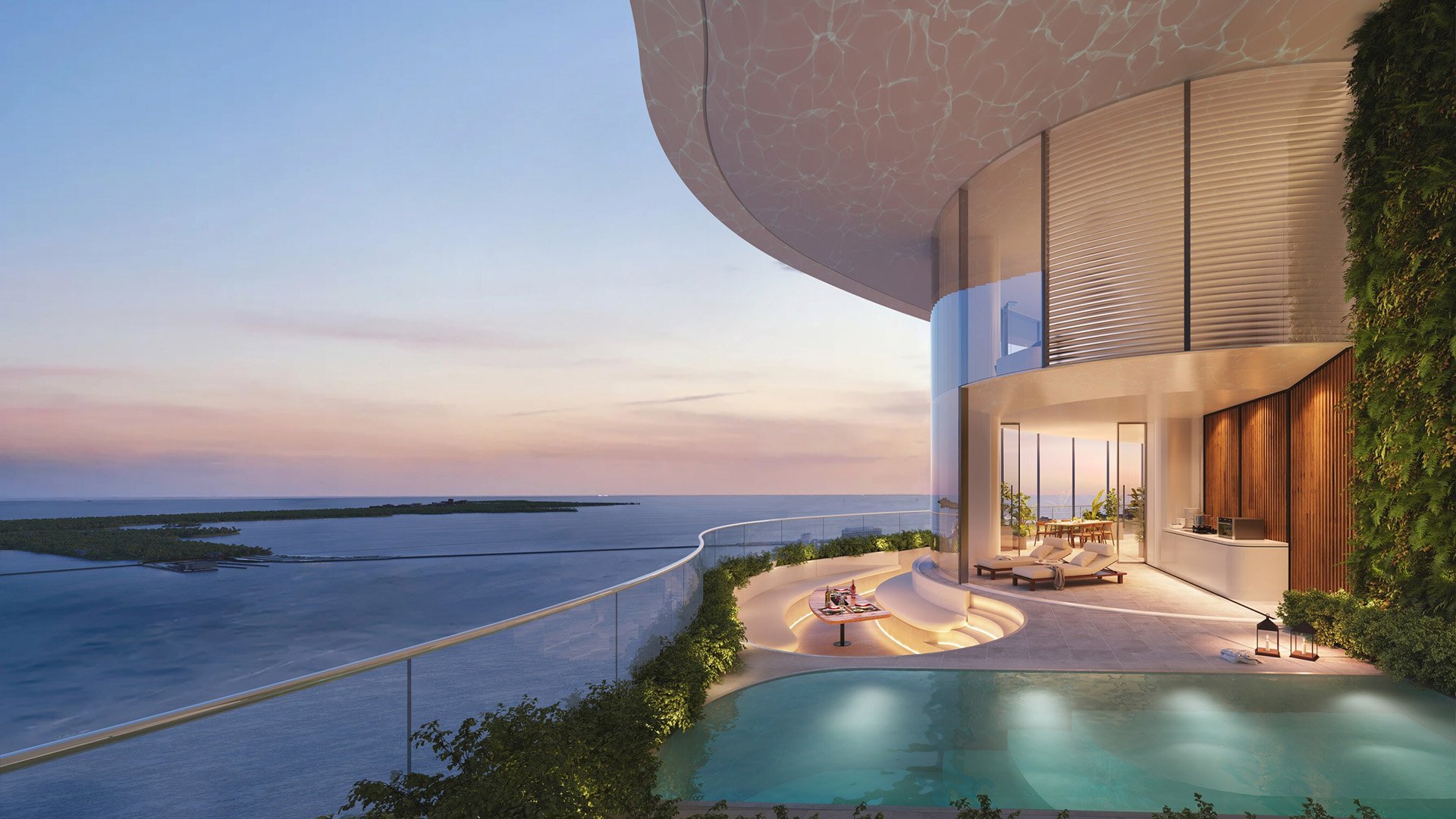
The advertised residential specifications offer a more useful starting point for evaluating individual homes: approximately 10-foot ceilings, full-height glazing, and expansive wraparound terraces. Panoramic water views are advertised from all living rooms and primary bedrooms. Review the specific floor plan, orientation, and terrace configuration rather than assume every residence offers the same experience.
Select homes are advertised with outdoor summer kitchens and private saunas. Neither should be read as a building-wide standard. Request a residence-specific schedule identifying what is included, what is optional, and how those features fit the layout under consideration.
The planned bayfront setting gives the glazing and terraces a clear purpose: bringing the experience of the water into the principal rooms. Yet the most consequential details may be quieter ones. Buyers should examine furniture placement, circulation to the terrace, and how living and sleeping spaces accommodate their routines.
Advertised specifications include HEPA air purification, smart climate and humidity controls, keyless entry, and home automation. Kitchens are planned with multi-stage reverse-osmosis water systems. These features warrant the same scrutiny as finishes: request equipment specifications, maintenance responsibilities, and an explanation of which controls are managed within the residence.
An expansive terrace or sophisticated control system earns its value through use. The selection process should therefore begin with a clear account of daily needs: entertaining, working from home, seasonal occupancy, and the degree of household assistance desired.
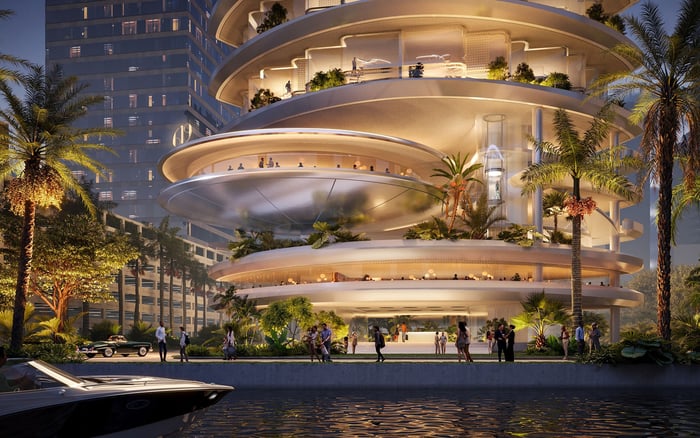
A waterfront Nobu restaurant is planned at the tower’s base as Miami’s second Nobu restaurant. The advertised residential food-and-beverage program extends further, with Nobu Café, private-chef services, and Nobu in-residence dining.
That distinction matters. A restaurant within the building and a meal delivered to a private dining room serve different needs. Buyers should ask about proposed operating hours, reservation arrangements, ordering procedures, private-event capabilities, and charges associated with residential service. None of those details should be assumed from the brand alone.
For buyers also considering Cipriani Residences Brickell, a useful comparison is the precise role dining would play in their week. Evaluate each offering independently, seeking written answers about access and costs rather than assuming hospitality names imply equivalent arrangements.
The proposed household program includes in-residence butler and staff support, hotel-style housekeeping, lifestyle management, and move-in coordination. Advertised arrival and transportation services include chauffeur and house-car access, doorman and porter assistance, and valet parking.
Further proposed assistance spans grocery stocking, estate staffing, personal shopping, gifting, private travel and aviation arrangements, childcare, and pet care. For an owner who travels frequently, the attraction is clear: fewer separate arrangements before arriving or leaving.
Access, however, is not the same as inclusion. It remains unconfirmed which services would be covered by condominium fees, charged individually, or provided through outside operators. Request a written service schedule distinguishing availability, booking requirements, staffing, and charges. The program’s value will depend as much on execution and clarity as on breadth.
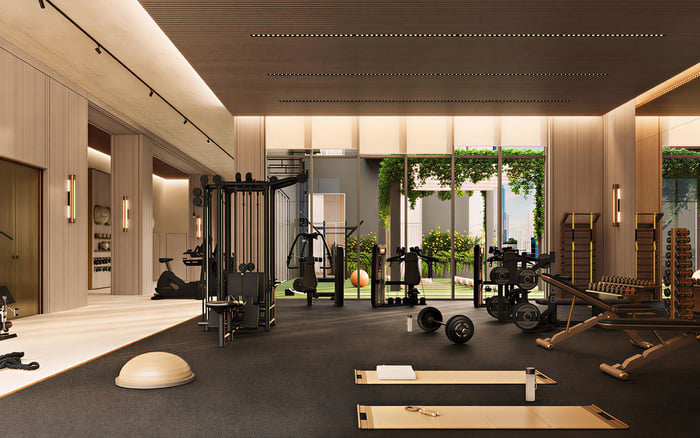
Approximately 90,000 square feet of private amenities are advertised across wellness, fitness, recreation, and dining. Plans include a two-story Nobu Wellness Center and Spa, a separate longevity and biohacking component, three resort-style pools, and two paddle courts.
Proposed wellness offerings include cryotherapy, hyperbaric oxygen, infrared sauna, red-light therapy, IV treatments, and peptide therapies. A dedicated longevity concierge is also planned to help residents navigate services and programming.
These offerings should not be treated as promises of health outcomes. Before assigning value to medical-style services, verify the final program, operators, practitioner credentials, licensing, clinical oversight, and eligibility requirements. Separate the appeal of a spa or pool from any decision involving treatment. Availability, suitability, and cost are distinct questions.
A buyer reviewing St. Regis® Residences Brickell alongside 619 should apply the same discipline to both: identify the services that matter, then establish how they are delivered and paid for. Brand recognition is a starting point for inquiry, not a substitute for reviewing the operating framework.
At 619, the architectural collaboration, planned Nobu dining, and breadth of proposed household support form the central proposition. Its suitability will depend on whether a buyer wants that level of integration and expects to use it. An extensive program may be compelling for one household and largely peripheral for another.
Advertised starting prices include approximately $2.386 million for a one-bedroom-plus-den, $2.812 million for a two-bedroom, and $7.512 million for a four-bedroom-plus-den. These are indicative marketing figures, not confirmation of current inventory or an offer for a particular residence.
An advertised payment schedule allocates 15% at contract, 15% at groundbreaking, 10% one year after contract, and 60% at closing, with Q2 2027 indicated for closing. Treat the schedule and timing as unconfirmed marketing terms. Current developer-approved offering documents should govern decisions about deposits, delivery, specifications, and contractual obligations.
The final review should connect the home, service program, and ownership costs. Confirm residence-specific inclusions, condominium charges, separately billed services, and the final amenity scope before committing.
For a discreet exploration of 619 and your South Florida residential options, connect with MILLION.
If branded residences are on your mind — as a home or as an allocation — we would be glad to share what we are seeing, privately.
Begin a quiet conversationThe condominium is planned for 619 Brickell Avenue, overlooking Biscayne Bay in Miami’s Brickell neighborhood.
The planned development is by 13th Floor Investments and Key International.
Foster + Partners is designing the tower in collaboration with Sieger Suarez Architects.
The project is positioned as Nobu Hospitality’s first residential project in Miami.
Provisional figures range from approximately 74 to 75 stories and 296 to 300 residences. Final counts should be verified in current developer-approved offering documents.
Plans advertise approximately 10-foot ceilings, full-height glazing, wraparound terraces, and water views from living rooms and primary bedrooms. Outdoor summer kitchens and private saunas are advertised only for select residences.
The proposed program includes a waterfront Nobu restaurant, Nobu Café, private-chef services, and Nobu in-residence dining.
Plans include a two-story wellness center and spa, a separate longevity component, three resort-style pools, and two paddle courts. Medical-style offerings require verification of final programming, licensing, and clinical oversight.
The available information does not establish service pricing or inclusions. Buyers should obtain written confirmation of what is included, separately charged, or arranged through outside providers.
Indicative starting prices include approximately $2.386 million for a one-bedroom-plus-den and $2.812 million for a two-bedroom. Q2 2027 appears as an unconfirmed marketing closing date, not a contractual delivery commitment.