A practical look at when formal dining is worth prioritizing at 2000 Ocean Hallandale Beach, especially for seasonal owners who host family, winter guests, and longer stays.
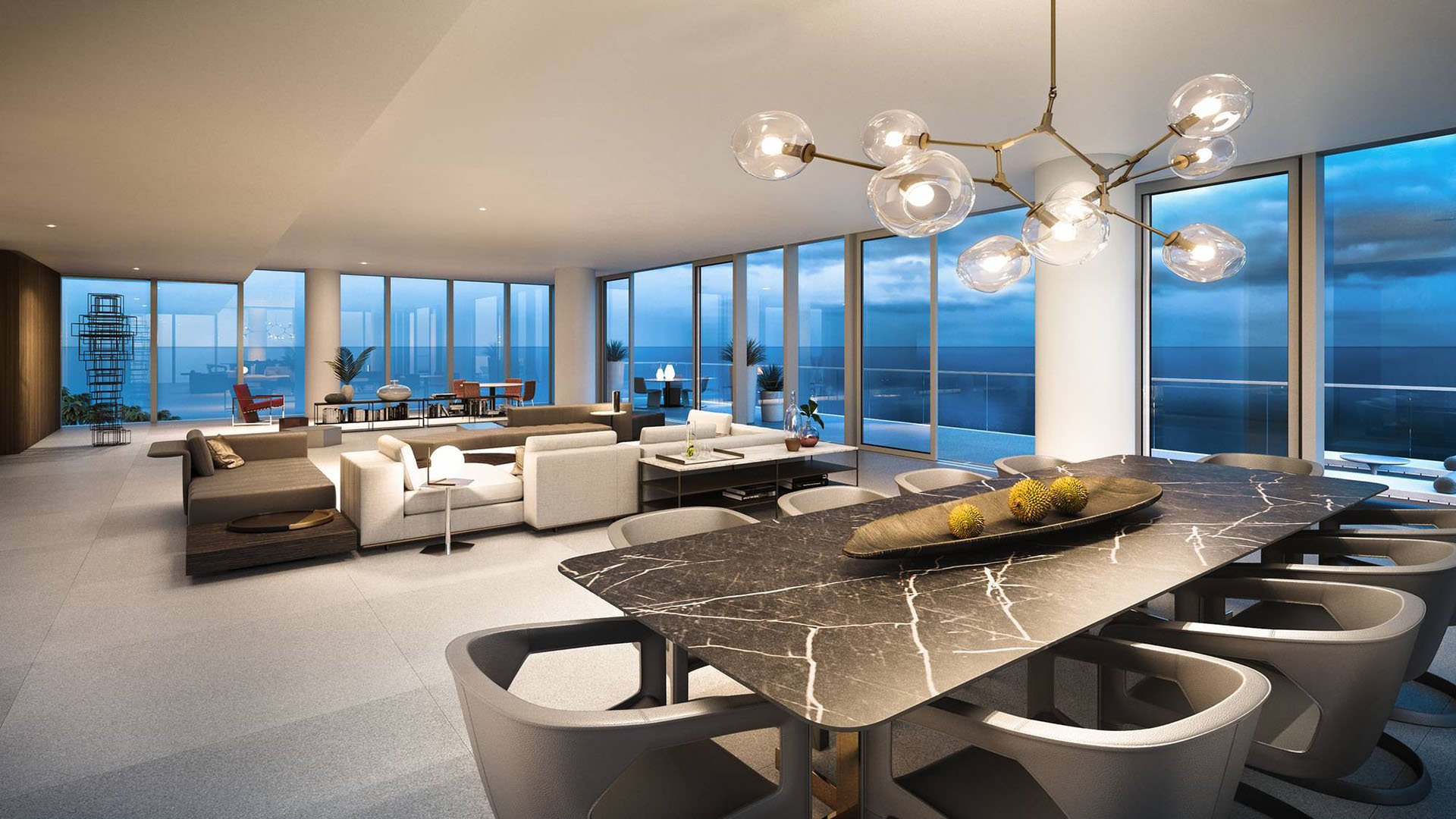
At 2000 Ocean Hallandale Beach, the usefulness of a formal dining area depends less on design fashion than on how the residence will be used during the months that matter most. Seasonal ownership changes the calculation. A room that may feel underused in a year-round home can become central during winter visits, family arrivals, holiday dinners, and evenings when entertaining at home is more appealing than booking another table.
The point is not to assume that formal dining is either necessary or obsolete. In a Hallandale luxury condominium, the dining area should be evaluated within the full in-residence rhythm: arrival, cooking, serving, gathering, conversation, cleanup, and the return to the living room, terrace, or view-facing spaces. For the right buyer, formal dining can give a seasonal residence a sense of occasion. For another, it may compete with the openness and simplicity that make a beach retreat easy to maintain.
Because the available project information does not establish unit-by-unit layouts, buyers should avoid assuming that every residence at 2000 Ocean contains a separate formal dining room. The stronger approach is to evaluate the specific floor plan, the relationship between dining and living areas, and how the space supports the ownership pattern.
Formal dining is most useful when the residence doubles as a winter entertaining base. Buyers who expect children, grandchildren, friends, or extended family to visit during the season often find that a dedicated dining zone does more than accommodate meals. It creates a predictable gathering point, which can be especially valuable when guests are coming and going over several days.
Holiday stays sharpen the point. A seasonal residence that is quiet for part of the year may suddenly need to support longer meals, multiple generations, and a more ceremonial style of hosting. In that setting, dining space is not merely square footage. It is part of the home’s hospitality language.
It also matters for buyers who use private chefs, caterers, or more structured entertaining. A defined dining area can create separation between preparation, service, and relaxation, especially when the kitchen, living room, and outdoor areas are all active at once. Even without claiming exact dimensions or seating capacity, the practical question is clear: does the dining area give the residence better hosting control, or does it interrupt the flow?
For a second-home owner, that distinction is important. The residence may not be occupied every week, but when it is occupied, it may be used more intensely than a primary home. A dining area that sits quiet in May can feel indispensable during December, January, and February.
Not every seasonal buyer should prioritize formal dining. Some owners come to Hallandale for an easy, low-maintenance retreat where the best meals happen outside the home. If the ownership pattern revolves around beach time, travel, wellness routines, and frequent dining out, a formal dining area may be less valuable than larger casual living space, cleaner circulation, or stronger terrace connectivity.
This is especially true for buyers who visit in shorter bursts. If a residence is used for long weekends or brief seasonal escapes, a formal dining area can become a beautifully finished but rarely activated zone. In that scenario, the buyer may prefer an open living and kitchen relationship that feels effortless from the moment of arrival.
The question is not whether formal dining is elegant. It often is. The question is whether that elegance translates into actual utility during the buyer’s specific ownership calendar. For some, a dining room turns an occasional stay into a true homecoming. For others, it becomes a space admired more than used.
Seasonal buyers should ask whether the dining area can flex. The most useful dining zones are not limited to dinner. They can serve as a work table during extended winter stays, a card table after lunch, a staging area for entertaining, or overflow workspace when guests are occupying bedrooms and quiet corners become scarce.
This flexibility can help justify the footprint. A formal dining area that supports daily life between events is more valuable than one that activates only for rare dinners. Buyers should imagine a full week in residence, not just a perfect evening. Where does a laptop go during a longer stay? Where do grandchildren draw, play games, or finish schoolwork? Where can flowers, gifts, serving pieces, and trays be placed before guests arrive?
The best layouts make these secondary uses feel natural, not improvised. If the dining area has a comfortable relationship to the kitchen and living area, it can become a multifunctional hub. If it is visually disconnected or awkward to reach, it may feel more ceremonial than practical.
At 2000 Ocean Hallandale Beach, buyers should weigh formal dining against the priorities that define luxury coastal living: view orientation, terrace access, kitchen connection, and living-room flow. A beautiful dining area loses impact if it pulls attention away from the residence’s strongest daily-use spaces.
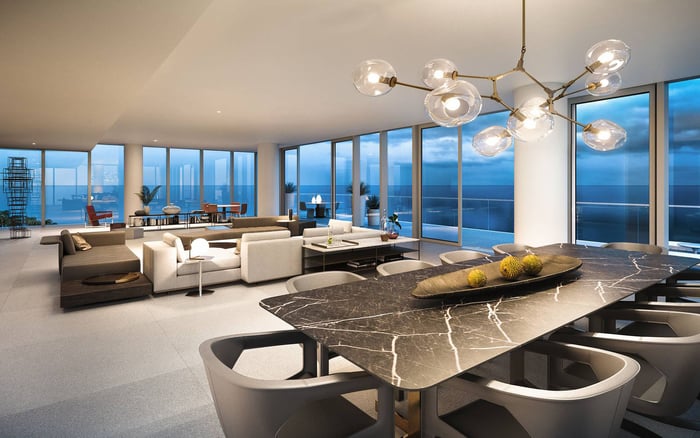
View orientation is particularly important. A waterview experience, when present in a specific residence, often shapes where owners and guests naturally gather. If the dining area benefits from that orientation, it may feel integrated into the residence’s best feature. If it sits outside the primary view corridor, buyers should decide whether the tradeoff is acceptable.
Open-plan living also deserves scrutiny. A seasonal residence should feel intuitive. Groceries arrive, guests settle in, drinks are poured, meals are served, and people move between interior and outdoor zones. Dining that enhances this movement has real value. Dining that narrows circulation or divides the main entertaining area may be less compelling, even if it photographs beautifully.
For an oceanfront buyer mindset, the most desirable space is often the one that allows the day to move easily from morning coffee to sunset hosting. Formal dining should support that sequence, not compete with it.
For seasonal buyers, the right question is not “Do I need formal dining?” It is “During my actual months in residence, what will this space do for me?” Buyers who host winter-season guests, celebrate holidays in South Florida, or expect longer family stays may find that formal dining adds comfort, order, and a gracious sense of permanence.
Buyers who prefer restaurants, travel often, or want a lock-and-leave retreat may reasonably place formal dining lower on the priority list. In those cases, casual dining, generous living space, and strong terrace adjacency may matter more.
Resale should be considered carefully, but without overstatement. Current available information does not establish that formal dining materially improves resale value at 2000 Ocean. The stronger buyer takeaway is functional: choose the layout that will be most consistently useful, most pleasant to live in, and most aligned with how the residence will be occupied.
In luxury real estate, utility is not the opposite of elegance. At its best, utility is what allows elegance to remain effortless.
Does every residence at 2000 Ocean Hallandale Beach have a formal dining room? The available information does not confirm unit-by-unit dining layouts, so buyers should review the specific residence they are considering.
Is formal dining important for a seasonal buyer? It can be important if the residence will host family, winter guests, holiday meals, or longer stays. It is less essential for owners who mostly dine out.
Should I prioritize dining space over terrace access? Not automatically. Buyers should compare dining utility with terrace access, view orientation, kitchen connection, and living-room flow.
Can a formal dining area serve other purposes? Yes. It may function as a work table, card table, entertaining staging area, or overflow workspace during extended visits.
Is formal dining useful for private-chef entertaining? It can be, especially when the layout supports smooth movement between the kitchen, dining area, and living spaces.
What if I only use the residence for short visits? For short stays, formal dining may be less useful than open casual space and simple maintenance. The ownership pattern should guide the decision.
Does formal dining improve resale value at 2000 Ocean? The current information does not verify a resale premium tied to formal dining. Buyers should avoid relying on unsupported resale assumptions.
How should I judge dining usefulness during a showing? Walk through a realistic day in residence, including meals, guests, work, entertaining, and movement between interior and outdoor spaces.
Is formal dining more valuable during the winter season? Often, yes. Winter stays tend to include more visitors, holidays, and longer periods of in-residence entertaining.
What is the simplest rule for deciding? If dining will be used often and flexibly, it may deserve priority. If it will sit idle, prioritize flow, views, and ease.
For a confidential assessment and a building-by-building shortlist, connect with MILLION.
If branded residences are on your mind — as a home or as an allocation — we would be glad to share what we are seeing, privately.
Begin a quiet conversation