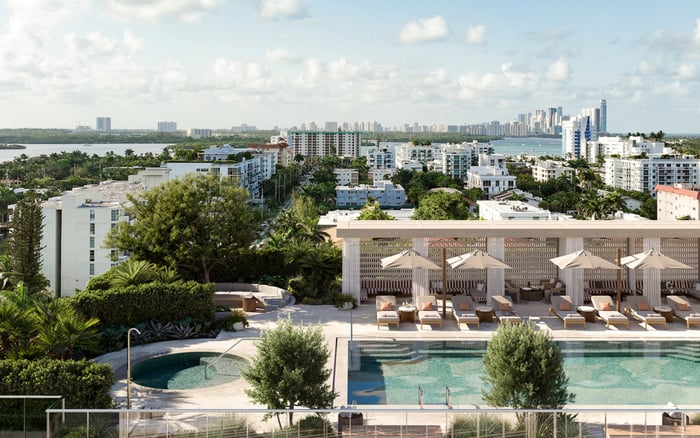
A vessel-first framework for evaluating routes, dockage, storm readiness, and discreet marina-to-residence transfers near Oceana Bal Harbour.

For a yacht owner, proximity to the water does not guarantee operational access. Oceana Bal Harbour is an oceanfront residential property in Bal Harbour, at the northern end of Miami Beach’s barrier island. That coastal position places offshore access, Intracoastal routing, dockage, storm planning, and the final transfer home within a single acquisition brief.
The inquiry begins with the vessel’s length, beam, draft, and air draft. Before selecting nearby dockage, test those dimensions against every intended route. A berth that appears convenient by road may prove unsuitable once bridges, channel depths, tides, and shallow approaches enter the calculation.
This is the practical framework for a MILLION Buyer's Guides analysis of Bal Harbour, where waterfront living must be evaluated alongside marina operations, boat-slip terms, and storm readiness.
Haulover Inlet is the principal geographic reference for assessing ocean access from the Bal Harbour area, but it is not a complete answer. The captain or marine adviser should chart the entire passage from berth to open water, accounting for fixed-bridge clearance, drawbridge schedules, charted channel depth, tidal conditions, turning requirements, and potentially shallow approaches.
Air draft demands particular attention. A route may accommodate the hull’s draft and beam yet remain unusable because of a fixed bridge. Drawbridges add another layer of timing and reliability, especially when an itinerary depends on a narrow departure window. Buyers should assess primary and alternative routes under realistic operating conditions, then reconfirm current navigation and bridge information before relying on either.
Residential comparisons should remain distinct from nautical conclusions. A buyer considering Rivage Bal Harbour or The Surf Club Four Seasons Surfside should conduct the same vessel-specific route audit rather than infer access from an oceanfront address.
Never assume a nearby berth is available. Confirm whether a marina offers transient, seasonal, or annual slips, and obtain direct confirmation that it can accommodate the vessel’s dimensions. The comparison should address maximum length, beam, draft, water service, shore-power capacity, fuel access, security, parking, tender handling, and crew support.
The strongest option may not be the nearest slip. A slightly longer ground transfer may be preferable if it provides a workable route, suitable utilities, controlled access, and dependable operational support. Owners comparing broader residential options such as Onda Bay Harbor should keep the residence and berth decisions connected, yet independently verified.
Determine how guests, vendors, captains, and crew gain admission. Review after-hours access, vehicle staging, package and provisioning procedures, and the practical route for luggage. Each detail shapes both convenience and privacy.
Marina hurricane policies demand document-level review. Key provisions include evacuation deadlines, haul-out requirements, emergency contacts, and restrictions on leaving a vessel in its slip. The owner’s plan must align those rules with the yacht’s insurance policy, captain availability, relocation route, and a confirmed backup berth or yard.
A credible plan assigns responsibility and timing before a storm threatens. It should establish who makes the relocation decision, who can operate the vessel, where it can go, which route remains viable, and what happens if the first destination is unavailable. Insurance obligations and marina deadlines are not interchangeable.
Building preparedness is a separate diligence track. Buyers should examine emergency power, flood exposure, storm procedures, access restrictions, and post-event re-entry protocols at the residence. Even with the vessel secured, the owner must understand how the property will operate before, during, and after a major event.
Discretion depends on the full sequence, not merely a private residence. Evaluate visibility at the marina, vehicle-staging locations, exposure of luggage and guests, lobby access, elevator controls, staffing, and guest-registration procedures.
The most revealing measure is an actual marina-to-residence transfer at realistic traffic and operating times. Time the handoff from vessel to vehicle, note public sightlines, and observe every point where names, guests, or movements become visible. If after-hours arrivals reflect the owner’s likely pattern, repeat the exercise then.
A residence such as Oceana Bal Harbour should therefore be assessed as one component of a broader operating system. For a yacht owner, the premium decision combines navigable access, dependable dockage, coordinated storm readiness, and a controlled arrival.
Does an oceanfront Bal Harbour residence include yacht dockage? Oceanfront positioning does not confirm a berth. Slip availability and terms must be verified directly.
Which vessel dimensions matter most for route planning? Length, beam, draft, and air draft should all be mapped against every intended route.
Why is air draft essential? A fixed bridge can render an otherwise navigable route unusable, even when depth and beam are adequate.
What should a bridge review cover? Review fixed clearances, drawbridge schedules, tides, channel depth, and potentially shallow approaches.
Why is Haulover Inlet relevant? It is the principal geographic reference for evaluating ocean access from the Bal Harbour area.
What should be confirmed before selecting a slip? Confirm vessel limits, term type, utilities, fuel access, security, parking, tender handling, and crew support.
What belongs in a yacht storm plan? Coordinate marina deadlines with insurance, captain availability, relocation routing, and a backup berth or yard.
What building storm questions should buyers ask? Examine emergency power, flood exposure, access restrictions, storm procedures, and re-entry protocols.
How can a buyer assess arrival privacy? Test the complete transfer, including marina sightlines, vehicle staging, lobby access, elevators, staffing, and registration.
Should nautical diligence be vessel-specific? Yes. The owner’s captain or marine adviser should review current route information and marina confirmations.
For a discreet conversation and a curated building-by-building shortlist, connect with MILLION.
If branded residences are on your mind — as a home or as an allocation — we would be glad to share what we are seeing, privately.
Begin a quiet conversation