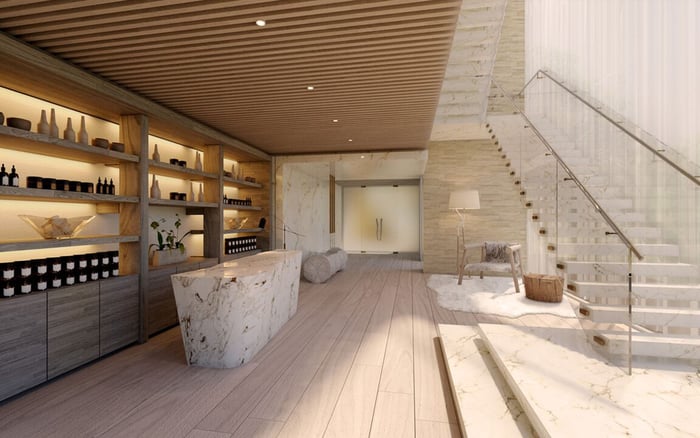
For committed Bay Harbor Islands buyers, the decisive luxury may be less about decorative impact and more about whether a residence supports health, recovery, and access to care in daily life.
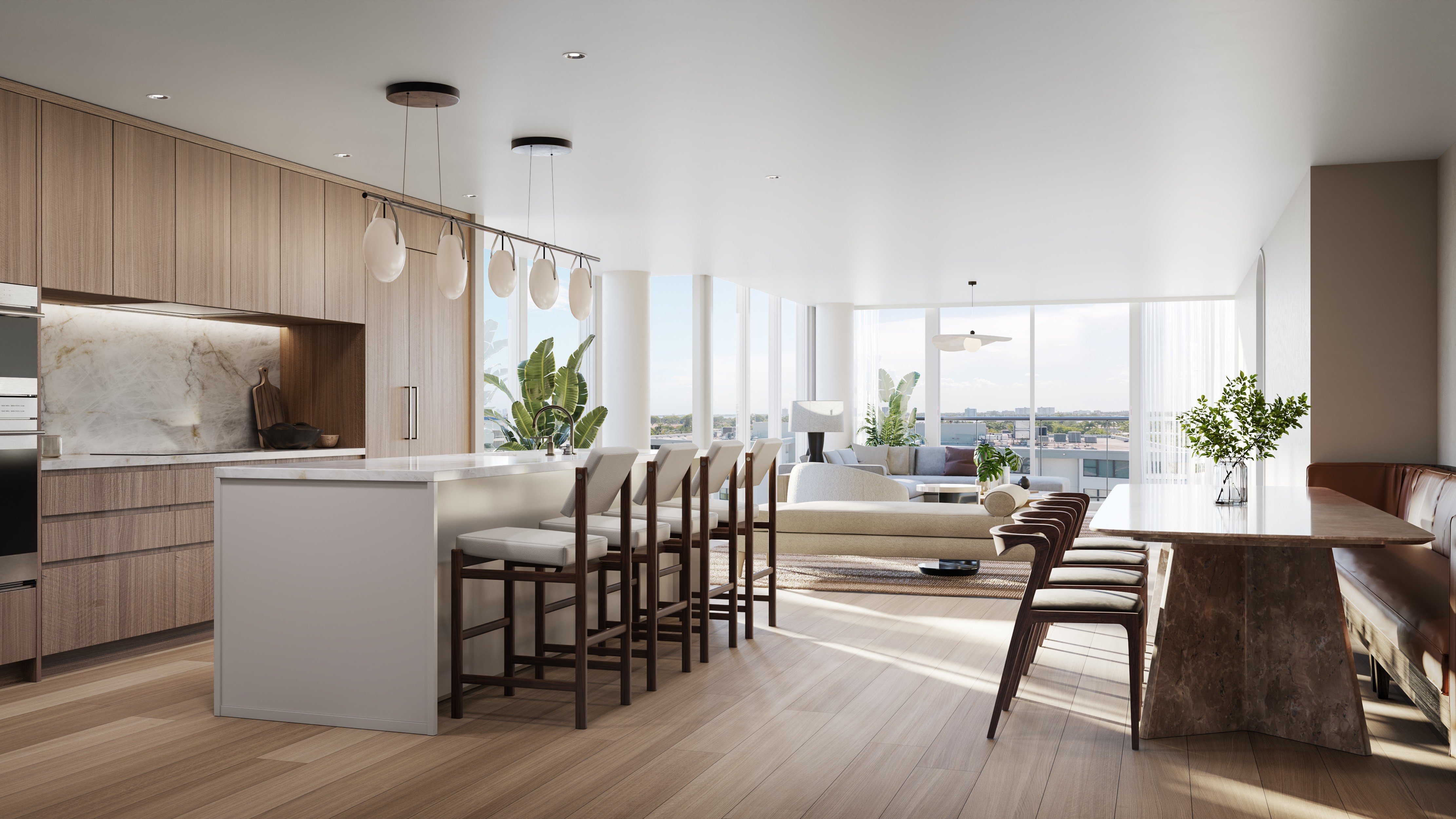
For serious Bay Harbor Islands buyers, a residence can be evaluated as an operating environment rather than simply a collection of finishes. Materials, millwork, and appliances help establish visual quality, but the spaces and services that support movement, rest, recovery, and daily convenience may have a more direct effect on a resident's routine.
That distinction can be especially relevant to full-time residents, long-horizon owners, and households balancing professional, family, or healthcare commitments. Their central question may be whether a building reduces friction in the activities they expect to repeat each week.
A wellness-oriented project such as The Well Bay Harbor Islands can therefore be assessed through practical due diligence. Buyers should focus on which spaces and services they would use, how access works, what costs apply, and whether the overall program fits their priorities.
Amenity value depends on use. A buyer who expects to exercise, recover, relax, or meet with service providers regularly may place more weight on convenient wellness infrastructure than on a finish upgrade that is experienced primarily as a visual feature.
The review should begin with the household's actual calendar. Buyers can list recurring routines, estimate likely frequency, and identify the spaces or services that would make those routines easier. They can then compare that expected utility with the cost and complexity of the building's broader operating program.
Convenience should not be assumed from an amenity list alone. Buyers should verify operating hours, reservation procedures, guest rules, privacy arrangements, provider availability, and any separate charges before assigning value to a wellness offering.
Wellness access and medical access are related considerations, but they are not interchangeable. Fitness, relaxation, recovery, and lifestyle services do not replace hospitals, emergency care, physicians, pharmacies, rehabilitation providers, or specialists.
A disciplined buyer should conduct two separate reviews. The first should establish what is available within the building and how residents access it. The second should examine real travel routes to the healthcare providers and facilities the household expects to use.
Those routes should be tested at realistic appointment times rather than judged only by distance on a map. Buyers should also consider transportation preferences, mobility needs, privacy, scheduling patterns, and their tolerance for delays.
Buyers can compare local options without assuming that similarly polished presentations support the same lifestyle. A practical comparison set may include Alana Bay Harbor Islands, Onda Bay Harbor, and La Maré Bay Harbor Islands alongside The Well Bay Harbor Islands.
The purpose is not to identify a universal winner. It is to determine which property best supports the buyer's expected pattern of ownership. Relevant considerations may include residence layout, amenity access, privacy, service structure, arrival experience, and the ease of completing recurring off-site journeys.
A useful scorecard separates visible design features from operational characteristics. Buyers can compare finishes while also reviewing hours of operation, staffing, appointment availability, guest policies, service fees, and the route from the residence to frequently used spaces.
A long amenity list is only a starting point. Buyers should ask whether services are included, separately charged, reservation-based, or dependent on third-party availability. They should also clarify cancellation rules, access limitations, and how the building plans to manage periods of high demand.
Operating considerations deserve equal scrutiny. Specialized spaces, equipment, and staffing may provide meaningful personal utility, but buyers should review how those elements are maintained and funded. Wellness features should not be treated as a guarantee of resale performance or investment outperformance.
Design remains part of the decision. The more precise approach is to distinguish replaceable interior elements from shared infrastructure, service systems, and location characteristics that an individual owner cannot easily change.
Different ownership patterns produce different priorities. An occasional resident may emphasize visual impact and straightforward lock-and-leave use, while a committed end user may assign more weight to repeated convenience, privacy, wellness routines, and access to a personal healthcare network.
The strongest decision framework is specific to the buyer. Households should rank their likely weekly activities, identify the services they would genuinely use, verify relevant healthcare routes, and account for the ongoing cost of convenience. Finishes shape the atmosphere, but the building's operating environment determines how effectively that atmosphere supports daily life.
Why can wellness amenities matter more than finishes? Frequently used spaces and services may influence daily routines more directly than decorative features.
Should buyers ignore design quality? No. Design remains important, but it can be evaluated alongside operational convenience and recurring personal utility.
Are wellness services equivalent to medical care? No. Wellness offerings do not replace physicians, hospitals, emergency care, pharmacies, rehabilitation providers, or specialists.
How should buyers evaluate medical proximity? They should test realistic routes to the providers and facilities their household expects to use.
Why are operating hours important? An amenity has limited practical value if its schedule does not align with the resident's routine.
What access details should buyers verify? Buyers should confirm reservation rules, guest policies, privacy arrangements, provider availability, and access limitations.
Why should fees be reviewed separately? Some services or facilities may create costs beyond the residence purchase, so buyers should understand the applicable structure.
Do wellness amenities guarantee stronger resale performance? No. Buyers should evaluate them for personal utility rather than assume a financial premium.
How can buyers compare Bay Harbor Islands projects? A consistent scorecard can compare layouts, shared spaces, service access, privacy, operating considerations, and recurring travel needs.
Who may benefit most from this framework? Full-time residents, long-horizon owners, and households with recurring wellness or healthcare routines may find it especially useful.
For a tailored shortlist and next-step guidance, connect with MILLION.
If branded residences are on your mind — as a home or as an allocation — we would be glad to share what we are seeing, privately.
Begin a quiet conversation