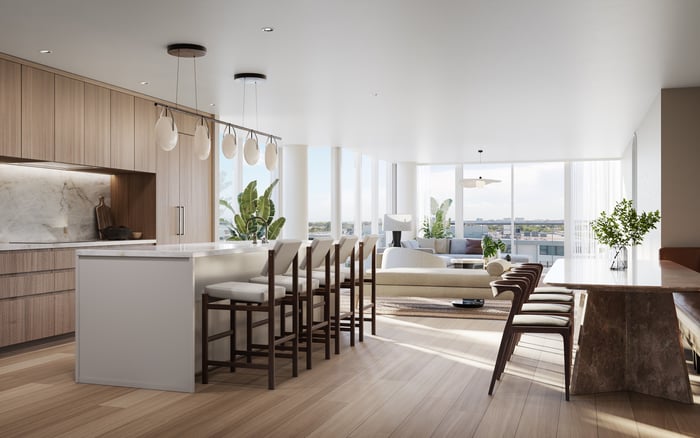
For private-aviation buyers at THE WELL Bay Harbor Islands, a seamless arrival should be demonstrated, not assumed. Written transfer procedures, documented luggage custody, current occupancy approvals, and a tested residence-readiness plan turn an appealing service proposition into a dependable second-home experience.
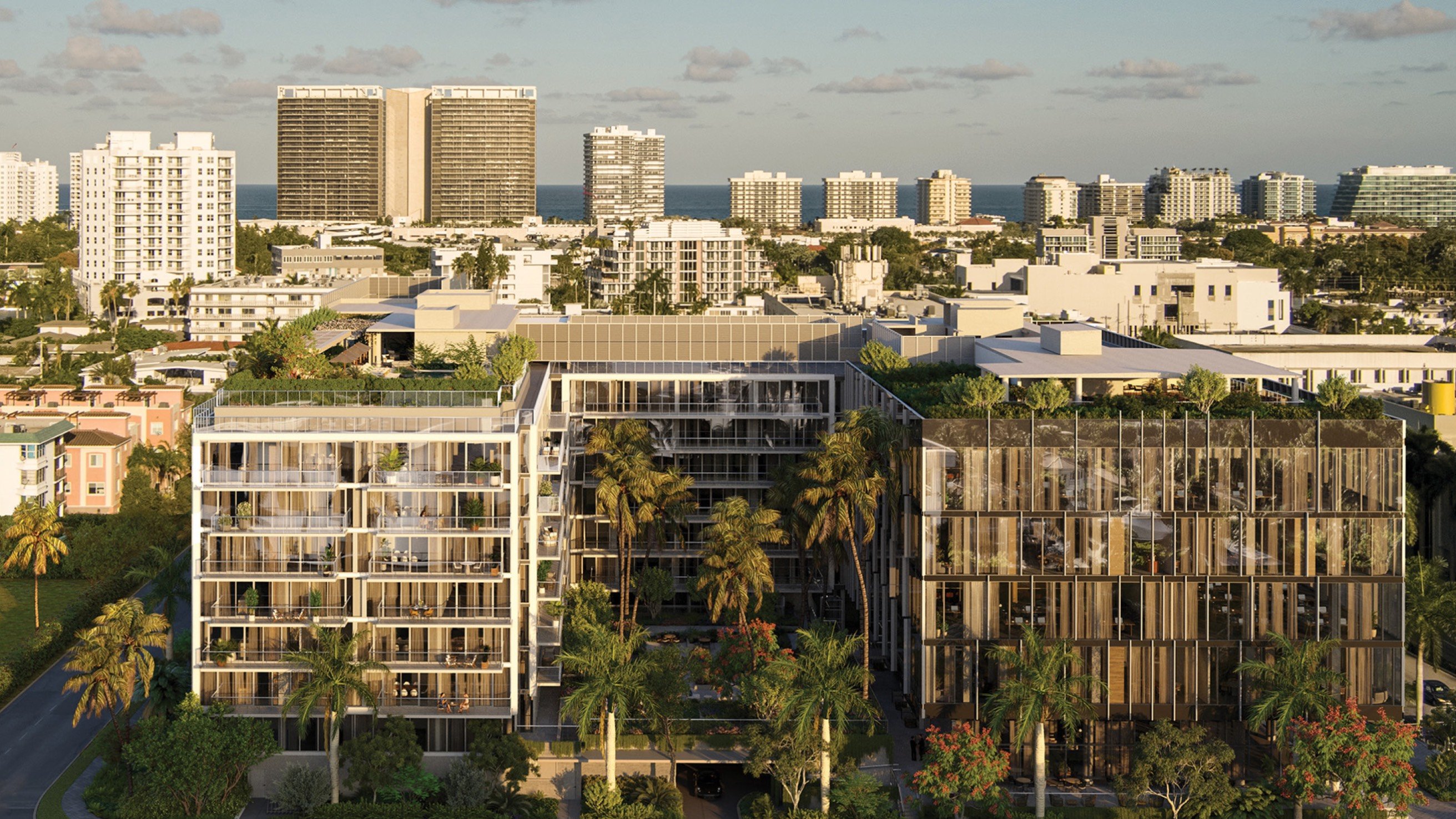
For a private-aviation buyer, arrival does not end at touchdown. It ends at the residence door, with luggage accounted for, systems working, and access arrangements resolved. At The Well Bay Harbor Islands, that distinction deserves the same attention as the floor plan.
THE WELL is a mixed-use residential, office, and wellness development at 1177 Kane Concourse. Its advertised residential amenities exceed 22,000 square feet, and its residences range from one to four bedrooms. These attributes establish the proposition-not an airport-to-residence service commitment.
Decision-grade diligence separates three questions: how the owner arrives, who controls the belongings, and whether the residence is legally and physically ready. Each requires written confirmation. An elegant concierge offering is no substitute for an agreed operating procedure.
Start with the current offering documents. The advertised condominium count is 66; the figure in October 2023 was 54. Reconcile that difference against the current declaration, unit schedule, approved plans, and offering documents rather than selecting whichever marketing figure appears most recent.
Apply the same discipline to historical schedules. Earlier targets included a December 2024 opening and a January 2025 completion. Neither establishes current occupancy authorization, the readiness of a particular residence, or the availability of every advertised service.
Buyers comparing Bay Harbor Towers should apply the same documentary standard independently. Comparisons become useful when each property answers the same questions. A completion label alone is not a readiness assessment.
Miami-Opa Locka Executive Airport, identified as OPF/KOPF, has three fixed-base operators: Atlantic Aviation, Fontainebleau Aviation, and Signature Flight Support. These FBOs serve aircraft ranging from small single-engine private planes to large corporate jets. Select the actual FBO before designing the ground-transfer plan.
Third-party private-aviation transfers are advertised, including tarmac access at these operators. That availability neither establishes a THE WELL arrangement nor guarantees access for a particular flight. Confirm the intended pickup location, required permissions, driver staging, and responsibility for communicating schedule changes.
Do not assume a fixed journey time from OPF, MIA, or FLL. Define the arrival window as the full sequence from aircraft exit to residence entry: luggage release, loading, driving, valet reception, and elevator access. A road-transfer estimate captures only part of that sequence.
Request a written procedure naming the FBO contact, ground operator, building receiver, and after-hours escalation contact. Specify how a delayed flight changes receiving arrangements and what happens if the owner arrives before the bags. The objective is accountability at every handoff, not an optimistic timetable.
Advertised 24-hour valet parking and security do not establish an airport-to-residence luggage protocol. Before authorizing a transfer, confirm who accepts the bags at each stage, whether acceptance is logged, and when responsibility passes from driver to building staff.
A workable instruction should address bag counts, identifying details, delivery acknowledgement, and exceptions for valuables or fragile items. Confirm whether luggage may arrive before the owner, where it would be held, and whether staff may enter an unoccupied residence. Written access authorization should identify the permitted people and activities.
Review insurance and liability separately. Ask which terms govern loss, damage, unattended storage, and disputed delivery. Do not assume the driver's coverage extends through the building or that valet acceptance means delivery inside the residence.
The same questions belong in a comparison with Alana Bay Harbor Islands. The meaningful distinction is the confirmed custody procedure, not a general concierge label.
Legal readiness comes first. Obtain current occupancy certificates, relevant inspection sign-offs, elevator and life-safety approvals, and written move-in authorization. Have the appropriate advisers review what applies to the building and the specific residence. Confirm the unit punch-list status and document unresolved items.
Physical readiness is a separate test. Verify active utilities, commissioned appliances and building systems, working internet and security, and the agreed furniture and window treatments. Record warranty contacts and identify the person responsible for correcting deficiencies. A beautifully presented residence is not necessarily ready for an uninterrupted stay.
Request a pre-arrival walkthrough against an agreed checklist. Confirm cooling, lighting, hot water, appliance operation, access credentials, and delivery arrangements. Establish which checks can be completed before the owner travels and how failures will be communicated.
For buyers considering Onda Bay Harbor or extending their search to Bal Harbour, this two-part framework remains useful. Legal permission to occupy and practical readiness are not interchangeable.
THE WELL's Bay Harbor Islands club is advertised as 16,000 square feet, with more than 40 movement and fitness classes weekly. Offerings include strength training, EMS training, personal training, and performance assessments. Recovery options include sauna, steam, cold plunge, massage, acupuncture, infrared treatments, and sound treatments.
Biomarker testing, IV therapy, and hyperbaric oxygen therapy are also advertised. Their availability does not establish inclusion with condominium ownership. Confirm membership pricing, resident and guest privileges, booking lead times, eligibility requirements, and charges before incorporating these services into an arrival routine.
Advertised residential offerings include a wellness concierge available in person or by text, plus a rooftop pool and hot tub, private cabanas, chaises, and a summer kitchen. Plant design and maintenance, organic home-cleaning options, and local CSA deliveries are also advertised. Establish which services are included, separately billed, or dependent on scheduling.
A wellness concierge is not automatically a travel coordinator, luggage custodian, or residence-readiness guarantor. Ask who is responsible for each task and what confirmation the owner receives upon completion.
Arrange a live test using the intended FBO and ground operator under realistic weekend or peak-season conditions. Measure the elapsed time from aircraft to residence and record each handoff. One successful rehearsal informs planning; it does not create a permanent travel-time guarantee.
The most useful buyer's guides turn appealing promises into acceptance criteria. Here, those criteria are a documented transfer plan, traceable luggage custody, current occupancy authorization, tested residence systems, and defined service entitlements. Rehearse the delayed-flight scenario as carefully as the ideal arrival.
For a discreet perspective on service-led ownership and South Florida residential choices, connect with MILLION.
If branded residences are on your mind — as a home or as an allocation — we would be glad to share what we are seeing, privately.
Begin a quiet conversationThe mixed-use residential, office, and wellness development is at 1177 Kane Concourse, Bay Harbor Islands.
The advertised count is 66, while an October 2023 description identified 54 residences. Buyers should reconcile the difference through current offering documents and approved plans.
OPF/KOPF lists Atlantic Aviation, Fontainebleau Aviation, and Signature Flight Support.
A property-operated airport transfer program is not confirmed here. Confirm any proposed arrangement directly in writing before relying on it.
No guaranteed transfer time from OPF, MIA, or FLL is established. Test the full aircraft-to-residence sequence with the intended FBO and ground operator.
Advertised 24-hour valet and security do not establish that service. Confirm custody, receiving hours, residence access, insurance, and liability terms separately.
That permission is not established. Obtain written confirmation of acceptance, storage, authorized residence entry, and delivery acknowledgement.
Request current occupancy certificates, relevant inspection sign-offs, elevator and life-safety approvals, and move-in authorization. Confirm the specific unit's punch-list status.
Advertised treatments do not establish ownership inclusion. Confirm membership pricing, resident and guest privileges, booking requirements, and separate charges.
Check utilities, cooling, hot water, appliances, internet, security, access credentials, and agreed furnishings. Document deficiencies and identify the person responsible for resolving them.