A discreet editorial guide for San Francisco buyers considering Key Biscayne as a base for tax residency planning, family rhythm, privacy, and a more controlled Miami lifestyle.

For a certain San Francisco buyer, Key Biscayne is not a conventional relocation story. It is a study in control: where the family wakes up, how visible its routines become, how easily business and household obligations can coexist, and whether a residence can support a credible long-term plan rather than a symbolic second address.
That distinction matters. This buyer profile is often sophisticated, advisory-driven, and accustomed to weighing consequences before making a move. Tax residency, family life, and daily privacy are not separate questions. They intersect through the home, the neighborhood, the school rhythm, the travel pattern, and the level of discretion a household can realistically maintain.
Key Biscayne enters that conversation because it feels residential before it feels performative. It offers proximity to Miami without requiring buyers to live inside the city’s most public corridors. For families accustomed to the density, visibility, and intensity of the Bay Area, that quieter posture can be the central luxury.
A Florida purchase alone should never be treated as a complete tax residency strategy. Buyers moving from San Francisco typically approach the issue through legal, tax, and estate advisors, and rightly so. Residency is evaluated through patterns, records, presence, intent, and consistency. The residence matters, but it is only one piece of a larger factual portrait.
Key Biscayne can be compelling because it lends itself to actual use. A home that a family genuinely wants to inhabit is more credible than one selected only for paperwork. The question is not whether the property photographs well, but whether the household can build an ordinary week around it. Morning routines, medical relationships, club memberships, school calendars, family gatherings, and travel habits all become part of the practical assessment.
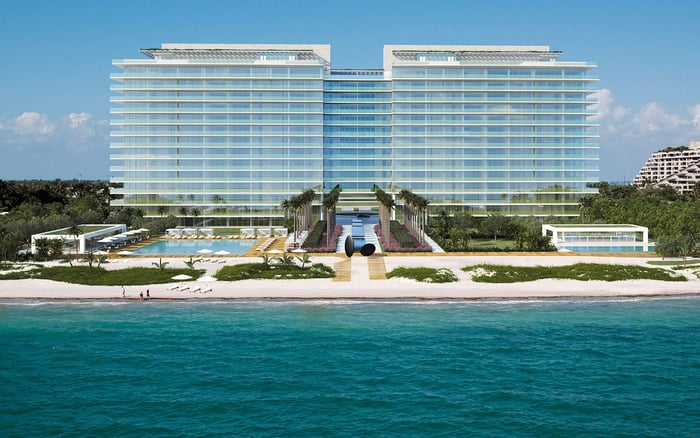
This is where luxury buyers should be especially careful. A dramatic residence in the wrong location can become underused. A more intuitively livable address may do more to support continuity. For some buyers, Oceana Key Biscayne represents the kind of Key Biscayne reference point that belongs in the conversation because it allows them to think about residential life in the market itself, not merely as an abstract tax idea.
San Francisco families often arrive with a highly developed sense of logistics. They understand that a home decision is also a calendar decision. The right residence should make it easier to manage school conversations, sports, wellness, extended family visits, work calls, travel, and downtime without turning every movement into a production.
Key Biscayne’s appeal is partly emotional. It suggests a smaller daily radius, a more private cadence, and a setting where children can experience home as a defined environment rather than an extension of a business district. That does not remove the need for careful diligence. Families should study school fit, commute tolerance, after-school routines, household staffing, airport patterns, and the difference between weekday and weekend behavior.
The most successful buyers tend to test the lifestyle before they commit to it. They ask whether the island rhythm feels restorative or limiting. They consider whether a frequently traveling spouse will feel connected enough to Miami’s professional and cultural centers. They evaluate whether teenagers, younger children, guests, and grandparents will each experience the location differently.
This is why a Key Biscayne decision is rarely made in isolation. Buyers also compare established residential neighborhoods across the bay. Park Grove Coconut Grove may enter the discussion for those who want a lush, residential Miami setting with a different relationship to the mainland, while still keeping the conversation focused on family routine rather than spectacle.
Privacy is often misunderstood as secrecy. For ultra-premium buyers, it is usually more practical than that. It means a household can move through the week without unnecessary exposure. It means guests can arrive without turning the residence into a public stage. It means children, staff, advisors, and extended family can operate within a setting that feels protected and legible.
Key Biscayne appeals to buyers who want a softer boundary between public and private life. The island condition helps shape expectations. The residential character encourages a different kind of behavior than a tower in the middle of a financial district or a nightlife corridor. That does not mean every address is equally private. Building design, approach, parking, elevator configuration, staff protocols, and neighboring uses all matter.
For some households, the comparison naturally extends to Fisher Island, where the privacy question becomes even more pronounced. A buyer considering Key Biscayne may also examine The Residences at Six Fisher Island or The Links Estates at Fisher Island to understand how far they want to go toward separation, exclusivity, and a more controlled residential environment.
The decision is not simply about what is most private. It is about what level of privacy the family will actually enjoy. Too much separation may feel constraining. Too little may defeat the purpose of the move. The right answer is personal and should be tested through actual time on the ground.
Key Biscayne occupies a particular position in the South Florida imagination. It is close enough to Miami to remain connected, yet distinct enough to feel like a deliberate choice. For a San Francisco buyer, that balance can be persuasive. The move is not necessarily about trading one urban identity for another. It may be about preserving access while lowering friction.
Other Miami addresses can offer different forms of prestige. Brickell may suit buyers who want a direct vertical relationship with finance, dining, and business infrastructure. Miami Beach may suit buyers who prefer a more iconic coastal profile. Coconut Grove may appeal to those who want greenery, family life, and a long-established residential mood. Fisher Island may be the answer for buyers who place extreme value on separation.
Key Biscayne sits among these choices as a refined middle language. It is not the most urban answer, and it is not the most secluded one. Its strength is that it can feel like home rather than a statement. For a buyer whose planning includes tax residency, the ability to build a believable, repeatable, satisfying daily life may be its greatest advantage.
Some households will still want to compare broader Miami waterfront options. The Residences at Mandarin Oriental, Miami may be part of that wider lens for buyers who want a different relationship to the city while continuing to prioritize discretion and service.
The best Key Biscayne evaluations begin with disciplined questions. Will the family actually spend enough time here to make the move meaningful? Which household members will use the home most often? Does the school strategy support the residency strategy, or does it create conflicting patterns? How will travel be documented and managed? Which advisors need to coordinate before a contract is signed?
Buyers should also define the emotional brief. The vocabulary may sound simple: Key Biscayne, Lifestyle, Waterfront, Oceanfront, Second-home, and Investment. In practice, each word carries a different consequence. A Lifestyle purchase prioritizes daily pleasure. An Investment lens emphasizes exit discipline and market fit. A Second-home may not support the same planning goals as a true primary residence. Waterfront and Oceanfront preferences can shape privacy, maintenance expectations, and how the family uses outdoor space.
The most elegant purchase is the one that aligns the visible home with the invisible plan. If the plan is residency, the home must be usable. If the plan is family continuity, the neighborhood must support routine. If the plan is privacy, the property must protect the household in ordinary moments, not only during a showing.
Is Key Biscayne a practical choice for San Francisco buyers considering residency planning? It can be, provided the decision is supported by consistent daily use and coordinated advice from qualified tax and legal professionals.
Does buying a home automatically establish tax residency? No. A purchase may be part of a broader plan, but residency depends on facts, conduct, documentation, and advisor guidance.
Why do families consider Key Biscayne instead of central Miami? Many families prefer a more residential rhythm while still remaining connected to Miami’s broader business and cultural life.
Is Key Biscayne only for full-time residents? Not necessarily. Some buyers evaluate it for seasonal use, but a residency-driven plan requires a more deliberate pattern of life.
How should buyers evaluate privacy in a condominium? They should study arrival sequence, elevator configuration, staffing, parking, guest access, and the general feel of the building.
Should schools be considered before choosing a property? Yes. School fit can influence commute patterns, family routines, and whether the home supports the intended lifestyle.
How does Fisher Island compare with Key Biscayne? Fisher Island may appeal to buyers seeking greater separation, while Key Biscayne can feel more integrated into a daily family routine.
Can a waterfront preference conflict with privacy goals? It can. Views and exposure should be evaluated together, since the most scenic setting is not always the most discreet.
What should buyers test before committing? They should test weekday routines, weekend traffic, school logistics, travel timing, household staffing, and comfort with the local pace.
What is the best way to shortlist comparable options for touring? Start with location fit, delivery status, and daily lifestyle priorities, then compare stacks and elevations to validate views and privacy.
For a tailored shortlist and next-step guidance, connect with MILLION.
If branded residences are on your mind — as a home or as an allocation — we would be glad to share what we are seeing, privately.
Begin a quiet conversation