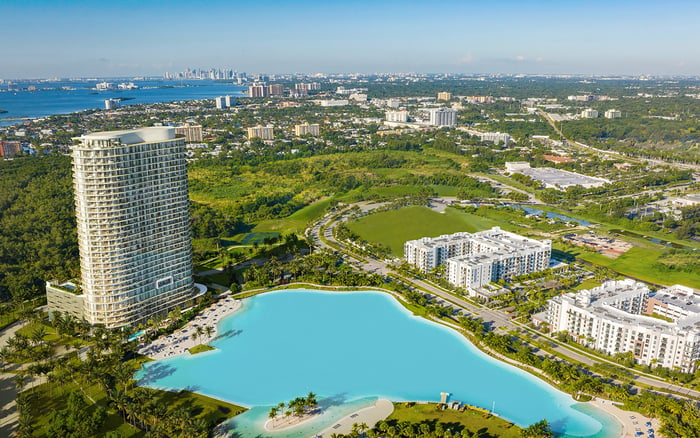
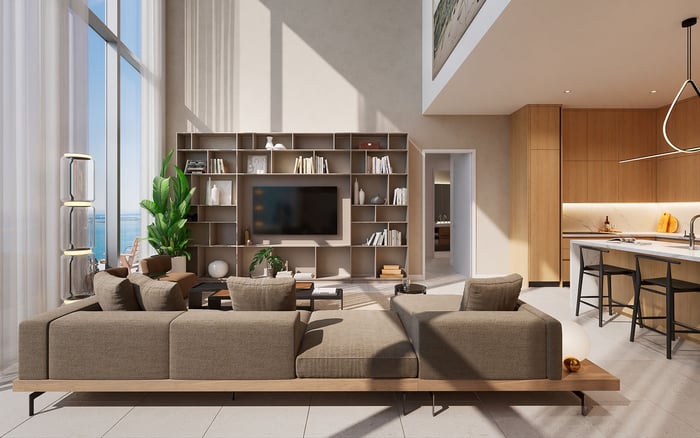
In a selective Aventura condo market, durable value begins with the exit. Buyers should weigh building-level resale depth, the marketability of a unit line, and the scarcity of its view before assigning a premium to replaceable finishes.
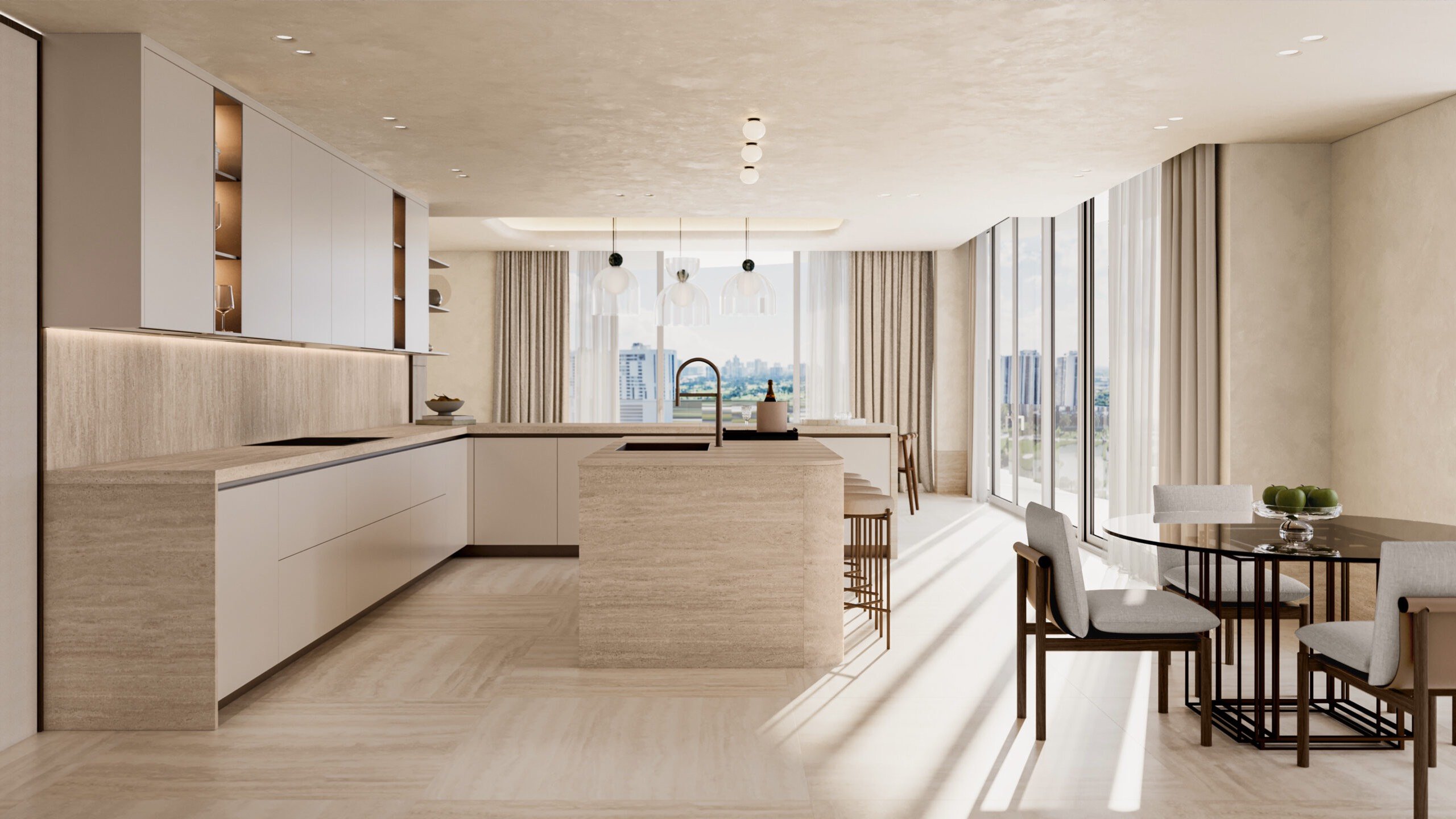
A polished interior can make a residence feel immediately compelling. It can also distract from the attributes that will determine how the property competes years later. In Aventura, where buyers can compare numerous towers, floor plans, conditions, and price tiers, the more consequential questions center on resale depth, line selection, and whether a view is genuinely scarce.
In Aventura, resale and investment decisions increasingly demand the same discipline. Pricing and trends matter, but waterfront positioning and true water-view scarcity can be harder to replace than a designer kitchen. Finishes remain relevant, particularly when they elevate a home from outdated to turnkey, but their value should be assessed within the property’s broader resale framework.
A recent snapshot of Aventura’s $1 million-plus condo segment counted approximately 169 active listings against 124 trailing-year sales, equivalent to roughly 16 months of supply. This is not a market in which every attractive residence enjoys equal liquidity.
Appropriately priced homes in strong buildings still sold for about 93 percent of list price after approximately 154 days. The distinction matters: elevated inventory does not eliminate transactions, but it concentrates them among properties buyers consider marketable. A broader city snapshot showed an average marketing period of 120 days, further reinforcing the need for conservative exit assumptions.
Average luxury-condo pricing also moved from approximately $700 per square foot in 2025 to about $650 in the first quarter of 2026. Over the same period, the average sale-to-list discount widened from roughly 14.8 percent to 20.6 percent. These are dated market snapshots, not universal building-level rules, but they illustrate why cosmetic appeal alone should not justify an acquisition price.
Resale depth encompasses more than transaction volume. It considers how many plausible buyers may want the property, how frequently comparable residences trade, and how much competing inventory exists within the building and immediate market.
A buyer considering Avenia Aventura should therefore assess the residence in two ways: as a lifestyle choice and as a future listing competing for attention. Relevant evidence includes months of supply, days on market, sale-to-list ratios, price reductions, and absorption among genuinely comparable homes.
Citywide averages can orient a buyer, but a tower with several similar listings may perform differently from one with limited direct competition. In a selective market, building-specific absorption can reveal more than a new appliance package or fashionable stone selection.
A line is the repeatable combination of layout, exposure, placement, and view within a tower. Its value depends partly on how naturally it serves the next buyer. Efficient one- and two-bedroom residences can offer greater liquidity, while larger corners and three-bedroom homes require a stronger building and view thesis to support long-term value.
This does not mean smaller is always safer. It means every layout needs an identifiable resale audience. Buyers should examine circulation, bedroom privacy, usable outdoor space, competing stacks, and the number of near-substitutes likely to appear simultaneously.
Nearby alternatives also shape that audience. One Park Tower by Turnberry North Miami can form part of a broader comparison set for buyers willing to look beyond Aventura. The question is not whether two projects are identical, but whether a future purchaser might regard them as substitutes.
“Water view” is not a sufficient investment thesis. Buyers should distinguish a broad, durable outlook from an angled or partially obstructed exposure available in many competing units. The relevant issue is scarcity: how many other residences provide a similar visual experience, and how confidently can that experience be expected to endure?
Comparison shopping may extend east to Turnberry Ocean Club Sunny Isles or Jade Signature Sunny Isles Beach. These alternatives matter because a premium Aventura residence does not compete solely within its own building. It may also compete with neighboring luxury markets for the same discretionary buyer.
Broad public summaries rarely establish exact premiums for individual lines, exposures, and protected views. Those premiums require building-level comparable sales and careful physical due diligence. A rare view may support differentiation, but only when the acquisition price remains aligned with the evidence.
Renovated residences have demonstrated stronger pricing, faster absorption, and smaller negotiation discounts than original-condition homes. In practice, the more relevant condition divide is often turnkey versus outdated, rather than new construction versus resale.
Still, renovation cannot correct a compromised line, abundant substitutes, or an unsupported asking price. Well-priced, renovated homes continued to trade efficiently, while outdated or overpriced properties lingered. As inventory increased, pricing alignment-not momentum alone-drove outcomes.
The disciplined buyer therefore separates renovation cost from scarcity value. Cabinetry, flooring, lighting, and fixtures can be changed. Orientation, stack, floor-plan geometry, and the underlying outlook generally cannot.
Begin with the likely exit pool. Identify the buyer profile, then examine recent comparable sales, active competition, withdrawn listings, marketing periods, and discounts. Compare the subject line with other lines in the building before measuring it against the wider market.
Next, assign premiums in the correct order. First, consider building strength and resale depth. Then evaluate line utility and view scarcity. Finally, price condition and finishes. This sequence prevents a visually compelling renovation from receiving credit for value that belongs to a superior exposure-or from concealing a structural weakness.
Aventura luxury condos span a wide range, from roughly $600,000 for some two-bedroom residences in established buildings to more than $5 million for premium homes in top-tier towers. Typical luxury pricing has also been placed at approximately $900,000 to $1.2 million, depending on the building, view, and amenities. That breadth makes precision more valuable than broad labels.
What does resale depth mean in an Aventura condo? It reflects the size of the plausible future buyer pool, comparable transaction activity, and the volume of competing inventory.
Why does months of supply matter? It indicates how long existing inventory could take to sell at the recent sales pace and helps frame negotiating leverage.
Are renovated units more liquid than outdated units? Renovated homes have shown stronger pricing, faster absorption, and smaller discounts, provided their asking prices remain aligned with the market.
Can premium finishes justify paying above comparable sales? Only cautiously. Finishes are replaceable and should not outweigh evidence from the building, line, view, and recent transactions.
What makes one condo line better than another? A stronger line typically combines functional planning, desirable exposure, privacy, and fewer direct substitutes for future buyers.
Is every water view scarce? No. Scarcity depends on the quality, breadth, durability, and availability of comparable views in competing residences.
Should buyers rely on citywide price-per-square-foot averages? Use them for orientation, then prioritize building-level and line-specific comparable sales when making an acquisition decision.
Do larger residences carry more resale risk? They can attract a narrower buyer pool, so larger corners and three-bedroom homes benefit from a compelling building and view profile.
Which metrics should buyers review before making an offer? Review months of supply, days on market, sale-to-list ratios, price reductions, comparable sales, and building-specific absorption.
What should be valued first: the view or the renovation? Evaluate durable view scarcity and line quality first, then price the renovation according to condition and comparable evidence.
When you're ready to tour or underwrite the options, connect with MILLION.
If branded residences are on your mind — as a home or as an allocation — we would be glad to share what we are seeing, privately.
Begin a quiet conversation