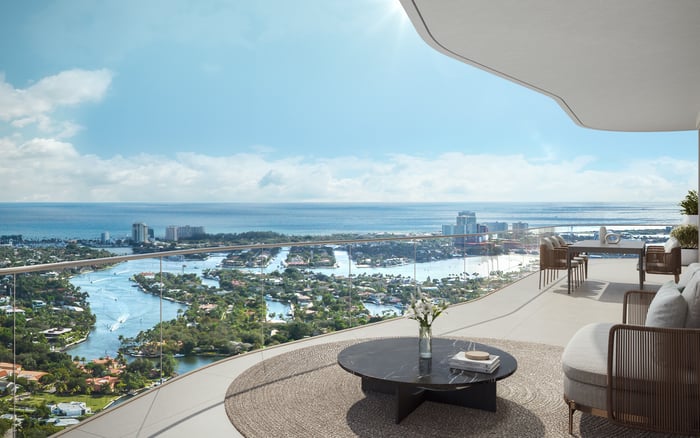
In Las Olas, resale liquidity depends on how many buyers will accept a residence’s complete proposition. Unit size, layout, view, floor, carrying costs, assessments, and building rules can matter more than a headline discount.

A reduced asking price can attract attention, but it does not automatically create resale liquidity. In Las Olas, the more consequential question is often how many credible purchasers want the precise combination of interior area, bedroom count, layout, view orientation, elevation, building profile, and monthly expense.
That distinction becomes especially important when buyers can compare several alternatives. A residence may look inexpensive beside its original asking price yet remain difficult to resell if its defining characteristics appeal to only a narrow audience.
A price reduction changes the entry point, but it does not necessarily deepen the buyer pool.
The apparent bargain should therefore be tested against the unit’s eventual exit profile. A prospective purchaser should consider who is likely to buy the residence later, which competing homes that buyer may review, and whether the unit’s advantages are durable enough to remain persuasive.
Broad neighborhood figures can provide context, but they cannot substitute for unit-level analysis. Las Olas residences differ by age, layout, condition, fee structure, rental restrictions, exposure, and proximity to the corridor’s waterfront and commercial destinations.
Efficient residences may appeal to downsizers, second-home purchasers, investors, or buyers seeking a smaller South Florida base. Larger homes may suit purchasers who need more bedrooms, storage, entertaining space, or separation between living areas. Neither category is inherently more liquid.
The key is whether the floor plan makes effective use of its interior area. Awkward circulation, limited storage, undersized secondary rooms, or space that is difficult to furnish can shrink the audience even when the residence appears competitive on a price-per-square-foot basis. A well-planned home may support broader demand because more purchasers can imagine living in it without major compromises.
Size should consequently be evaluated as a demand category rather than only as a mathematical input. Buyers should identify the likely audience for the unit and determine whether the plan serves that audience better than nearby alternatives.
A direct river, ocean, or wide-water outlook can strengthen buyer interest. A partial or obstructed exposure may need to compete with more compelling orientations in the same tower, particularly when the interiors and floor plans are otherwise similar.
Floor level matters for related reasons. Higher elevations may appeal to purchasers who prioritize light, outlook, privacy, or prestige. Lower floors may suit those who value easier access, a closer connection to the streetscape, or a lower acquisition cost. The relevant issue is not whether one elevation is universally superior, but whether its specific benefits justify its price and ongoing expense.
Height and view should also be analyzed separately. A higher floor does not guarantee a more desirable outlook, and a lower residence may still benefit from an open or distinctive exposure. Buyers should examine what the windows and terraces actually frame, whether that outlook feels protected, and how competing units present the same orientation.
Competitive context extends beyond the immediate stack. A Las Olas purchaser may also evaluate nearby Fort Lauderdale options such as Sixth & Rio Fort Lauderdale. The comparison may not be like for like, but it shows why location, design, elevation, and building identity all become part of the resale calculation.
The recurring ownership obligation can determine whether a prospective buyer remains in the pool. A residence with a compelling negotiated price may still feel expensive when association charges, property taxes, insurance, assessments, and other ownership expenses are considered together.
Buyers should examine current charges and available association materials rather than relying on the listing’s headline figures alone. The purpose is not merely to calculate one monthly total. It is to understand whether the building’s financial profile is likely to remain acceptable to the type of buyer who may eventually purchase the unit.
The more useful comparison is therefore total ownership cost, not asking price alone. A lower-priced residence may face a narrower resale audience when its carrying burden is difficult to justify beside competing homes. Conversely, a higher-priced unit with an efficient plan, compelling outlook, and understandable cost profile may remain relevant to more purchasers.
Newer or branded alternatives can also shape expectations. Buyers may compare the complete ownership proposition with Four Seasons Hotel & Private Residences Fort Lauderdale and St. Regis® Residences Bahia Mar Fort Lauderdale. A Las Olas resale does not need to replicate those properties, but its location, design, services, outlook, and costs should form a coherent proposition.
Building policies can materially influence resale demand. Rental restrictions, pet provisions, renovation procedures, parking arrangements, and approval requirements may affect whether a particular purchaser can use the residence as intended.
Rental flexibility can be relevant to investors and second-home owners who want optionality, while more restrictive policies may appeal to buyers who prefer a predominantly owner-occupied environment. The resale question is not which policy is best in the abstract. It is how each rule changes the number and type of buyers for whom the unit works.
Location within Las Olas also matters. Access to waterfront recreation, dining, shopping, and everyday services can distinguish otherwise similar residences. Buyers should evaluate how conveniently the building supports their intended lifestyle rather than treating neighborhood identity as a substitute for property-specific diligence.
Building-level performance deserves more weight than a broad corridor average. Even within one tower, different stacks, views, floor bands, and renovation conditions can behave as separate resale categories. The closer the comparable residence is to the subject unit, the more useful its trade may be.
Begin with closed sales in the same building. Then narrow the comparison to the same vertical stack, a similar floor band, matching view orientation, comparable interior condition, and a similar assessment profile. Active listings reveal current competition, while closed trades show which propositions buyers have accepted.
Next, model both the acquisition price and the recurring ownership cost. Consider whether the likely future purchaser is an owner-occupant, downsizer, second-home buyer, or investor, then identify which features invite or exclude each group.
It is also useful to distinguish curable objections from permanent ones. Interiors can often be renovated, and finishes can be replaced. Square footage, view line, floor level, core building rules, and the basic structure of recurring costs are harder to change. Those durable characteristics deserve greater weight when assessing the exit.
Finally, test the residence against realistic alternatives rather than only against its previous asking price. A discount may be meaningful, but it should not distract from a compromised plan, an uncompetitive outlook, or a carrying-cost profile that future purchasers may resist.
In Las Olas and the wider Fort Lauderdale market, disciplined buyers underwrite resale depth before celebrating a discount. The strongest acquisition is often the residence whose size, view, floor, building rules, and ownership costs remain persuasive to the broadest credible audience.
For discreet guidance on evaluating South Florida luxury residences, connect with MILLION.
If branded residences are on your mind — as a home or as an allocation — we would be glad to share what we are seeing, privately.
Begin a quiet conversationA lower asking price may attract attention, but resale liquidity depends on how many credible buyers accept the residence’s complete physical and financial proposition.
Neighborhood figures combine buildings and residences with different layouts, views, conditions, rules, and costs. They provide context rather than a direct valuation for one unit.
No size is universally most liquid. Demand depends on whether the layout and ownership costs suit the likely audience for that residence.
An efficient plan may appeal to more buyers because rooms are easier to use and furnish. Awkward circulation or limited storage can narrow demand.
Open river, ocean, or wide-water outlooks may strengthen interest, while partial or obstructed views must compete with stronger orientations in the same building.
No. Higher floors may offer light, privacy, or broader views, but buyers should evaluate the actual outlook and the premium attached to the elevation.
Buyers should consider association charges, property taxes, insurance, assessments, and other recurring ownership expenses together.
Rental, pet, renovation, parking, and approval policies can determine whether a residence works for a prospective buyer’s intended use.
Start with recent closed sales in the same building, then prioritize the same stack, similar floor band, matching view, comparable condition, and similar assessment profile.
Square footage, view line, floor level, core building rules, and the basic structure of recurring costs are generally less flexible than interior finishes.