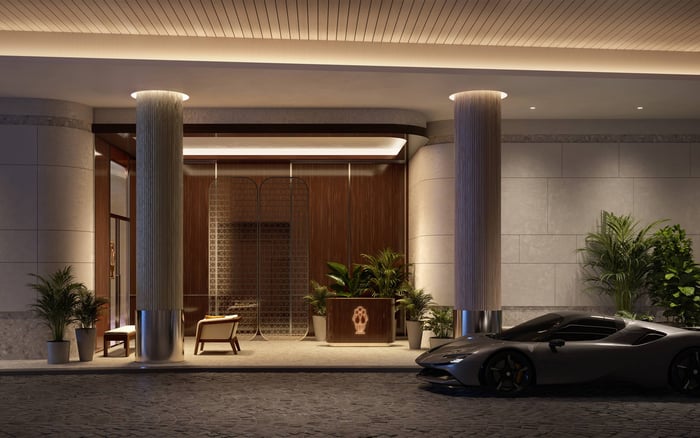
In Palm Beach luxury residences, operational details can be as consequential as design. Elevator configuration, valet handoffs, access control, guest routing, and service circulation shape privacy and convenience long after a buyer has assessed the finishes.
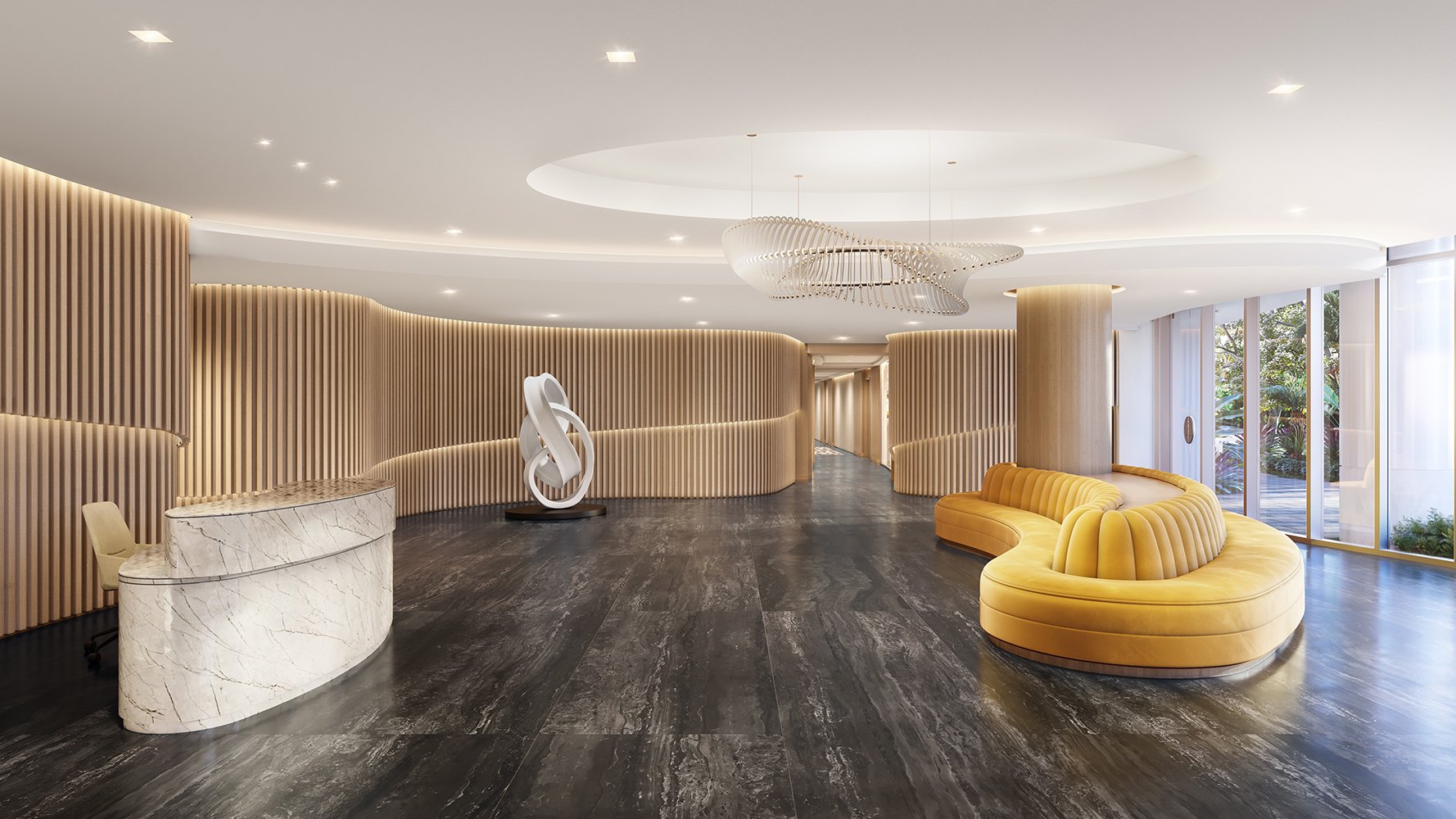
Finishes often dominate an initial property presentation because they are immediate and visually compelling. Yet the route from the curb to the residence can have a more persistent effect on daily life. Elevator configuration, vehicle handoff, access control, waiting areas, and shared thresholds determine how exposed or effortless each arrival feels.
For serious Palm Beach buyers, the central issue is not whether one feature sounds luxurious in isolation. It is whether architecture, staffing, and operating procedures work together. A direct elevator journey offers limited value if the preceding vehicle handoff is congested, guest authorization is unclear, or deliveries regularly cross the resident path.
This distinction deserves particular attention when evaluating a residence before the building is operating. A buyer can inspect material samples and floor plans, but the practical arrival sequence requires a different form of review.
The phrase “private elevator access” does not by itself explain the complete journey. A buyer should determine where the elevator opens, whether a foyer or vestibule is involved, which areas may be shared, and how access is authorized. It is equally important to understand whether residents, guests, household employees, deliveries, and building personnel follow the same route.
The inquiry should remain residence-specific. A feature presented for a building may not necessarily apply in the same way to every floor plan or home. Buyers should compare marketing language with the applicable plans, disclosures, and purchase materials before treating an access arrangement as confirmed.
Project pages such as The Berkeley Palm Beach and Mandarin Oriental Residences, West Palm Beach can serve as starting points for comparing how Palm Beach County residences present arrival, privacy, and vertical circulation. Those pages should support, rather than replace, a review of the documents governing a particular purchase.
The elevator is only one stage of arrival. Valet flow determines where a vehicle pauses, how passengers transition into the building, where keys are transferred, and whether owners encounter queues involving guests, deliveries, or service providers. Small moments become significant when repeated every day.
Buyers should ask how the arrival area functions when several vehicles appear at once. The useful questions are practical: Where do passengers wait? Is there a clear resident handoff? How are drivers and unannounced visitors handled? What process applies outside normal hours? The objective is to understand the complete sequence rather than judge the porte cochere solely by its appearance.
Staffing and physical design should also be considered together. A well-planned drive court cannot compensate for an unclear handoff process, while attentive service cannot fully overcome circulation that forces unrelated users into the same constrained space.
The page for The Ritz-Carlton Residences® West Palm Beach offers another relevant project reference for buyers comparing the relationship between residential arrival and service. Any conclusions about a specific home should still be verified through the materials applicable to that residence.
Privacy does not require excluding visitors or household support. It requires predictable movement through the property. Buyers should trace how family, friends, employees, deliveries, and building personnel are admitted and directed, noting each point where their routes overlap with the resident journey.
Guest authorization deserves particular scrutiny. A smooth system should make it clear who approves access, where a visitor waits, and how the elevator is released. Delivery procedures matter for the same reason. Buyers should determine whether packages and larger items follow different paths and whether those paths affect the primary entrance or elevator.
South Flagler House West Palm Beach is an additional project page buyers may consult while comparing privacy and circulation concepts. As with every project, residence-level details require confirmation in the relevant plans and contractual materials.
A useful pre-contract exercise is to map several journeys. First, follow the expected route as an owner returning by car. Then repeat the exercise conceptually as a guest, household employee, delivery person, and service provider. Record each handoff, credential check, waiting point, shared area, and door or elevator transition.
Next, test the sequence against less composed conditions. Ask what happens during simultaneous arrivals, a large delivery, a late return, or an unannounced guest visit. These scenarios can reveal dependencies that remain invisible during a quiet sales presentation.
Buyers should request clear answers about elevator access, valet procedures, loading and delivery routes, guest authorization, emergency access, and coverage outside standard hours. If a feature is described as available only in certain residences, the buyer should verify that it appears in the materials for the home under consideration.
A residence can often be refreshed through changes to surfaces, fixtures, lighting, or cabinetry. Core circulation is different. Elevator placement, loading access, vehicle geometry, and shared thresholds are integral to the property and generally cannot be assessed as decorative selections.
This does not make finishes unimportant. It places them in the proper hierarchy. Buyers can evaluate aesthetic preferences while giving equal or greater weight to the systems that govern privacy, time, and repeated movement through the building.
The strongest arrival experience may feel uneventful: the vehicle handoff is clear, access is controlled without unnecessary friction, and the path home avoids needless exposure. That quiet consistency is a meaningful measure of residential service.
What can private elevator access mean in a luxury residence? It can refer to different elevator, foyer, or vestibule arrangements. Buyers should confirm the precise configuration and access controls for the specific residence.
Why should arrival flow be reviewed separately from finishes? Arrival flow depends on embedded circulation and operating procedures, while many interior selections can be changed after purchase.
Does a building-level description apply to every residence? Not necessarily. Features may differ by floor plan or residence, so the applicable purchase materials should be reviewed.
What should buyers ask about valet operations? They should ask about handoff points, waiting areas, simultaneous arrivals, guest vehicles, driver procedures, and coverage outside normal hours.
Does elevator privacy depend only on architecture? No. Credential controls, guest authorization, staffing, and procedures also shape how private the journey feels.
Why should delivery routes be examined? Delivery paths can overlap with resident areas and affect congestion, exposure, and convenience.
How can buyers evaluate guest handling? They can identify where guests are greeted, who authorizes entry, where visitors wait, and how elevator access is provided.
Can a sales presentation demonstrate daily operations? It can illustrate design intent, but it may not show how the property functions during busy periods or outside standard hours.
Which materials may help confirm access features? Relevant floor plans, disclosures, purchase materials, and operating documents may clarify what applies to a particular residence.
What is the goal of a route-based review? It helps a buyer understand every transition from arrival to the front door and identify where privacy or convenience may depend on unverified assumptions.
When you're ready to tour or underwrite the options, connect with MILLION.
If branded residences are on your mind — as a home or as an allocation — we would be glad to share what we are seeing, privately.
Begin a quiet conversation