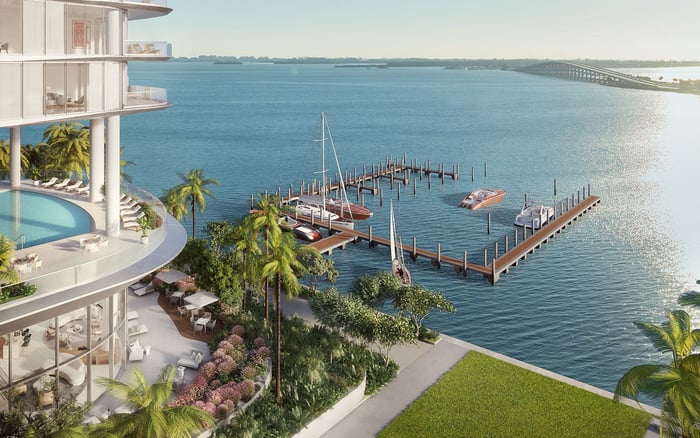
A discreet due-diligence guide for private-club buyers in South Florida, explaining why prior leaks, flooding, drainage issues, reserve records, and insurance history matter before committing to a club-linked residence.

In South Florida, even the most polished private-club experience can turn on a practical question: where has water been before, and how was it addressed? For buyers considering a club-linked home, condominium, villa, or estate, water intrusion history is not a peripheral maintenance note. It is a measure of future comfort, assessments, insurance, amenity reliability, and resale confidence.
The issue extends beyond beachfront exposure. Drainage systems, canals, tides, groundwater, and rainfall can interact in ways that are not always apparent during a showing. A sunny walk-through may reveal finishes and views, but it rarely reveals how a garage performs during elevated tides or how a clubhouse roof responds to wind-driven rain.
That is why buyers comparing oceanfront towers, golf communities, waterfront villas, or urban residences in Brickell should treat a “no known water intrusion” statement as a starting point, not a conclusion. The right posture is not alarm. It is disciplined verification.
Water intrusion is not a single condition. It can mean roof leaks, window and door failures, balcony drainage problems, wall penetration, garage flooding, stormwater backflow, ground-level seepage, or moisture entering below-grade and mechanical spaces. At the site level, it can affect roadways, cart paths, pool decks, seawalls, marina areas, landscaping, storage rooms, and club operations.
That distinction matters because the private-club buyer is often purchasing two experiences at once: the private residence and the shared lifestyle infrastructure. A pristine living room is only part of the analysis if locker rooms have recurring moisture, elevators serve flood-prone garages, or critical equipment sits in vulnerable spaces.
Coastal and low-lying settings deserve particular attention, but inland club communities also merit careful review. Hurricane conditions, heavy rain, wind-driven moisture, and drainage limitations can affect buildings, mechanical systems, marinas, landscaping, and amenities even when the primary residence appears well maintained.
A single leak after an extreme storm does not carry the same meaning as recurring water entry after ordinary afternoon rain. Sophisticated buyers should ask where water entered, how often, under what conditions, who repaired it, whether the repair was professionally evaluated, and whether the same location has been monitored since.
Patterns matter because repeated moisture can create compounding consequences. Buyers should ask inspectors and engineers whether prior water entry may have affected structural elements, interior finishes, air quality, mechanical rooms, storage spaces, or club operations. The goal is to separate a resolved maintenance event from an unresolved ownership risk.
For a buyer considering The Residences at 1428 Brickell or another high-design urban address, the inquiry is not simply whether the residence feels elevated and new. It is whether the building envelope, association records, flood positioning, and long-term maintenance culture support the confidence expected at the top of the market.
A strong diligence package should include seller disclosures, association records, budgets, reserve materials, special-assessment history, insurance claims, engineering reports, maintenance logs, and documentation of prior water damage and repairs. The goal is to determine whether past water issues were isolated, properly remediated, and funded, or whether they indicate recurring exposure.
For condominiums and club-linked residences, inspection and reserve materials can be especially important. Buyers should review available building-condition records, board minutes, maintenance decisions, repair proposals, reserve planning, and any discussion of waterproofing, drainage, roofing, balconies, garages, seawalls, or mechanical spaces.
Water intrusion history should be read alongside inspection records, reserve studies, insurance information, and board-level maintenance decisions. A beautiful lobby is not a substitute for evidence of attentive stewardship.
At coastal addresses such as The Perigon Miami Beach or St. Regis® Residences Sunny Isles, a buyer should not assume that newness, brand stature, or architectural ambition eliminates the need for documentation. The sharper question is how the property has been designed, managed, insured, and funded around the realities of its setting.
Private-club due diligence should extend beyond the home inspection. Ask about the clubhouse, spa, restaurants, kitchens, cart storage, tennis or pickleball areas, fitness spaces, parking, service corridors, seawalls, docks, drainage infrastructure, and any low-lying amenity zones. If the club has had operational shutdowns after storms or repeated maintenance closures tied to moisture, those facts may affect enjoyment as much as ownership cost.
For communities with a golf identity, water management can be both functional and aesthetic. Drainage, lakes, turf conditions, cart paths, and clubhouse access all influence daily use. In waterfront settings, marina resilience, electrical systems, seawalls, and dock areas deserve equal attention. Buyers evaluating Shell Bay by Auberge Hallandale or island-oriented options such as The Residences at Six Fisher Island should think in terms of the whole operating environment, not just the residence.
Insurance is part of that environment. Flood insurance pricing and availability can affect ownership cost in areas with flood exposure, especially where ground-level residences, garages, storage, or amenities are involved. Public flood maps are a baseline tool, but they are not a substitute for site-specific evaluation, association records, and professional inspection.
Before signing, the most effective buyers ask precise questions. Has there been water entry through the roof, windows, doors, walls, slab, garage, or mechanical areas? Were claims filed? Were repairs temporary or permanent? Were engineers involved? Were permits required? Did the association levy or discuss special assessments? Were reserves increased after the event? Has the same problem reappeared?
The answers should be written, not merely conversational. Buyers should ask their counsel, inspectors, engineers, and insurance advisors how known water conditions should be evaluated before the membership and purchase decisions harden.
The quiet luxury of South Florida club life is built on continuity: the restaurant open after a storm, the elevator reliable after high water, the residence dry after heavy rain, the board funded for what comes next. Water history is ultimately a question about continuity.
Is water intrusion only a beachfront issue? No. It can also be relevant in inland club communities, urban towers, marina settings, and properties with drainage or below-grade spaces.
What is the first record a buyer should request? Start with seller disclosures and association records, then add inspection, reserve, insurance, and maintenance documentation.
Are public flood maps enough for due diligence? They are a useful baseline, but buyers should pair them with site-specific inspections and building records.
How should buyers view a one-time storm leak? A single extreme-weather event is different from repeated water entry after ordinary rain, tides, or seasonal storms.
Why do reserve studies matter? They can help buyers understand whether an association is planning and funding building and amenity obligations.
Can water intrusion affect concrete buildings? It can be a concern, and buyers should ask qualified inspectors or engineers to evaluate any prior moisture condition.
Should club amenities be inspected too? Yes. Clubhouses, garages, marinas, pools, cart paths, locker rooms, and mechanical spaces can all affect ownership enjoyment.
Can mold become part of the concern? Yes. If moisture is not corrected, buyers should ask inspectors whether additional air-quality or remediation review is warranted.
Does new construction eliminate the need for review? No. New-construction buyers should still review design exposure, warranties, drainage, insurance, and association funding.
What is the best overall approach before signing? Treat water history as a core diligence item, combining written records, professional inspections, flood context, and legal review.
If you'd like a private walkthrough and a curated shortlist, connect with MILLION.
If branded residences are on your mind — as a home or as an allocation — we would be glad to share what we are seeing, privately.
Begin a quiet conversation