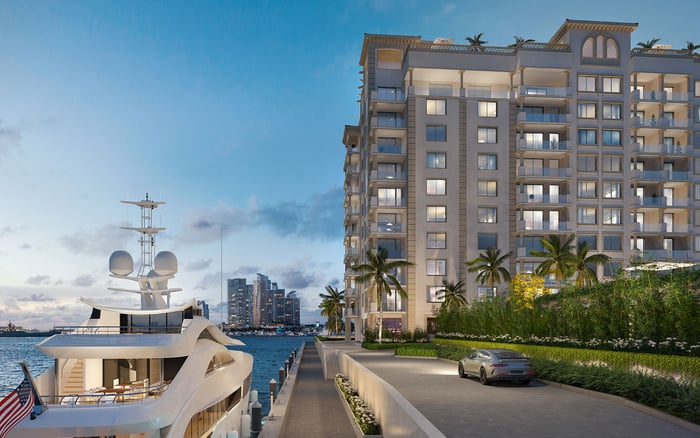
On Fisher Island, service depth is not simply an amenity story. Palazzo della Luna and The Links Estates present distinct residential formats supported by a wider island ecosystem, giving buyers a useful framework for assessing operational ease, privacy, and continuity.
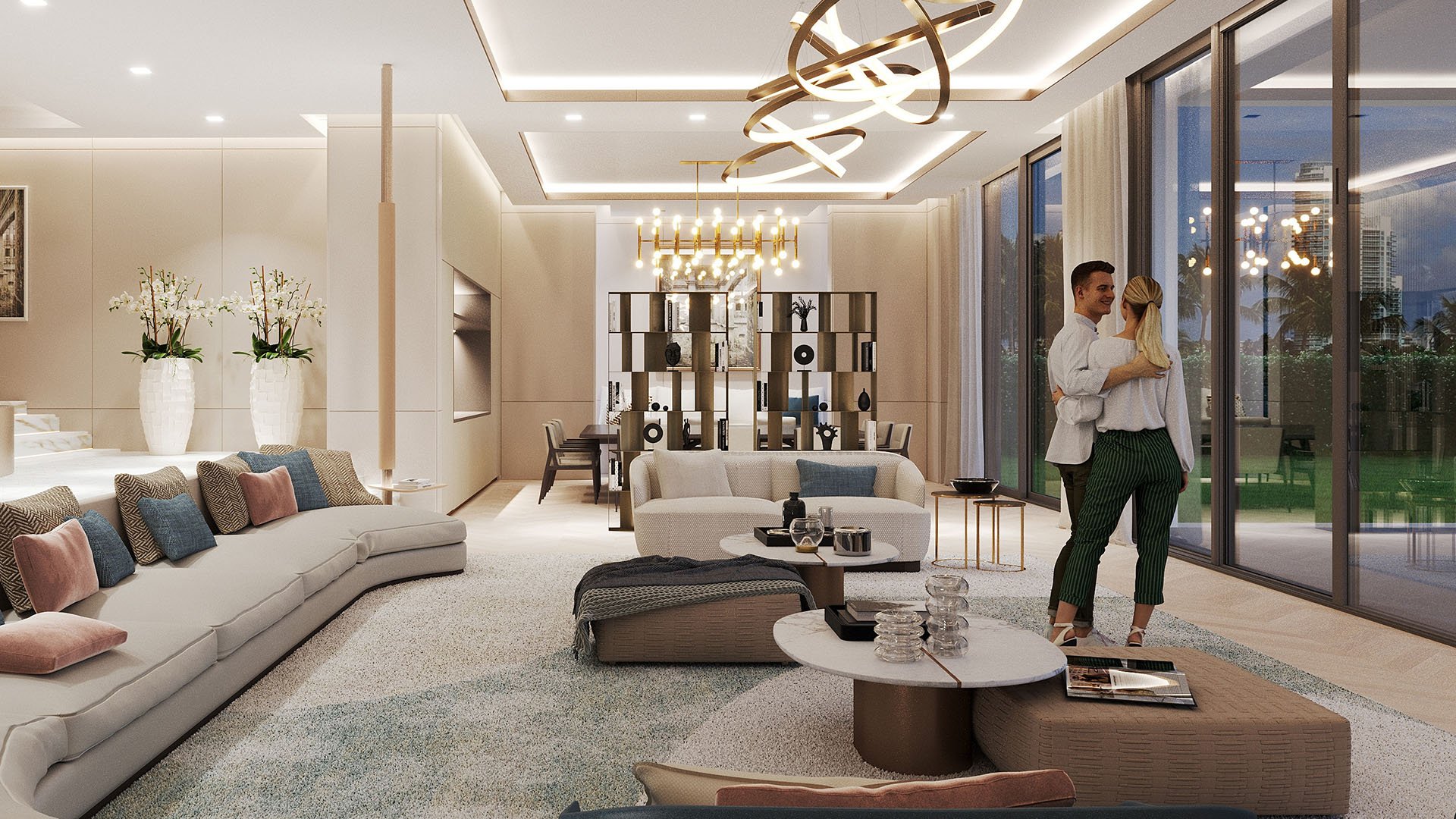
For a buyer evaluating Fisher Island, just off Miami Beach, the most consequential questions may arise after the residence itself has been admired. Who coordinates the property when the owner is away? How reliably do transportation, security, maintenance, and hospitality work together? Which services belong to the residence, and which depend on the wider island platform?
That distinction separates a compelling amenity program from genuine service depth. Amenities describe what is available. Service depth encompasses the people, systems, access, coordination, and operational reliability that make those amenities-and the residence itself-easier to use. On a private island with controlled access, that infrastructure is not peripheral. It shapes daily ownership.
This is why Palazzo della Luna and The Links Estates at Fisher Island deserve to be considered together. They offer distinct residential experiences, yet both derive value from Fisher Island’s broader hospitality and lifestyle ecosystem.
Palazzo della Luna is an ultra-luxury residential development on private Fisher Island. For service-focused buyers, its relevance lies in a layered proposition: building-level hospitality and operational support paired with access to the island’s wider resources.
That structure can reduce the practical burden of maintaining either a primary home or an intermittently occupied residence. Rather than judging the property by its physical amenities alone, a buyer can assess how building operations interact with island transportation, security, recreation, hospitality, and other daily needs.
The point is not that every conceivable request is automatically covered. It is that the residence sits within two potential circles of support. Careful buyers will want to understand where building responsibility ends, where club or community access begins, and how requests move between those layers.
The Links Estates approaches ownership from an estate perspective. It offers private-home autonomy within Fisher Island’s controlled-access setting, supported by an established ecosystem that includes club, marina, security, transportation, and recreational infrastructure.
For an owner seeking the privacy and character of an estate, the alternative can be assembling an independent network for household operations, access, maintenance, and oversight. The Links Estates belongs in the service-depth conversation because its wider community platform may reduce the need to rely solely on separately constructed household infrastructure.
This does not make an estate operationally identical to a serviced condominium. Instead, it gives buyers a more nuanced proposition to examine: how much independence they want within the home and how much coordinated support they expect beyond it. Golf and other recreational elements matter, but their practical value ultimately depends on access terms and reliable operation.
Physical separation gives Fisher Island its singular privacy, but it also heightens the importance of logistics. Transportation and controlled access affect residents, guests, household teams, vendors, deliveries, and property care. Security, hospitality, and daily coordination therefore become part of the ownership architecture, rather than an optional finishing touch.
A mainland residence can sometimes compensate for a service gap through numerous outside providers. An island residence places greater emphasis on how access and community systems function as a whole. The strongest due diligence therefore follows the complete journey: arrival, entry, residence readiness, recreation, guest handling, maintenance, and departure.
This broader lens also helps buyers distinguish privacy from isolation. Privacy is enhanced when systems work quietly and predictably. Isolation becomes a concern when ownership depends on unclear procedures or fragmented responsibilities.
Service depth becomes especially visible when a home is not continuously occupied. A second-home buyer should ask what happens before arrival, during a stay, and after departure. The objective is not to assume that a particular service is included, but to identify who can coordinate residence readiness, maintenance needs, access, and follow-through.
At Palazzo della Luna, the relevant inquiry covers both building-specific support and Fisher Island’s larger platform. At The Links Estates, it covers the relationship between estate autonomy and community-level resources. In both cases, buyers should determine whether support is included, club-dependent, separately billed, available at all hours, or governed by association rules.
Clear answers matter more than an impressive menu. The true measure is whether responsibility is defined and continuity can be maintained while an owner is elsewhere.
A thoughtful comparison should begin with residential format, then move to service architecture. Buyers drawn to condominium living may consider Palazzo della Luna alongside Palazzo del Sol and The Residences at Six Fisher Island, while still examining each property on its own current terms.
The Links Estates calls for a different set of questions because private estates and condominium residences distribute responsibility differently. The useful comparison is not which format has the longest amenity list, but which best aligns with the owner’s desired balance of privacy, direct control, staffing, oversight, and shared infrastructure.
For either choice, request a precise map of responsibilities. Confirm service hours, escalation procedures, access rules, billing, club dependencies, maintenance boundaries, and provisions for guests or outside personnel. Also clarify which arrangements attach to the residence and which require separate relationships.
Palazzo della Luna and The Links Estates belong in the same conversation because each addresses a central challenge of luxury ownership: preserving privacy while reducing operational friction. One layers residential building support onto island-wide resources. The other combines estate-style autonomy with the infrastructure of an established private community.
The better choice depends on how the buyer wants the home to function, not merely how it looks. On Fisher Island, the deepest luxury may be a residence whose systems remain discreet, coordinated, and dependable, whether the owner is present or away.
What does service depth mean in luxury real estate? It encompasses the staffing, maintenance, security, transportation, coordination, and reliability that support ownership, rather than amenities alone.
Why is service depth especially important on Fisher Island? Physical separation and controlled access make transportation, security, hospitality, and daily operations central to the residential experience.
How does Palazzo della Luna approach service? It layers building-level hospitality and operational support onto Fisher Island’s broader resources.
How does The Links Estates approach service? It pairs estate-style autonomy with access to community-level infrastructure and support.
Are the two properties directly comparable? They offer different residential formats, but both can be assessed through privacy, operational responsibility, access, and continuity.
Does access to island infrastructure mean every service is included? Not necessarily. Buyers should verify inclusion, club requirements, separate charges, operating hours, and applicable rules.
What should a primary-residence buyer prioritize? Focus on daily transportation, access, security, maintenance coordination, guest procedures, and escalation paths.
What should a second-home buyer prioritize? Examine residence readiness, remote oversight, maintenance follow-through, access for approved personnel, and departure procedures.
Do amenities prove that a property has deep service? No. Service depth depends on how people and systems operate, coordinate, and respond over time.
What documents and details should buyers review? Review association rules, club dependencies, service scopes, billing terms, access procedures, hours, and responsibility boundaries.
When you're ready to tour or underwrite the options, connect with MILLION.
If branded residences are on your mind — as a home or as an allocation — we would be glad to share what we are seeing, privately.
Begin a quiet conversation