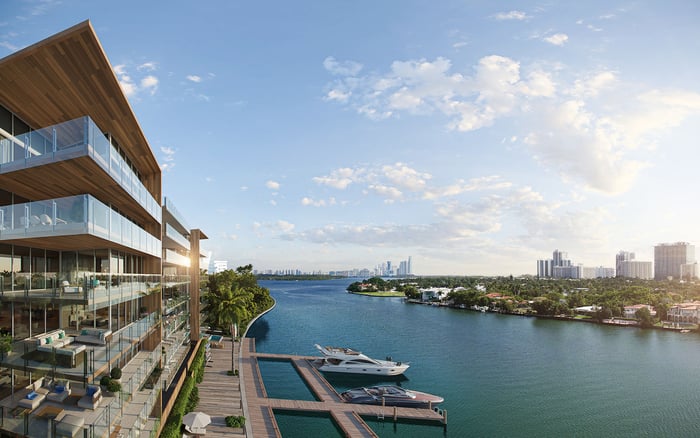
A buyer-focused look at Onda and Mila through the lens of dockage proximity, practical access, residence selection, and disciplined waterfront due diligence.
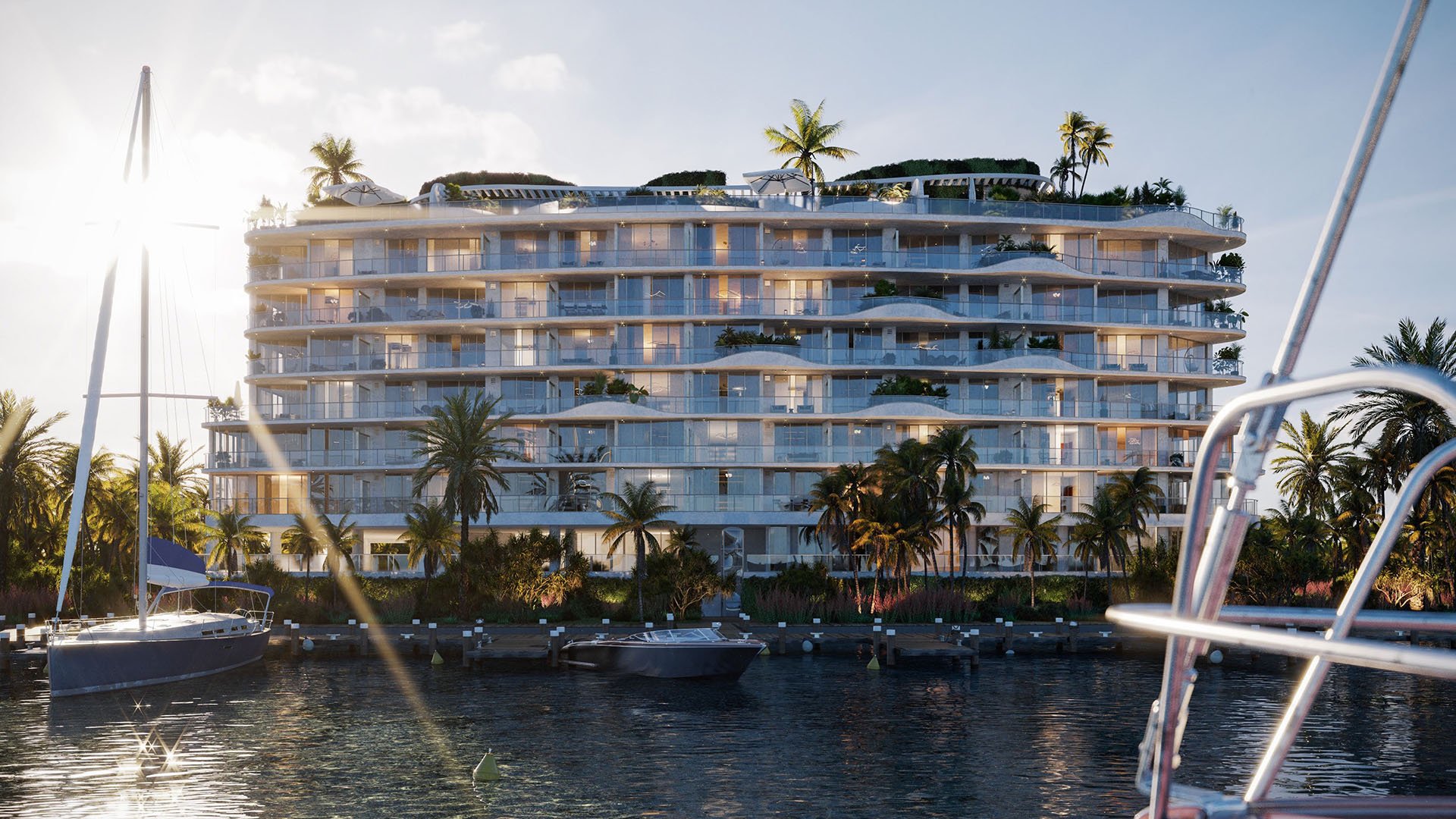
For a certain South Florida buyer, the defining luxury is not simply a water view. It is the ability to move gracefully between home and boat, with as little friction as possible. That distinction places Onda Bay Harbor and Mila Bay Harbor Islands in an important conversation-not as interchangeable propositions, but as two names worth examining when dockage proximity shapes the residential brief.
The operative word is proximity. It should never be treated as shorthand for an included slip, an assignable right, or accommodation for any particular vessel. Instead, it describes a lifestyle objective that must be translated into legal rights, physical distances, operating procedures, and everyday convenience. A discerning buyer begins with the romance of the water, then verifies the mechanics.
Bay Harbor Islands offers a focused setting for buyers who want their residential search to remain connected to the boating conversation. Yet the neighborhood alone is not enough. The relevant question is how a specific residence relates to the buyer's preferred dockage arrangement, whether on-site, nearby, privately contracted, or otherwise secured.
A Bay Harbor search should therefore be conducted at two scales. First comes the residence: layout, privacy, outlook, service, and long-term suitability. Second comes the marine routine: the path from the front door to the vessel, the reliability of access, and the practical requirements attached to ownership or use. A waterfront label may begin the discussion, but it cannot complete it.
The local comparison set can further sharpen priorities. Reviewing La Maré Bay Harbor Islands alongside Onda and Mila can clarify whether a buyer is primarily drawn to a particular residence, a water-oriented setting, or the shortest possible transition to boating. The purpose is not to assume equivalence, but to make the brief more exact.
Onda Bay Harbor belongs in the conversation because it gives buyers a clear, project-specific starting point for examining the relationship between residence and water access. Mila Bay Harbor Islands warrants the same disciplined review. Neither should be reduced to a single boating attribute, particularly when project-level dockage specifications are not established here. Their relevance lies in how naturally they fit a Bay Harbor Islands search centered on proximity, discretion, and day-to-day ease.
A buyer should ask each sales team the same questions in the same order. Is any boat-slip interest conveyed with the residence? If so, is it deeded, assigned, licensed, leased, or subject to separate documentation? What vessel dimensions and operating restrictions apply? Are there recurring charges, transfer conditions, insurance requirements, waitlists, or approval procedures? If dockage is off-site, what is the actual door-to-dock journey under normal conditions?
Consistency matters. Identical questions make differences visible and prevent an attractive presentation from obscuring practical limitations. The objective is not merely to be near a marina. It is to secure an arrangement that works for the owner's vessel, schedule, guests, crew expectations, and tolerance for coordination.
For boating households, convenience is a chain, and every link matters. The elevator journey, lobby circulation, vehicle or pedestrian transfer, loading arrangements, weather exposure, security procedures, and after-hours access can collectively matter more than distance on a map. Buyers should experience the route rather than infer it.
This is also where La Baia North Bay Harbor Islands can serve as another useful comparison. Touring more than one Bay Harbor Islands project allows buyers to assess scale, arrival, privacy, and the perceived ease of moving between residential and marine life. No brochure can substitute for walking the route, timing it, and considering how it feels with family, guests, provisions, or boating equipment.
The exercise should be repeated at the times the owner expects to use the route. A weekend departure may feel different from an early weekday run. Rain, heat, service access, and guest arrival can alter the experience. Luxury, in this instance, is measured by repeatability.
Marine access requires a distinct diligence track. Buyers should have qualified legal and marine professionals review the governing documents, title or license structure, transferability, insurance obligations, maintenance responsibilities, rules, and any vessel limitations. Physical suitability should also be confirmed for the intended boat rather than assumed from a generic description.
The residence requires equally careful study. Buyers should compare floor-plan utility, storage, privacy, outlook, parking, building rules, ownership costs, and resale flexibility. A perfect marine arrangement cannot rescue a residence that fails the household, just as an exceptional home may disappoint if reaching the boat becomes a recurring inconvenience.
This balanced approach is central to MILLION Buyer's Guides: define the lifestyle, separate assumptions from rights, and evaluate the property as a complete ownership experience. Onda and Mila can both remain compelling candidates while still demanding independent verification.
These projects are most relevant to buyers who see boating as part of ordinary life rather than as an occasional amenity. They may also suit second-home owners who value a compact routine and want fewer transitions between arrival, residence, and time on the water. For them, dockage proximity is not decorative. It is a planning criterion.
The final decision should follow a clear hierarchy. First, verify that the residence works on its own merits. Second, establish exactly what marine rights or nearby arrangements are available. Third, test the route and operating routine. Finally, compare the total cost and complexity of ownership. That sequence preserves the aspiration while protecting the buyer from preventable compromise.
Does proximity to dockage mean a slip is included? No. Proximity and a legally conveyed or contractually secured dockage right are separate matters.
Why compare Onda Bay Harbor and Mila Bay Harbor Islands? Both belong in a focused Bay Harbor Islands search where residence-to-vessel convenience is a priority.
What should a buyer verify first? Confirm the legal form, availability, transferability, cost, and vessel limits of any dockage arrangement.
Is a water view enough for a boating buyer? No. A view does not establish access, usage rights, vessel fit, or operational convenience.
Should buyers walk the route to the dock? Yes. Timing the full journey can reveal practical issues that a map or rendering cannot show.
What vessel information is needed during diligence? Buyers should provide accurate dimensions and operating requirements to qualified marine professionals.
Can nearby off-site dockage still be attractive? Yes, provided access is reliably secured and the daily transfer suits the owner's expectations.
Do building rules matter to boat owners? Yes. Rules may affect equipment movement, service access, guests, deliveries, and other routines.
Should residence quality or dockage come first? Both must work, but each should be assessed independently before the overall proposition is judged.
Who should assist with the review? Buyers should engage qualified real estate, legal, insurance, and marine professionals as appropriate.
For a confidential assessment and a building-by-building shortlist, connect with MILLION.
If branded residences are on your mind — as a home or as an allocation — we would be glad to share what we are seeing, privately.
Begin a quiet conversation