For privacy-minded buyers, club proximity is not simply a map measurement. It is a daily-life calculation involving access assumptions, route quality, arrival discretion, household rhythms, and the degree of separation a residence preserves from Miami’s social calendar.
For a certain Miami buyer, the ideal residence sits close to a preferred social orbit while remaining distinctly outside it. Private-club season sharpens that requirement. Invitations, dinners, meetings, wellness appointments, and spontaneous gatherings can make a club feel like an extension of home, yet the residence itself must still provide a genuine retreat.
That balance is more nuanced than choosing the shortest route on a map. A residence may be geographically close to a club yet inconvenient in practice. Another may feel more removed while offering a calmer, more discreet journey. Buyers should therefore evaluate proximity as a complete experience: departure from the residence, time in transit, arrival conditions, and the return home after an active evening.
This is where lifestyle priorities become property criteria. The right address should support participation without allowing the surrounding social energy to dictate the household’s privacy, schedule, or sense of calm.
Club proximity does not establish membership, access, priority, or reciprocity. Those questions should be confirmed independently and directly before influencing a purchase decision. Buyers should also distinguish among a private club, a residential amenity, a hospitality venue, and a members-only program. Similar language can describe materially different arrangements.
The same discipline applies when considering branded or hospitality-oriented residences. A buyer comparing Shore Club Private Collections Miami Beach with other Miami Beach options should assess the residence on its own merits, then examine any club-related proposition as a separate layer of due diligence.
The essential question is not merely, “What can I join?” It is, “Does this home remain compelling if access terms, personal habits, or the social calendar change?” A durable purchase should function first as a private residence.
Club-oriented buyers benefit from testing actual routes at the times they expect to travel. The evaluation should encompass the building exit, vehicle retrieval, pickup logistics, bridge or causeway dependence, valet conditions at the destination, and the ease of returning home. A short radius can conceal a fragmented journey.
In Brickell, for example, a buyer might include The Residences at 1428 Brickell in a broader comparison of routes, household needs, and preferred destinations. The project link is a starting point for evaluation, not evidence of club access or a guarantee of travel time.
Repeat the test rather than relying on a single visit. Compare an evening departure with a daytime appointment. Consider whether a driver can wait discreetly, whether guests can be received without confusion, and whether household staff have practical alternatives. At this level, convenience is operational, not abstract.
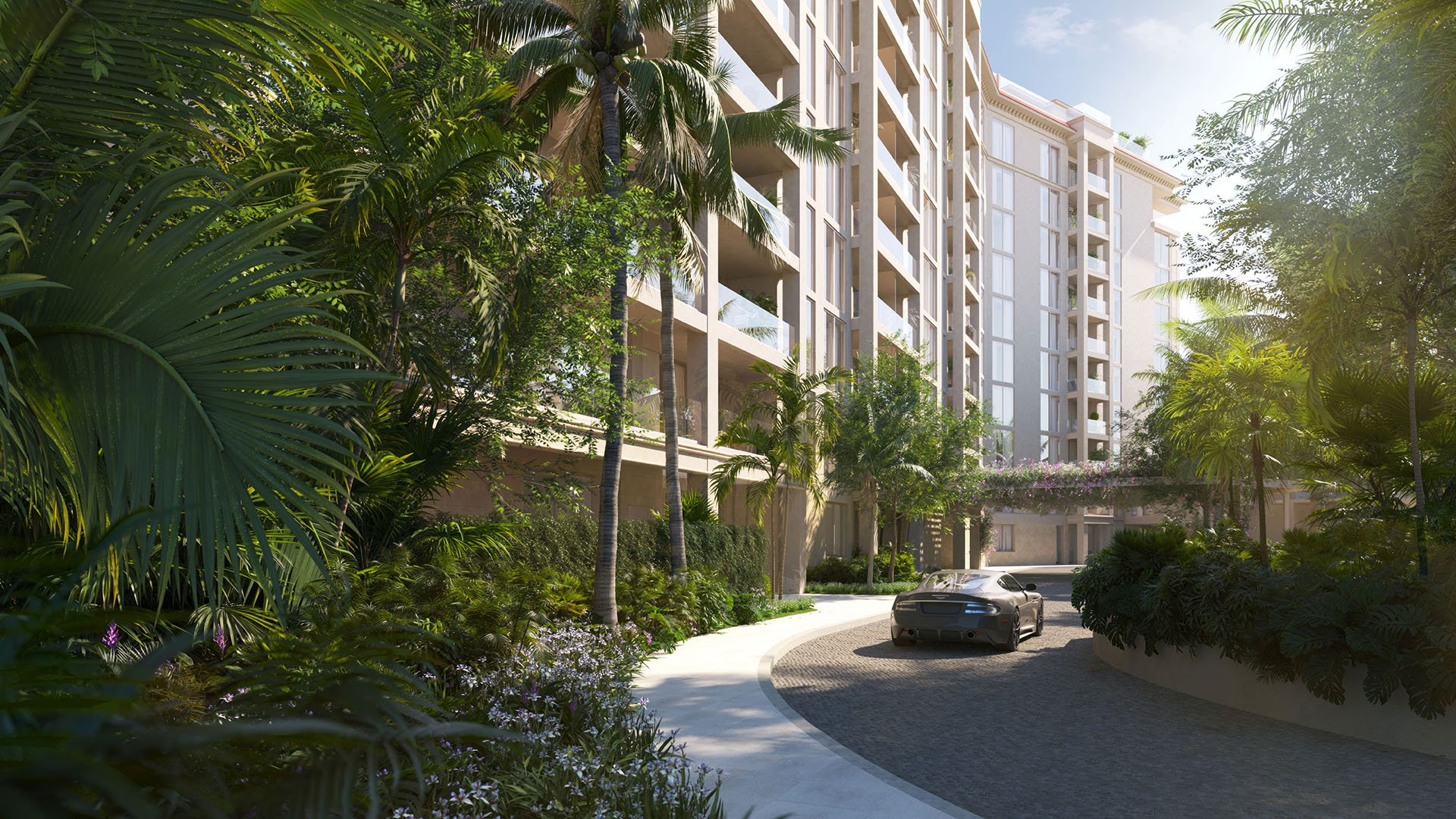
Privacy is rarely a single feature. It is a sequence of thresholds between the public realm and the residence. Buyers should examine the curb, vehicle arrival, lobby or entry sequence, elevator circulation, residential corridor, service access, and sightlines surrounding the home.
Ask who shares each threshold. Observe whether residents, visitors, deliveries, staff, and hospitality guests follow the same path. Review how guest authorization works and how easily the household can receive friends without creating unnecessary visibility. Privacy should feel composed, not defensive.
For buyers studying Fisher Island, The Residences at Six Fisher Island can be considered within this layered framework. The relevant inquiry remains specific to the buyer: how the complete arrival and circulation sequence aligns with family, staffing, and entertaining patterns.
Acoustic privacy matters as well. During a private tour, pause near entries, elevators, terraces, and principal bedrooms. A polished visual presentation should never substitute for careful listening.
The most suitable club-adjacent home is not necessarily the closest. Some buyers want immediate access to Miami Beach social life. Others prefer a buffer, using water, landscaping, lower-density streets, or a distinct neighborhood rhythm to create psychological distance. Neither preference is inherently superior.
Coconut Grove may enter the conversation for a buyer seeking a different relationship between home life and city activity. Vita at Grove Isle is one approved project to review when considering how departure routes, guest arrivals, and daily routines support that preference.
A second-home buyer should be especially precise. If the residence will open and close around visits, management protocols, delivery handling, guest permissions, and staffing coordination may matter as much as the social itinerary. The home must feel effortless upon arrival and secure in the owner’s absence.
Before touring, create a concise brief organized into three categories. First, identify the clubs and destinations that genuinely shape the household’s week. Second, define acceptable journey conditions, including transfers, route complexity, and arrival style. Third, state the privacy standards that cannot be compromised.
Then score each residence consistently. Useful headings include residential arrival, visitor separation, service circulation, acoustic conditions, route resilience, staff practicality, and retreat quality. Do not allow one glamorous evening to outweigh how the property functions on an ordinary morning.
Private-club season matters because it reveals the tension between connection and seclusion. The strongest buying decision resolves that tension deliberately. It places the owner close enough to participate with ease, yet far enough from the performance of the social scene to preserve the essential luxury of private life.
Does living near a private club guarantee access? No. Membership and access should be verified separately from residential ownership.
Is the nearest residence always the most convenient? No. Route complexity, pickup logistics, and arrival conditions can matter more than distance.
When should a buyer test the route to a club? Test it during the periods when the household expects to travel, ideally more than once.
What is the first privacy threshold to inspect? Begin at the curb and follow the complete sequence through entry, circulation, and the residence.
Should hospitality and residential circulation be reviewed separately? Yes. Buyers should understand who uses each entrance, elevator, corridor, and service path.
How should buyers evaluate guest arrivals? Review authorization, waiting, parking, wayfinding, and the discretion of the complete experience.
Why does acoustic privacy matter? Sound can cross boundaries that appear visually private, particularly near shared circulation areas.
What should staff consider when evaluating proximity? Staff should assess vehicle access, deliveries, waiting areas, service routes, and schedule reliability.
Can a quieter location still suit a club-focused buyer? Yes. A composed route and stronger sense of retreat may outweigh immediate adjacency.
What makes a club-proximity purchase durable? The residence should satisfy the household even if memberships, habits, or social priorities evolve.
When you're ready to tour or underwrite the options, connect with MILLION.
If branded residences are on your mind — as a home or as an allocation — we would be glad to share what we are seeing, privately.
Begin a quiet conversation