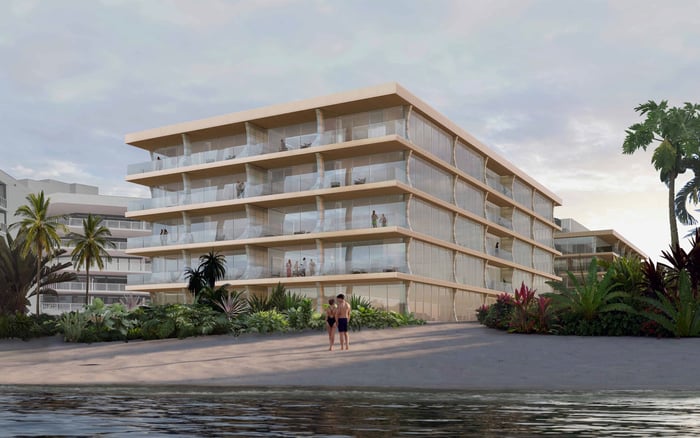
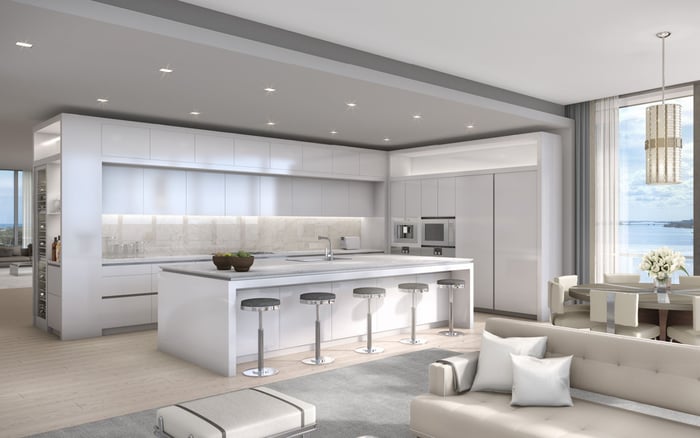
On South Flagler Drive, a waterfront purchase is also a boating decision. Slip rights, usable depths, bridge schedules and crew access can shape ownership value as much as the residence itself.
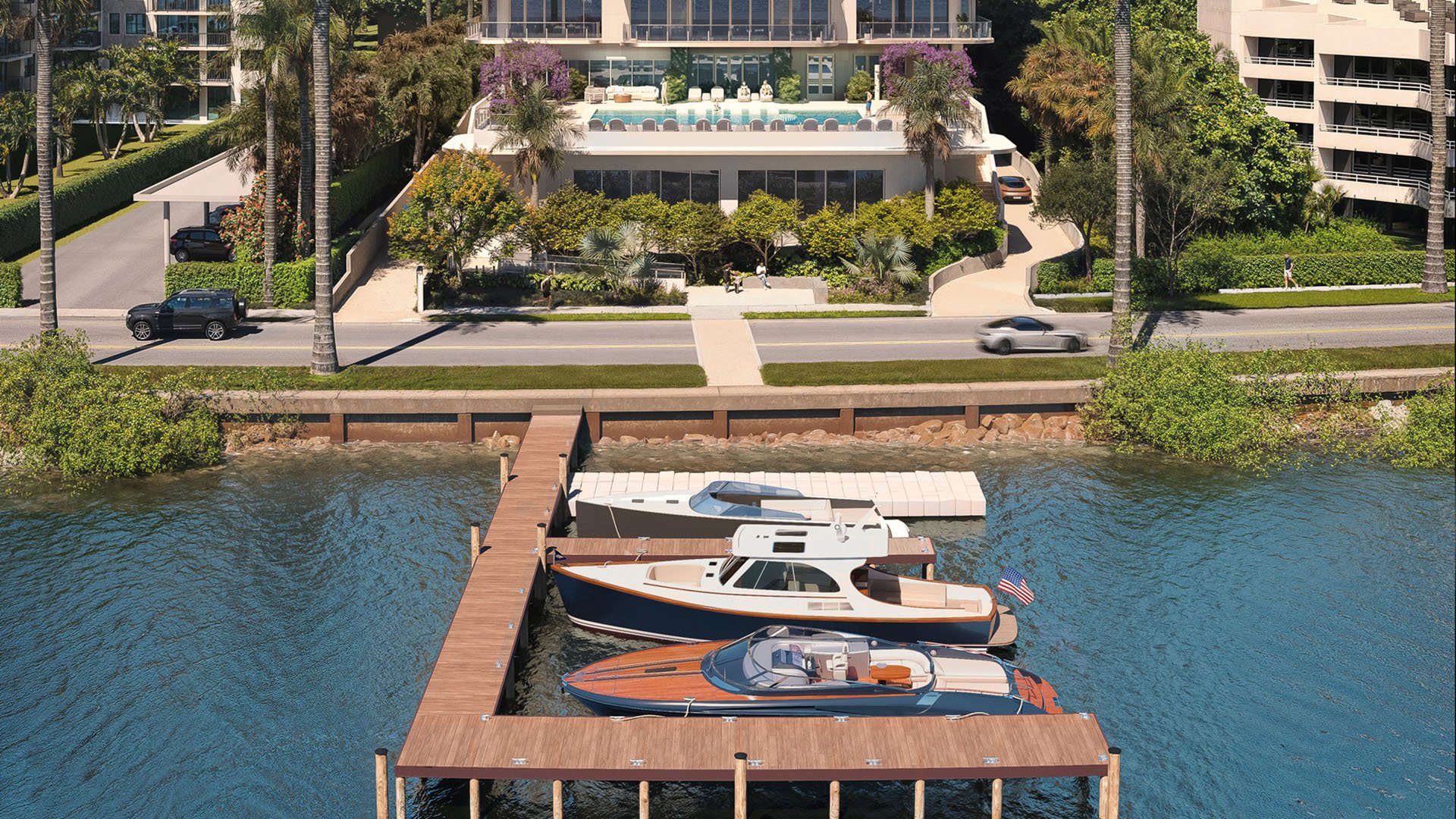
On South Flagler Drive, the most consequential feature of a waterfront residence may be the departure it makes possible. For an owner who boats regularly, a beautiful outlook and a workable home port are distinct assets. The asking price captures neither the certainty of a berth nor the effort required to reach open water.
This West Palm Beach waterfront is Intracoastal frontage, not Atlantic beachfront. When evaluating Maison D'Or South Flagler, distinguish the residence's waterfront setting from any documented personal-vessel accommodation. Charter coordination, if offered, is not the same as a berth for the buyer's own boat.
The distinction is fundamental: the residence must work for both the household and the vessel. That does not mean marine costs universally outweigh purchase-price differences. It means an apparently attractive acquisition can become less compelling if its boating arrangements are uncertain, unsuitable or inconvenient.
Start with the legal arrangement, not the rendering. Deeded ownership, exclusive-use rights, leased slips, shared facilities and availability-dependent access are separate propositions. Ask counsel to identify the governing documents, the duration of the right, transfer provisions, vessel restrictions and any approval requirements before assigning financial value to dockage.
For buyers considering Forté on Flagler West Palm Beach, the same distinction applies: any reference to marina access should not be read as a guaranteed or deeded slip without supporting documentation. The water view and the right to use the water can be entirely separate purchases.
Begin with a simple question: what boating entitlement will belong to this purchaser at closing? Then ask what happens if the vessel changes. A right suitable for today's boat may not serve a larger replacement.
Physical capacity deserves the same scrutiny as legal entitlement. Inspect the existing dock and confirm its usable dimensions, utilities and suitability for the intended vessel. Do not treat a general description of boating access as confirmation that a particular yacht can be accommodated.
Where proposed dock work is part of the purchase discussion, distinguish a permit from a completed improvement. Dock length is not interchangeable with accepted vessel length. Confirm what exists, what remains to be built and what the intended vessel can actually use. Do not value unfinished marine infrastructure as though it were operational.
Marina dues and off-site dockage are not interchangeable expenses. Request any applicable marina-association budget, dues schedule, assessment obligations and maintenance responsibilities separately from a berth proposal. A nightly rate cannot establish the recurring charges attached to residential slip rights.
For an off-site alternative in West Palm Beach, obtain written seasonal or annual proposals covering utilities, minimum billable length, deposits and cancellation terms. Confirm vessel acceptance and berth availability rather than assuming that a quoted rate establishes access.
Keep transient-rate arithmetic separate from an actual monthly or annual offer. Compare residence costs plus confirmed boating costs over the intended ownership period, rather than treating a nightly-rate calculation as proof of savings.
A yacht can fit its dock and still face a constrained departure. Air draft-the vessel's height above the waterline-determines whether a bridge opening may be necessary. Underwater draft raises a different question: whether sufficient depth exists beneath the vessel throughout its passage.
If the intended route includes Royal Park Bridge, verify current vertical and horizontal clearances, opening rules and conditions before relying on the route. Have the captain review the complete passage, vessel dimensions and water levels; do not presume that one bridge is the only relevant constraint.
Nor should a deep-water dock description substitute for verified berth, approach-channel and low-water depths. Safe operating draft requires vessel-specific evaluation, not confidence in the phrase “deep water.”
A berth that looks convenient on a map may demand a different daily routine than the buyer imagines. Before committing, walk through a departure with the captain or intended operator: crew arrival, parking, provisioning, equipment movement, guest boarding and return access.
Ask whether crew accommodation is needed, where it would be arranged and what rules govern service access. Establish how repairs and routine maintenance would be coordinated. These are questions to resolve, not services to assume come with a luxury address.
For buyers also considering South Flagler House West Palm Beach, apply the same vessel-first checklist without presuming any particular dock entitlement. The residence comparison should include a documented boating plan, whether on-site or elsewhere.
Before finalizing the decision, bring three elements together: counsel's review of slip rights, the captain's assessment of physical suitability and written operating-cost proposals. Resolve construction status and access restrictions alongside the usual residential due diligence.
For a frequent boating household, certainty and convenience can justify paying more for the right arrangement. For another buyer, an off-site berth may be entirely satisfactory. The objective is not the lowest asking price in isolation, but a residence whose marine arrangements support the life its owner intends to lead.
Explore South Flagler Drive residences with MILLION to place the property and its boating requirements in the same conversation.
If branded residences are on your mind — as a home or as an allocation — we would be glad to share what we are seeing, privately.
Begin a quiet conversationNo. The waterfront discussed here fronts the Intracoastal Waterway, so buyers should evaluate the boating route separately from the residence's water views.
No. Confirm the specific boating entitlement in the purchase and governing documents rather than relying on the waterfront setting.
Not necessarily. Buyers should distinguish deeded ownership from exclusive-use rights, leases, shared access and availability-dependent arrangements through the governing documents.
Confirm its usable dimensions, utilities and suitability for the intended vessel. Dock length alone does not establish the vessel size it can accommodate.
No. Verify what exists, what remains to be built and whether the intended vessel can use the completed infrastructure.
If it is on the intended route, confirm current vertical and horizontal clearances, opening rules and conditions. Have the captain assess those constraints against the vessel's dimensions.
No. Verify berth, approach-channel and low-water depths against the vessel's requirements with the captain or a qualified marine professional.
Not by itself. Obtain a written seasonal or annual proposal that addresses utilities, minimum billable length, deposits and cancellation terms.
Yes. Obtain applicable marina-association dues schedules, assessment obligations and maintenance responsibilities separately from a berth proposal.
Review crew accommodation needs, parking, provisioning, equipment movement, guest boarding and service access. Confirm repair coordination and daily operating arrangements rather than assuming they accompany the residence.