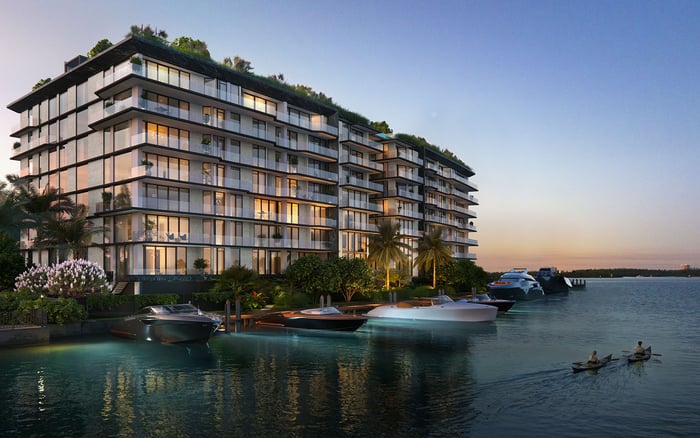
Association strength is a form of invisible luxury, shaping ownership long after finishes and views have made their first impression. La Maré and Alma deserve disciplined consideration through documents, budgets, governance, insurance, and transition planning.

In a refined condominium, the most consequential features are often absent from the sales gallery. A well-conceived budget, clear governing documents, appropriate insurance, disciplined maintenance protocols, credible reserves, and an orderly transition from developer control to owner governance can shape the ownership experience for years.
That is why La Maré Bay Harbor Islands and Alma Bay Harbor Islands belong in the conversation for buyers who define quality broadly. The point is not to presume that either association has proved itself. It is to recognize that each should be evaluated as an operating institution, not simply as a collection of private residences.
For buyers accustomed to examining architecture, materials, and outlooks, this requires a second lens. Association strength is the infrastructure behind privacy, consistent service, physical stewardship, and long-term financial predictability.
La Maré and Alma present two project-specific opportunities to ask the same serious questions. What obligations will owners share? Which expenses are included in the projected budget? How are maintenance responsibilities divided among the residence, common elements, and any limited common elements? What authority remains with the developer before turnover?
These questions are especially relevant to a boutique ownership preference. A more intimate residential environment can feel personal and discreet, but the association's scale also affects how costs are distributed. Buyers should model that relationship rather than assume fewer residences automatically mean either lower expenses or greater control.
The same restraint applies to waterfront positioning. Water views or access may heighten desire, yet association analysis must address the less visible obligations of a coastal property. Insurance structure, preventive maintenance, inspection responsibilities, and contingency planning deserve equal standing with design.
A rigorous review begins with the declaration, articles of incorporation, bylaws, rules, proposed budget, insurance information, purchase agreement, disclosure materials, and any management or service contracts available for examination. Legal and financial advisers should identify provisions that could materially affect control, costs, leasing, alterations, pets, guests, parking, storage, or the use of shared spaces.
The budget warrants line-by-line attention. Buyers should separate recurring operating expenses from reserves and distinguish fixed contractual obligations from assumptions that may change after occupancy. Staffing, utilities, maintenance, administration, insurance, and amenity operations should be considered together, because a lean projection in one category may be offset elsewhere.
For new-construction or pre-construction purchases, the association may not yet have an operating record. In that setting, strength is assessed through the quality and coherence of the framework: realistic assumptions, clear responsibilities, sensible contracts, warranty protections, transparent turnover provisions, and the ability to adapt once actual expenses replace projections.
Governance determines how owners participate in decisions and how efficiently the building responds when priorities compete. Buyers should understand voting rights, board composition, meeting procedures, amendment thresholds, collection remedies, and the developer's reserved powers. They should also examine whether important contracts can be reviewed, renewed, or terminated after owner turnover.
The practical question is not whether rules exist; every shared-ownership structure depends on them. The better question is whether those rules are intelligible, enforceable, and compatible with the buyer's intended use.
A second-home owner may focus on access procedures and oversight during absences. A full-time resident may care more about daily service and board responsiveness. An investment-minded purchaser may prioritize leasing restrictions, approval procedures, and the treatment of tenants. The same documents can therefore lead different owners to different conclusions.
Context sharpens judgment. Buyers looking beyond La Maré and Alma can place The Well Bay Harbor Islands and Onda Bay Harbor within the same comparison while resisting superficial rankings based solely on amenities or presentation.
Create a uniform scorecard for every candidate. Include projected monthly obligations, reserve philosophy, insurance structure, management arrangements, owner voting rights, leasing rules, alteration standards, warranty pathways, turnover timing, and significant shared contracts. Record unanswered questions separately from confirmed terms.
This is the essence of a Bay Harbor acquisition review and a useful principle across buyer's guides: compare like with like, but never confuse comparable marketing categories with identical legal or financial structures. Two residences at similar asking levels can create markedly different ownership experiences when their shared obligations diverge.
The final choice should balance private enjoyment with collective responsibility. A buyer may reasonably accept higher shared costs when the services, maintenance standards, and reserve approach align with personal expectations. Another may prefer a simpler operating model with fewer recurring commitments. Neither is inherently superior.
La Maré and Alma belong in this discussion because serious buyers should test each opportunity against the fundamentals of durable condominium ownership. The decisive evidence will be found in the controlling documents, financial assumptions, contracts, insurance arrangements, and transition mechanics available at the time of review.
The prudent sequence is straightforward: identify the desired residence, obtain the complete association and purchase file, engage qualified Florida legal and financial counsel, request clarification in writing, and model costs under more than one scenario. Elegance may begin the conversation, but institutional clarity should help complete it.
What does association strength mean for a condominium buyer? It is the financial, legal, governance, insurance, and operational framework supporting shared ownership.
Does a projected budget prove that future costs will remain stable? No. It is a set of assumptions that should be tested against contracts, services, reserves, insurance, and possible changes after occupancy.
Why review governing documents before selecting finishes? Governing documents can affect use, voting, leasing, alterations, expenses, and resale flexibility long after design decisions are made.
Is a smaller association automatically financially stronger? No. Scale changes how costs are allocated, but strength depends on obligations, planning, collections, reserves, and governance.
What should buyers examine regarding developer control? Review reserved powers, voting arrangements, turnover conditions, contract authority, warranties, and the transfer of records and funds.
How should insurance be evaluated? Qualified advisers should review coverage, deductibles, exclusions, allocation of responsibility, and how premiums are reflected in the budget.
Why are reserves important? Reserves can support anticipated capital needs and reduce reliance on sudden owner assessments, subject to the association's governing framework.
Should second-home buyers use a different checklist? The core review is the same, though access, remote oversight, guest policies, and service continuity may carry greater weight.
Can two nearby projects have very different association structures? Yes. Budgets, contracts, rules, governance rights, insurance, and shared responsibilities are project-specific and require separate review.
Who should review the association file? Buyers should engage qualified Florida legal, financial, insurance, and inspection professionals appropriate to the transaction.
When you're ready to tour or underwrite the options, connect with MILLION.
If branded residences are on your mind — as a home or as an allocation — we would be glad to share what we are seeing, privately.
Begin a quiet conversation