A privacy-focused shortlist of five active luxury residential developments in Brickell, Brickell Key and Downtown Miami, distinguishing resident-only positioning, private elevators and component-level separation from unconfirmed owner-hotel circulation arrangements.
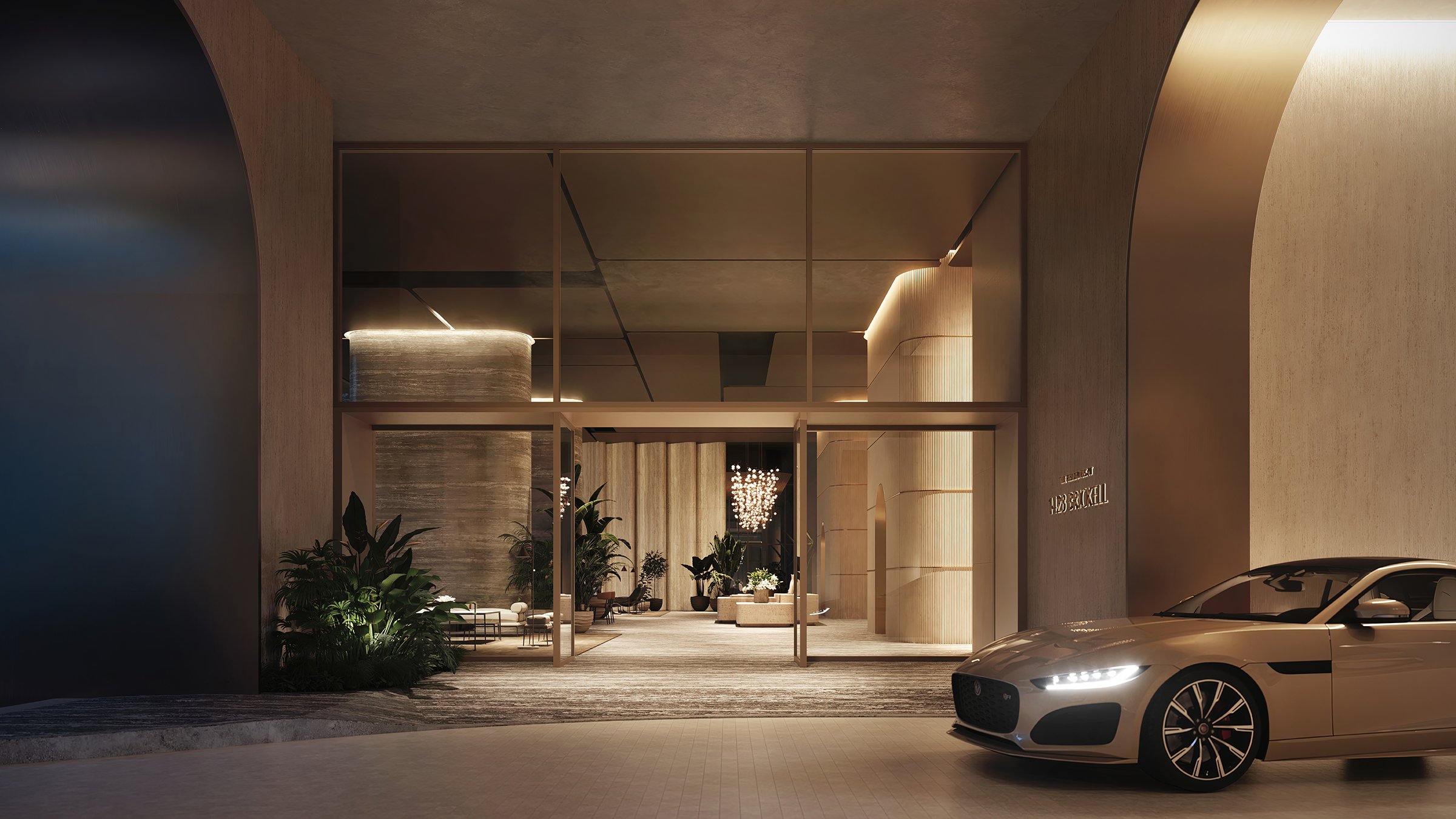
For a luxury buyer, privacy is more than a private elevator opening into a residence. It encompasses the entire journey home: the approach to the building, the arrival lobby, the elevator ride and the spaces used between appointments or after dinner. A beautifully appointed residence can still fall short if those transitions involve traffic the buyer hoped to avoid.
In Brickell and Downtown Miami, the meaningful distinction is between an appealing residential identity and an explicitly defined access arrangement. Resident-only spaces, private elevators and separate building components each address part of that question. They are not interchangeable assurances.
The Residences at 1428 Brickell offers the clearest starting point for this brief, with spaces positioned exclusively for residents and their guests. The other candidates offer distinct reasons for further investigation-not identical promises of separation.
1. The Residences at 1428 Brickell - Brickell, Miami
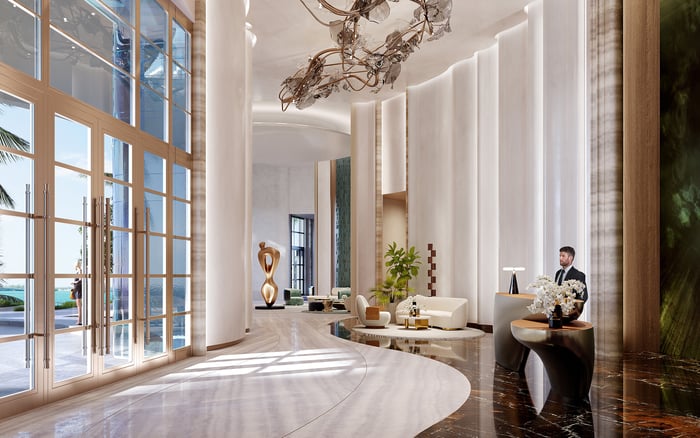
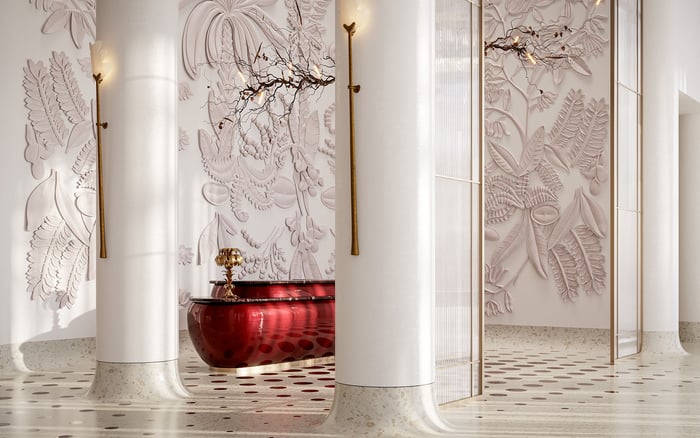
With 195 residences, 1428 Brickell has the shortlist’s strongest explicit resident-focused privacy positioning. Every space is described as exclusively for residents and their guests, reinforced by the statements “no hotel crowds,” “no outside memberships” and “nothing public.” Controlled entry and separated circulation are also emphasized. Together, these address more than the privacy of an individual apartment.
For buyers prioritizing minimal hotel-guest overlap, this is the most direct match to the brief. Two- to four-bedroom residences are advertised, and private tours are available by appointment. The next step is to examine how the resident-only proposition carries through entrance plans, elevator access and operating documents. Marketing language is not a substitute for those details.
2. St. Regis Residences Miami - Brickell waterfront
St. Regis ranks second for its advertised private elevators and full-floor and half-floor residences. It is listed as “Now Selling,” with Biscayne Bay views alongside wellness and dining amenities. These features make it relevant to buyers seeking a more private residential arrival.
The distinction matters: a private elevator does not, by itself, establish a separate owner elevator bank or an entirely independent route from the curb. Buyers should confirm which access arrangements apply to each residence and whether nonresident traffic intersects with the approach to those elevators. Its position here reflects the appeal of the advertised residential features, not a building-wide guarantee of separation.
3. Cipriani Residences Miami - Brickell, Miami
Cipriani is an active luxury branded-residence development in Brickell and earns a place on the shortlist for buyers considering branded residential living. Its development activity is more clearly established than the precise configuration of dedicated owner entrances or elevator banks.
For this buyer profile, its third-place position calls for a focused circulation review. Ask for the route from arrival to residence, the users permitted in each lobby and the access rules governing amenities. The available details do not establish complete owner-hotel separation, nor should they be read as proof that overlap necessarily occurs.
4. The Residences at Mandarin Oriental, Miami - Brickell Key
This active branded-residence development offers an island location on Brickell Key. The setting distinguishes it geographically from the other Brickell candidates, but geography alone does not determine how owners, guests or other users move through a property.
The precise owner-hotel circulation arrangement is not confirmed in the available details. Buyers should evaluate the island setting separately from the access design. Dedicated entrances, elevator permissions and the relationship between residential and any hospitality-facing spaces require direct confirmation before this option can be described as fully separated.
5. JEM Private Residences - Downtown Miami
JEM is the shortlist’s Downtown alternative, with separate entrance lobbies, elevators and amenity centers described for its condominium and rental components. That is a concrete distinction for buyers examining how different populations within a development are accommodated.
The separation, however, concerns condominium owners and rental occupants-not owners and hotel guests. JEM belongs in this comparison because component-level separation is relevant to residential privacy, but it answers a different question from 1428 Brickell’s no-hotel-crowds positioning. Buyers should assess those separate routes on their own terms, without translating rental separation into a hotel-traffic claim.
A branded residential identity and a circulation plan answer different questions. The former helps define the residential offering; the latter shows who can share the spaces owners use. Both deserve attention in a privacy-sensitive purchase, but only the access plan resolves the daily route home.
At St. Regis® Residences Brickell, private elevators and larger-format residences are the features to examine closely. Ask whether privacy begins at vehicle arrival, at the elevator lobby or only when the elevator reaches the residence. Each arrangement shapes the experience of coming home differently.
For Cipriani Residences Brickell, the immediate priority is obtaining entrance and elevator plans-not assuming the brand establishes the circulation outcome. A clear explanation should identify shared spaces as carefully as dedicated ones.
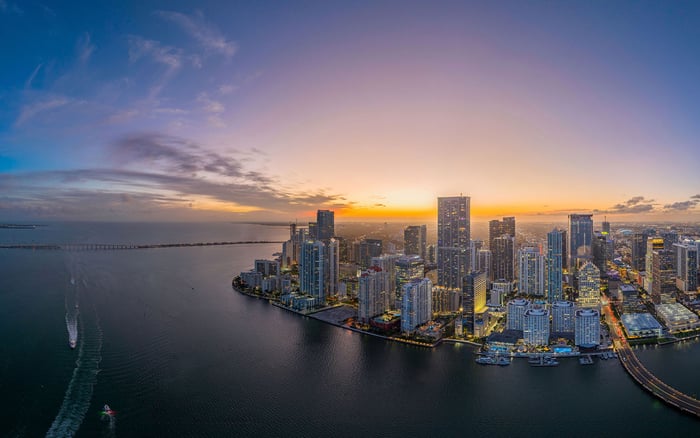
The location of The Residences at Mandarin Oriental, Miami makes it a distinct consideration within the wider Brickell search. An island address can suit a buyer’s lifestyle preferences without settling the privacy question inside the development.
Review the arrival sequence in order: vehicle approach, valet handoff, entrance, lobby, elevator and amenity access. Ask where owner routes might intersect with other users and which permissions prevent unintended access. Until those arrangements are confirmed, setting and circulation should remain separate considerations.
Start with entrance and elevator plans that clearly identify residential, rental, visitor and service routes where applicable. A floor plan showing a private elevator is useful, but it does not explain every space traversed before reaching it.
Next, request amenity-access rules. Establish whether spaces are reserved for residents and their invited guests, whether outside memberships are permitted and how access is controlled. Review valet arrangements and service routes with the same care: a dedicated residential entrance may not resolve every question about shared arrival functions.
Finally, compare those explanations with condominium documents. Ask which access arrangements are documented and which remain design or operating representations. The objective is not merely fewer encounters, but a clear understanding of who may enter each part of the property.
“Active” here refers principally to development or sales activity, not immediate occupancy. Confirm individual delivery timing and current availability before aligning a purchase with relocation plans.
For this brief, 1428 Brickell is the clearest first appointment, St. Regis warrants a private-elevator review, and JEM offers a distinct condominium-versus-rental separation proposition. Cipriani and Mandarin Oriental remain candidates whose precise owner circulation requires further confirmation.
For a discreet comparison of residences aligned with your privacy priorities, connect with MILLION.
If branded residences are on your mind — as a home or as an allocation — we would be glad to share what we are seeing, privately.
Begin a quiet conversationThe Residences at 1428 Brickell has the strongest explicit positioning, with resident-and-guest-only spaces and statements excluding hotel crowds, outside memberships and public access.
The development comprises 195 residences and advertises two- to four-bedroom homes.
Private tours are available by appointment.
Its advertised private elevators and full-floor and half-floor residences make it relevant to privacy-focused buyers. Those features do not establish fully separate building-wide circulation.
No. Buyers should separately confirm entrance arrangements, elevator banks and any shared spaces along the route to the residence.
The available details establish active development more clearly than dedicated owner entrances or elevator banks. Buyers should request the relevant plans and access rules.
No. The island location is established, but the precise owner–hotel circulation arrangement requires confirmation.
JEM is described as having separate lobbies, elevators and amenity centers for condominium and rental components. This concerns condo-versus-rental circulation, not documented owner–hotel separation.
Active refers primarily to development or sales activity, not immediate occupancy. Confirm each project’s delivery timing and current availability individually.
Request entrance and elevator plans, amenity-access rules, valet arrangements, service routes and condominium documents. Review them together to understand where dedicated and shared access begins.