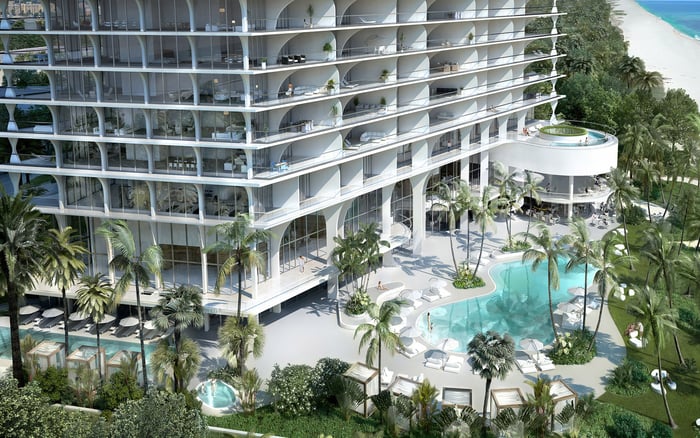
For buyers comparing Bentley and Waldorf Astoria residences, the essential distinction is between access, included services, and separately billed experiences. Association budgets, hospitality agreements, and written transfer provisions deserve as much attention as the amenity program.

An oceanfront cabana, a private dining room, and a concierge who anticipates the day can make a residence feel exceptionally well considered. Yet the financial meaning of those benefits rests less on the amenity description than on the documents governing their use. For buyers weighing Bentley against Waldorf Astoria, access is not the same as inclusion.
The comparison should begin with three questions: what is funded through condominium assessments, what requires a separate club or hospitality arrangement, and what is charged when used? A fourth matters just as much at resale: which privileges belong to the residence, and which depend on the individual account holder?
There is no established basis here for comparing separate private-club initiation fees, annual dues, or binding transfer terms between the two projects. Buyers should neither assume those charges exist nor interpret their absence from an amenity description as confirmation that everything is included.
At Bentley Residences Sunny Isles, the advertised amenity program spans more than 20,000 square feet across three levels, with Bentley Home furnishings. Its Sunny Isles Beach appeal lies in an extensive residential environment encompassing dining, wellness, entertainment, and beachside leisure.
Advertised social spaces include a restaurant emphasizing in-suite dining, a lounge and whiskey bar, a cigar lounge, and private dining space. The program also includes a spa, fitness center, beauty salon, cinema, game room, kids club, outdoor yoga studio, and pet spa. A landscaped beach club and oceanfront pool deck are described with food-and-beverage service and cabanas.
These descriptions establish the planned experience, not a comprehensive price schedule. The service offering includes 24-hour valet and security, multilingual concierge, beach and pool service, optional housekeeping, and in-residence dining. Optional housekeeping warrants its own budget line pending written pricing. Dining and spa use should likewise not be treated as prepaid simply because the venues are advertised.
Two unit-specific fee figures offer a limited financial reference: $4,742 monthly, or $56,904 annually, for Unit #4801; and $4,429 monthly, or $53,148 annually, for Unit #1104. Both annual amounts exclude other ownership expenses. Neither figure establishes a current building-wide budget or should be treated as a confirmed adopted assessment without further documentation.
The stated inclusions for #1104 encompass recreation facilities, security, common areas, exterior maintenance, pool service, trash removal, cable, elevators, sewer, and water. The separate field “Membership Purchase Required: No” does not establish that all services are included or that every privilege transfers automatically.
At Waldorf Astoria Residences Downtown Miami, advertised resident benefits include house-account signing privileges and preferred access to the spa and other hotel venues. The distinction matters: preferred access concerns the ability to use or arrange an experience, not confirmation that condominium dues cover its cost.
The described services also include a personal concierge, a private account for each resident, a dedicated on-site director of residences, 24-hour security and reception, doorman and bellman services, and valet parking. These offerings do not establish an all-inclusive price.
A house account is a mechanism for authorizing services, not evidence of complimentary consumption. Before budgeting, ask which charges can be posted to it, how they are settled, and which services, if any, are included in the recurring assessment.
“Beach Club Service” is also advertised, but its location, dues, usage charges, and transferability remain unestablished. It should not be equated with Bentley’s described oceanfront beach-club setting. Nor should Waldorf be characterized as the lower-fixed-cost alternative without a reliable, comparable association budget.
The useful comparison is not simply one monthly assessment against another. It is the anticipated annual cost of the household’s actual routine, with unresolved items clearly separated from confirmed obligations.
Ask for a schedule distinguishing four categories:
Association obligations: the applicable assessment, reserve contributions, and disclosed additional assessments, with clarification of what is already included.
Separate mandatory charges: any required club, hospitality, or access payments established by the governing agreements.
Optional recurring services: arrangements such as housekeeping, if selected, priced for the intended frequency.
Usage-based spending: dining, treatments, private events, and other services, wherever separately charged.
Then test that schedule against personal use. A seasonal owner hosting occasional dinners should request a different spending illustration from a full-time household expecting frequent housekeeping and wellness appointments. The objective is not to minimize service, but to understand precisely what the chosen lifestyle costs.
For a broader Downtown Miami search that also includes Aston Martin Residences Downtown Miami, apply the same categories without assuming that another branded address uses either project’s fee structure.
Membership transferability deserves scrutiny independent of monthly cost. A manageable recurring charge says nothing about whether a future purchaser inherits the same access or must establish a new arrangement.
Request written confirmation distinguishing rights attached to unit ownership, rights requiring a personal account, and benefits governed by a separate agreement. Ask whether a sale triggers approval, re-enrollment, transfer charges, or changes to eligibility. These are questions to resolve, not established conditions at either project.
The review should also address entity ownership, tenants, household members, and guests. For Waldorf, house-account privileges alone do not establish tenant eligibility or guest entitlements. For Bentley, the membership-purchase field does not answer those questions either. If family or rental use matters to the purchase, have counsel assess the relevant provisions before contracting.
Request the current or proposed association budget, reserve contributions, assessment disclosures, service-price schedule, and any separate club or hospitality agreements. Ask that each quoted amount be identified as proposed, estimated, or adopted, and confirm which unit it applies to.
Have counsel distinguish enforceable rights from advertised offerings and review provisions addressing service changes, pricing, eligibility, and transfers. Where a benefit materially influences the purchase, seek written clarification rather than relying on the general promise of a branded lifestyle.
The more compelling residence is not necessarily the one with the longest amenity inventory. It is the one whose documented services, recurring obligations, and future-use rights align most closely with how the buyer intends to live.
For a discreet perspective on South Florida residences and the questions behind their service offerings, connect with MILLION.
If branded residences are on your mind — as a home or as an allocation — we would be glad to share what we are seeing, privately.
Begin a quiet conversationSeparate initiation fees and annual club dues are not established by the advertised offerings discussed here. Buyers should request any applicable club or hospitality agreements before assuming a charge exists or is included.
Unit 4801 lists $4,742 monthly, equivalent to $56,904 annually, while 1104 lists $4,429 monthly, equivalent to $53,148 annually. These are unit-specific listing figures, not a verified current building-wide budget or confirmed adopted assessments.
It indicates that the listing does not identify a required membership purchase. It does not establish that every service is included or that privileges automatically transfer on resale.
It spans more than 20,000 square feet across three levels and features Bentley Home furnishings. Advertised spaces encompass dining, wellness, entertainment, and beachside amenities.
Preferred access describes an access benefit, not confirmation that treatments are included in condominium dues. Buyers should obtain the applicable service-price schedule.
They provide a way for residents to authorize services through an account. They do not establish complimentary services, resale-transfer procedures, or tenant and guest eligibility.
Its location, membership dues, usage charges, and transferability are not established here. Buyers should request written terms before assigning it a specific financial or lifestyle value.
Automatic transferability is not established for either project. Confirm which rights follow ownership and whether any approval, re-enrollment, or transfer charges apply.
Request the current or proposed budget, reserve contributions, assessment disclosures, service-price schedule, and any separate club or hospitality agreements. Written eligibility and transfer provisions should also be reviewed.
A reliable like-for-like ranking is not supported by the fee information discussed here. Compare unit-specific assessments and documented mandatory charges separately from optional and usage-based spending.