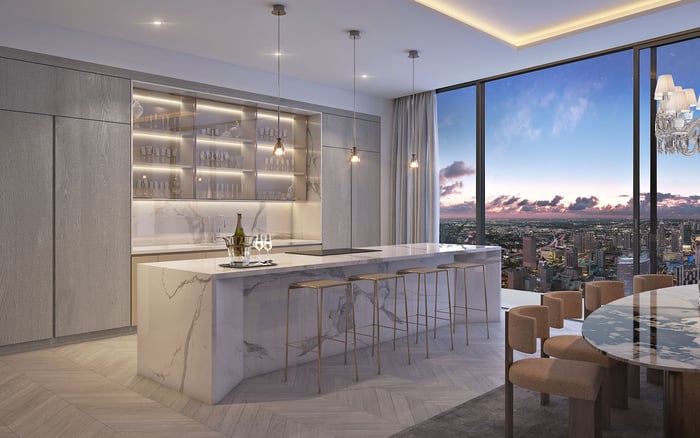
For private aviation users, Brickell Key is less a question of map distance than operational fit. The right residence should turn airport-to-home movement into a discreet, predictable sequence managed by staff, security, elevators, valet, and reception protocols.
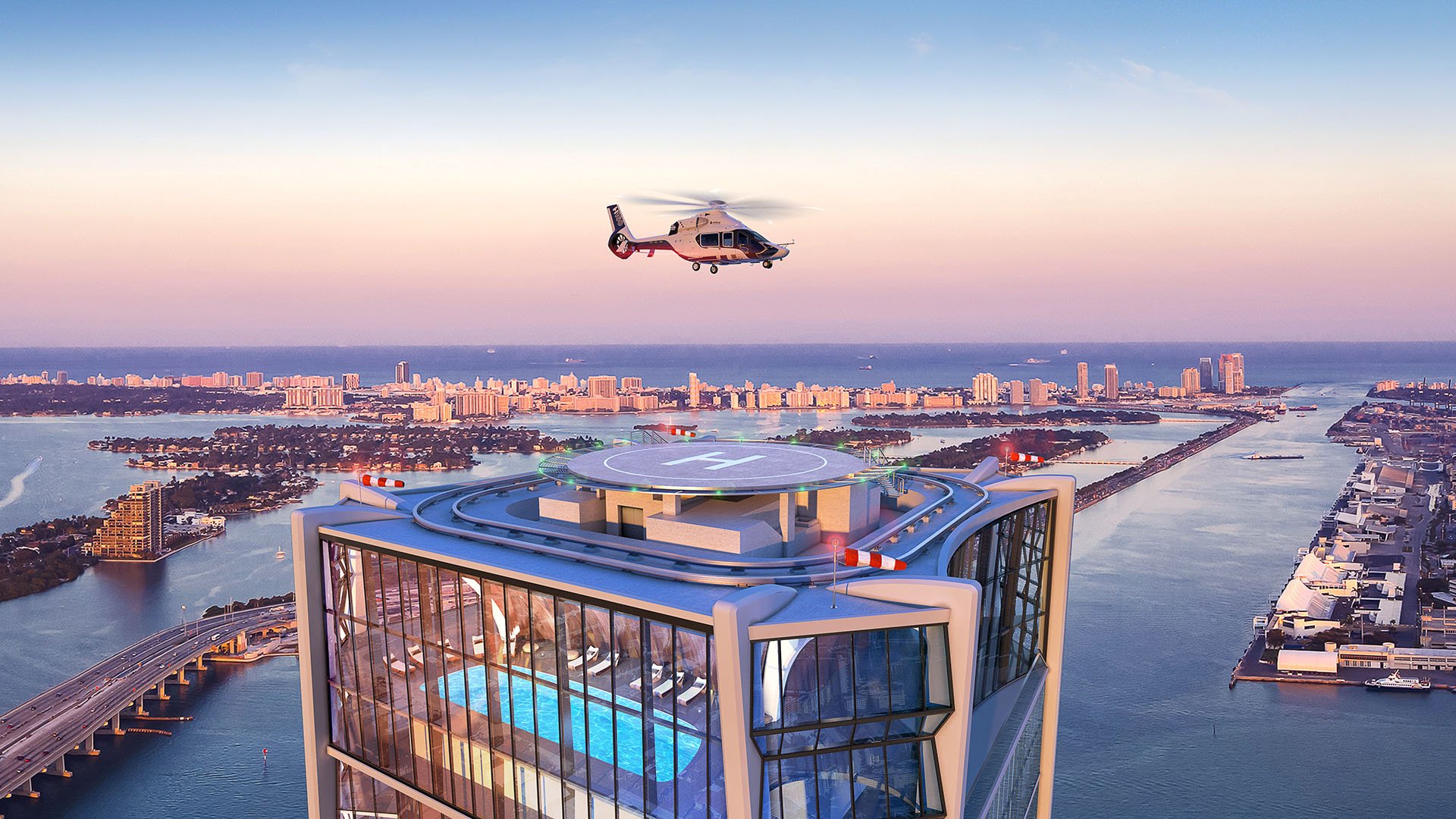
For private aviation users, the question is rarely whether a residence is beautiful. At the top of South Florida real estate, beauty is assumed. The sharper question is whether the building can absorb an irregular life: late arrivals, early departures, principal-only movements, family travel, staff handoffs, luggage transfers, visiting executives, medical appointments, and last-minute itinerary changes.
That is where Brickell Key becomes compelling. Its appeal is not simply proximity to Brickell, water views, or a quieter island atmosphere. For a buyer who uses private aviation, Brickell Key works when the building itself behaves like a disciplined extension of the flight operation. The residence should not introduce friction after the aircraft lands. It should make the final movement home feel calm, private, and already anticipated.
In this sense, Brickell Key competes not only with waterfront neighborhoods, but with operating models. A buyer may admire nearby towers such as St. Regis® Residences Brickell or Baccarat Residences Brickell because they signal a service-driven approach. Brickell Key deserves the same scrutiny: not just architecture, but choreography.
Building operations sound ordinary until they fail. For a private aviation user, they are the invisible luxury. The critical elements include valet discipline, guest screening, loading logistics, elevator access, package and luggage handling, service entrances, security posture, and the ability of staff to communicate without overexposing the resident’s movements.
The best buildings understand that privacy is not created by barriers alone. It is created by sequencing. A principal should be able to arrive without theatrical attention. A driver should know where to stage. Luggage should be handled without crowding the lobby. Household staff should have clear instructions. Guests should be processed gracefully, not interrogated in a way that feels amateur.
Brickell Key can suit this profile because it offers a more contained residential setting than the busiest parts of the mainland. Yet that containment only matters if the building can execute. A serene address with a congested porte cochere, unclear valet procedures, or uneven front desk training will feel less private than a busier building with better systems.
Private aviation compresses distance, but a poorly managed final mile can erase the advantage. After landing, the resident’s experience depends on how efficiently the ground sequence is handled. That sequence includes the vehicle, the route, the arrival point, the staff handoff, and the transition from public or semi-public space into the private residence.
For Brickell Key buyers, the building entrance should be studied at different times of day. Is there room for a discreet vehicle arrival? Is the valet team accustomed to executive drivers and security details? Can luggage move without creating a spectacle? Are elevators sufficiently coordinated for high-frequency arrivals?
The answer does not need to be ostentatious. In fact, the best answer is often quiet. A well-run building feels uneventful because problems are solved before they reach the resident. That is the standard aviation users should apply.
The mainland Brickell market offers a broader set of new and forthcoming luxury residences, many with highly developed amenity narratives. Buyers comparing Brickell Key with projects such as Cipriani Residences Brickell, Una Residences Brickell, or The Residences at Mandarin Oriental, Miami should look past brochure language and ask how the building will actually function at midnight, before dawn, and during peak guest periods.
Brickell Key’s advantage is both emotional and practical: a sense of separation from the intensity of Brickell while remaining connected to the financial district’s daily rhythm. The tradeoff is that the building must be especially competent at managing arrivals and departures. A buyer should not assume that a quieter setting automatically produces a smoother experience.
Mainland towers may offer more visible hospitality programming. Brickell Key may offer a more residential tone. The better choice depends on the owner’s habits. A frequent flyer who wants discretion, predictable access, and low social exposure may prefer the island character if the operational standards are right.
A private aviation buyer should approach diligence with the same seriousness used to evaluate an aircraft management team. The residence is part of the travel ecosystem. Weak links become apparent only after repeated use.
First, study the arrival sequence. The porte cochere, valet stand, security desk, lobby, elevator bank, and private corridor should form one coherent movement. If each step feels like a separate negotiation, the building is not operating at the right level.
Second, evaluate staff consistency. Luxury is not a single impressive tour. It is the same standard on a weekday morning, a holiday evening, and a rain-soaked late arrival. Ask how the building handles principal arrivals, family arrivals, vendors, drivers, and guests.
Third, consider storage and service flow. Aviation users often travel with more luggage, sports equipment, business materials, and household items than a typical resident. The building should have procedures that respect both convenience and discretion.
Fourth, assess privacy culture. Some buildings are friendly but porous. Others are secure but clumsy. The right environment is neither cold nor casual. It is trained, discreet, and observant.
Finally, understand the governance culture. Rules matter, but so does judgment. A building that cannot distinguish between a routine delivery and a high-sensitivity arrival may become frustrating over time.
Operational quality is not only a lifestyle concern. It can influence how an ultra-premium residence holds its appeal among sophisticated buyers. Private aviation users, executives, family offices, and international owners often compare properties through practical experience. They remember whether arrivals were easy. They remember whether staff were composed. They remember whether privacy was protected.
In luxury real estate, the physical residence is only part of the ownership experience. The rest is performance. A building that performs well makes the owner’s schedule feel lighter. A building that performs poorly becomes a recurring appointment with inconvenience.
This is why Brickell Key should not be judged merely as a prettier or quieter alternative to Brickell. It should be judged as a platform for a certain type of life. When the operations are right, the island setting can complement private aviation beautifully: calm arrival, controlled access, minimal exposure, and a residential atmosphere that restores privacy after movement.
When the operations are wrong, even the best view will not compensate for friction.
Is Brickell Key a good fit for private aviation users? It can be, provided the building manages arrivals, valet, security, elevators, and luggage with consistent precision.
What should aviation-oriented buyers prioritize first? Prioritize the arrival sequence from vehicle staging to elevator access, because that is where daily convenience is won or lost.
Does a quieter location guarantee more privacy? No. Privacy depends on staff training, procedures, and discretion as much as the physical setting.
How should buyers compare Brickell Key with Brickell towers? Compare operating culture, not only amenities, views, or design language.
Are branded residences automatically better for frequent flyers? Not automatically. A branded environment may signal service ambition, but the actual building team still determines the experience.
Why does valet matter so much? Valet is often the first and last point of contact, so delays or confusion can disrupt an otherwise seamless travel day.
Should buyers tour at more than one time of day? Yes. Different times reveal congestion, staffing rhythm, lobby atmosphere, and how the building performs under pressure.
What role does household staff play in the decision? Household staff can reveal whether deliveries, luggage, vendors, and guest movements are practical in real use.
Can operations affect resale appeal? Yes. Sophisticated buyers often value buildings that feel effortless, discreet, and consistently well managed.
What is the best way to shortlist comparable options for touring? Start with location fit, delivery status, and daily lifestyle priorities, then compare stacks and elevations to validate views and privacy.
For a discreet conversation and a curated building-by-building shortlist, connect with MILLION.
If branded residences are on your mind — as a home or as an allocation — we would be glad to share what we are seeing, privately.
Begin a quiet conversation