For Fort Lauderdale luxury buyers, operational ease can outweigh a modest difference in asking price. Alternate routes, private vehicle staging, and capable local oversight shape how effortlessly a residence performs during airport peaks, beach events, and long absences.

A Fort Lauderdale residence can be beautifully positioned, impeccably finished, and attractively priced yet still demand too much of its owner. For buyers who frequently use the airport, travel during major events, or leave a home vacant for extended periods, the decisive question is often not simply what the property costs but how smoothly it works.
That distinction creates a personal operations premium. It is not a formally established market premium. Instead, it reflects the private value of fewer detours, more predictable arrivals, protected vehicle staging, and less owner intervention. A residence that consistently removes friction may be the more luxurious acquisition even when its asking price is higher.
The true luxury may be a residence that asks almost nothing of its owner.
This lens is especially useful when comparing homes near the beach, downtown, the Intracoastal, and other high-activity parts of Fort Lauderdale. A map can show distance, but it cannot fully explain how the final approach feels during a crowded arrival window.
Airport access should be evaluated as a network rather than a single estimated drive time. A buyer can test the preferred approach, identify practical alternatives, and note where congestion or a temporary restriction would create a difficult final segment. The objective is not to predict every disruption. It is to understand whether the residence remains manageable when the easiest route is unavailable.
A useful route audit begins before the property tour. Ask the driver to approach from more than one direction and record where turns, merges, building entry, and unloading become complicated. Repeat the exercise at a busier time if airport access is central to the purchase decision. The difference between an easy trip and a demanding one may appear only in the final blocks.
Pickup logistics deserve equal attention. A household should decide how the arriving passenger and driver will communicate, where the vehicle can wait legally, and what happens if baggage collection or curb access takes longer than expected. The same protocol should work for family members, guests, and household staff without requiring the owner to supervise every step.
Buyers considering the beach can use Four Seasons Hotel & Private Residences Fort Lauderdale as one point of reference when comparing barrier-island arrival patterns. The purpose is not to assume that one route will always be superior, but to determine how many workable approaches remain when the preferred path is constrained.
Fort Lauderdale's beach and downtown districts can attract periods of concentrated activity. For a buyer, the relevant question is how that activity changes access to a particular residence. A normal weekday tour may not reveal the effect of crowded streets, temporary traffic controls, rideshare demand, or limited curb space.
An event-day audit should test the full arrival sequence. Approach the property from different directions, identify lawful waiting and unloading areas, and determine whether a closure could require a longer walk or a different passenger handoff. If the household relies on a private driver, include that person in the review because operational details often become apparent from the driver's perspective.
Different settings require different tests. A beach residence may place greater emphasis on barrier-island circulation and protected unloading, while a home near central Fort Lauderdale may require closer review of garage access and busy-street approaches. Sixth & Rio Fort Lauderdale offers a relevant reference point for considering how a centrally located residence functions when nearby streets are under pressure.
The goal is not to avoid active neighborhoods. Events, dining, culture, and waterfront activity may be central to the desired lifestyle. The buyer's task is to determine whether the building's arrival design and available approaches preserve ease when the surrounding district is busiest.
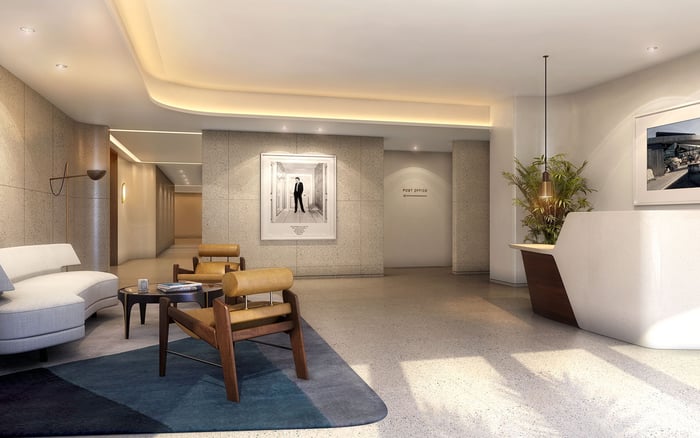
A porte-cochère, private driveway, motor court, or other off-street waiting area should be assessed as operational infrastructure. It can provide a controlled place for a driver to hold while luggage is loaded, allow guests to arrive without obstructing traffic, and create a more orderly position for vendors or household staff. During rain or a crowded week, that space can matter as much as an interior amenity.
The review should be exacting. Can vehicles pass or wait without trapping one another? Is there a protected place for luggage transfer? How does a guest enter after the owner has departed? Where can rideshare vehicles, deliveries, and service teams pause? What happens when several parties arrive within a short window?
At St. Regis® Residences Bahia Mar Fort Lauderdale, or another marina- or beach-area residence, buyers should study the transition from the public road to the private arrival point. A project overview is a starting point, not a substitute for observing circulation firsthand. The essential luxury is controlled movement from curb to residence.
Building staffing also matters. A well-designed arrival area is most useful when responsibilities for greeting, access, luggage, parking, and vendor coordination are clear. Buyers should ask how those functions operate when the owner is present, when only a guest arrives, and when service personnel need access to an unoccupied home.
Second-home ownership becomes easier when responsibilities are assigned before departure. Service availability alone is insufficient. A buyer should establish who has authority, who documents each visit, and who responds when a system alert or maintenance issue requires attention.
Secure remote entry, package handling, storm preparation, post-event inspection, cleaning schedules, vendor access, and vehicle care can all belong in the operating plan. The appropriate scope depends on the residence and the owner's use pattern, but each task should have a named person, an approval process, and a method of documentation.
A credible protocol identifies a primary manager and a backup, defines spending or approval thresholds, and records the home's condition before and after service calls. Remote technology can improve visibility, but it does not replace accountable local judgment. The strongest arrangement combines secure systems with a person empowered to act within agreed limits.
Buyers should also test the protocol rather than merely reading it. Before an extended absence, rehearse guest entry, package receipt, a service appointment, and an urgent maintenance call. Any point that still depends on the owner improvising from another location deserves refinement.
Before committing, test airport-to-property transfers under more than one traffic condition. Drive the preferred route and at least one alternative. Record where a driver can wait, turn around, and unload without creating unnecessary friction. Confirm how gate, garage, lobby, and elevator access function when the owner is absent.
Next, review the arrival area as carefully as the residence itself. Observe vehicle circulation, weather protection, luggage handling, guest entry, and service access. Ask how the building manages simultaneous arrivals and whether drivers or vendors have a clear place to wait.
Then rehearse a departure. Arrange package receipt, cleaning, property checks, and emergency entry as though the home will be unattended for an extended period. Request written responsibilities and escalation contacts. Determine whether the residence can accommodate guests, household staff, and vendors without requiring the owner to coordinate every movement personally.
Finally, compare properties by total operational burden rather than asking price alone. Multiple workable approaches, private staging, and reliable local oversight do not guarantee faster travel or establish a market premium. They can, however, support the quality sophisticated owners prize most: greater command of their time.
For discreet guidance on evaluating Fort Lauderdale residences through both lifestyle and operational criteria, consult MILLION.
If branded residences are on your mind — as a home or as an allocation — we would be glad to share what we are seeing, privately.
Begin a quiet conversationIt is the personal value a buyer assigns to predictable access, effective vehicle staging, and reduced owner intervention. It is not a formally established market premium.
Mileage alone does not capture congestion, route constraints, building access, or unloading conditions. Buyers should test the complete transfer rather than rely only on a map.
Drive the preferred route and at least one practical alternative under different traffic conditions. Review the final approach, legal waiting options, and passenger handoff plan.
A quiet property tour may not show how concentrated traffic affects the final approach. A busier-period test can reveal delays, difficult turns, and limited curb space.
Concentrated activity can change traffic flow, waiting options, unloading, and garage access. The impact depends on the residence and its available approaches.
It can create controlled off-street space for drivers, guests, luggage, vendors, and staff. This may reduce friction during crowded or simultaneous arrivals.
Check passing room, weather protection, luggage transfer, turnaround space, and capacity for overlapping arrivals. Also confirm how guests and vendors receive secure entry.
Clear authority, secure access, documented property checks, and accountable local oversight are central. A backup contact and defined escalation process also help.
Remote systems can improve visibility and access control, but they cannot perform physical inspections or exercise local judgment. Buyers should combine technology with accountable on-site support where needed.
Review alternate routes, arrival staging, building access, guest entry, vendor procedures, and the plan for extended absences. Test key steps before relying on them.