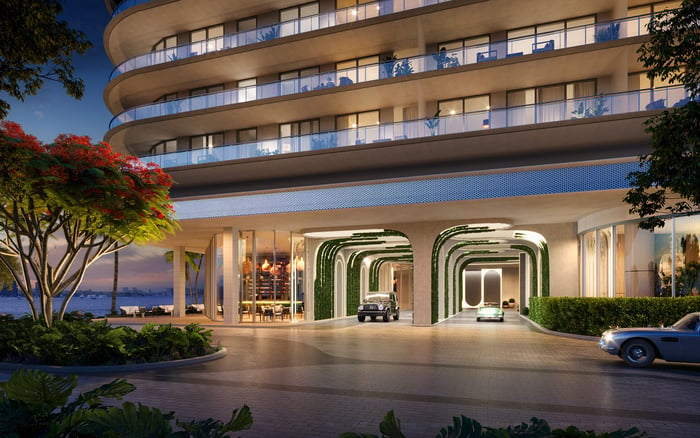
In North Bay Village, the most consequential feature of a luxury residence may be its relationship to loading bays, service elevators, commercial space, garage machinery, and waterfront operations. A disciplined buyer studies those adjacencies across the day before treating a lower asking price as genuine value.

In North Bay Village, a residence can present beautifully during a quiet showing and live very differently when routine building activity is underway. The difference often comes down to operational adjacency: the unit’s relationship to loading areas, service corridors, garage entrances, mechanical equipment, commercial premises, and waterfront activity. These elements may never appear in a simple price comparison, yet they can define the daily experience of ownership.
The most important luxury may be distance from the building’s operational spine.
An appealing asking price can compensate for cosmetic work or a less fashionable finish package. It is less effective at offsetting recurring vibration, early deliveries, rolling carts, service-door closures, or vehicle movements beneath a bedroom. The relevant comparison is not simply one residence against another, but one acoustic and operational position against another.
Delivery and service circulation should be treated as an enduring part of a property’s operation rather than a temporary inconvenience. The unit-level questions are practical: Where is the loading space relative to the residence? Which ramp, driveway, service door, or internal corridor connects it to the building? Does that route pass beneath a terrace, beside a bedroom wall, or near a private elevator vestibule?
Request the complete site plan rather than relying solely on the residence plan. Mark the loading bay, garage entrance, waste rooms, service elevators, commercial access, mechanical rooms, and primary delivery route. Then map the unit vertically as well as horizontally. A residence several floors above an active area may still share a structural line, shaft, or facade exposure with building operations.
Prospective owners comparing Continuum Club & Residences North Bay Village, Shoma Bay North Bay Village, and Tula Residences North Bay Village should apply the same discipline to each opportunity: assess the exact unit’s relationship to service infrastructure rather than extrapolating from the broader development story.
Service-elevator noise does not begin and end with the elevator car. Doors, motors, loading activity, and carts crossing thresholds can all shape the experience. Mechanical parking systems deserve similar scrutiny because vibration may be perceptible beyond the equipment’s immediate location.
Ask whether the unit adjoins an elevator shaft, machine room, garage wall, or service lobby. During a showing, pause the conversation and listen from the primary suite, living room, and terrace. Close interior doors and pay attention to impact sounds as well as steady mechanical noise. If permitted, observe the relevant elevator or garage equipment during normal use.
Request available maintenance records, recent repair information, and any relevant condominium complaint history. Documentation cannot replace an in-person test, but it may help identify whether a disturbance is isolated, recurring, or associated with a maintenance issue.
Commercial space can add convenience and vitality, but its operational profile matters. Buyers should identify existing uses, delivery arrangements, servicing routes, waste handling, operating patterns, and any restrictions described in governing documents or leases. The central issue is not whether a building is described as mixed-use, but how its commercial component interacts with its residential one.
A polished retail frontage may be acoustically remote from one stack and directly connected to another. Residences above or beside commercial premises demand particular attention to deliveries and servicing. Ask whether commercial personnel use separate elevators, entrances, loading areas, and waste rooms. Confirm whether exhaust, mechanical equipment, or back-of-house functions occupy space beneath or beside the unit.
Future conditions also deserve consideration. A current tenant’s operating pattern may not describe every future condition. Review available use restrictions and lease provisions with appropriate legal guidance. Residential branding provides context, but it is no substitute for understanding the rights and operating arrangements attached to commercial space.
Waterfront ownership introduces another operational edge. A marina or dock amenity may be highly desirable, yet its configuration and governance still warrant scrutiny. Buyers should ask where vessels approach, how dock servicing is managed, which access points contractors or staff use, and which residential exposures face those areas.
Dock rules, access arrangements, lighting, gates, servicing restrictions, and owner-versus-contractor use can all affect residential calm. Observe the waterfront from inside the residence with the doors closed, then from the terrace. The view can remain exceptional even as the acoustic experience changes with activity.
A standard appointment often captures a property at its most composed. Return during likely delivery periods, in the evening, and on a weekend. Enter through the garage, walk the service perimeter where access is permitted, and remain near the residence long enough for ordinary building activity to occur. A sound that seems minor during a brief tour may feel very different when repeated daily.
Request floor plans, loading schedules, commercial leases or use restrictions, dock rules, equipment-maintenance records, and available condominium complaint records. Ask management how deliveries, moves, refuse collection, contractors, and commercial servicing are scheduled. When acoustic privacy is a priority, consider engaging qualified legal, engineering, and acoustic advisers to assess the documents and physical conditions.
The central buying principle is simple: compare exposure, not merely price. Two similar layouts in the same building can carry different lifestyle implications because one may face open water while another aligns with a loading route, garage opening, service shaft, or commercial back-of-house area. A discount is meaningful only after the reason for it has been understood.
For discreet guidance on evaluating South Florida residences beyond the listing details, connect with MILLION.
If branded residences are on your mind — as a home or as an allocation — we would be glad to share what we are seeing, privately.
Begin a quiet conversationRecurring exposure to loading, service equipment, commercial activity, or garage movements can affect daily comfort. A discount may not compensate for a condition that cannot be readily changed.
Inspect the unit’s relationship to loading bays, service routes, garage entrances, elevator shafts, mechanical rooms, waste areas, commercial space, and docks.
Visit during likely delivery periods, evenings, and weekends. Multiple visits can reveal operating conditions that a conventional daytime showing may miss.
Request floor plans, loading schedules, equipment-maintenance records, dock rules, use restrictions, and available complaint records.
No. Building systems and operating procedures do not establish the acoustic experience within every individual unit.
A nearby shaft, door, machine space, or service lobby may transmit mechanical or impact sound. Vertical alignment can matter as much as horizontal distance.
Commercial uses may introduce deliveries, staff movements, waste handling, equipment, and servicing. Buyers should examine the separation of access, elevators, loading areas, and back-of-house functions.
Review dock configuration, access arrangements, vessel approach, servicing, lighting, gate operation, and contractor use.
Maintenance history may help a buyer assess reliability and determine whether equipment-related disturbance has been recurring.
No. Buyers should verify on-site uses, service circulation, operating arrangements, and the exact unit’s position within the property.