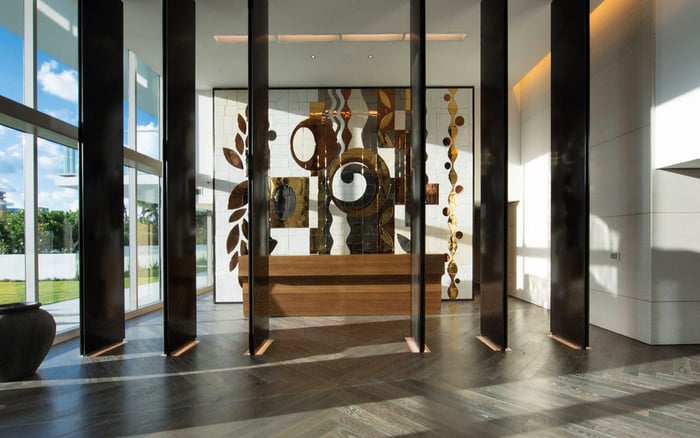
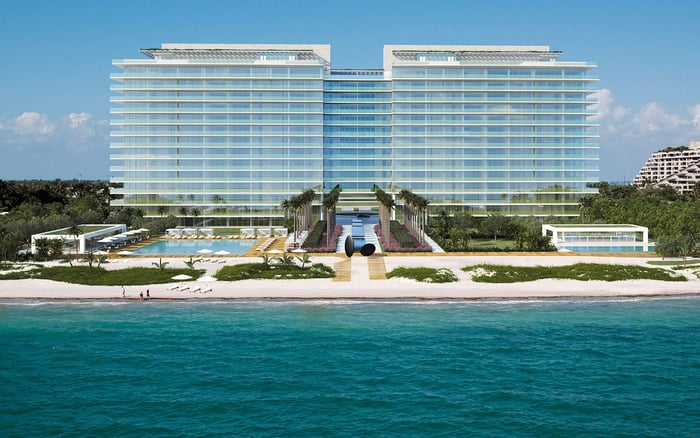
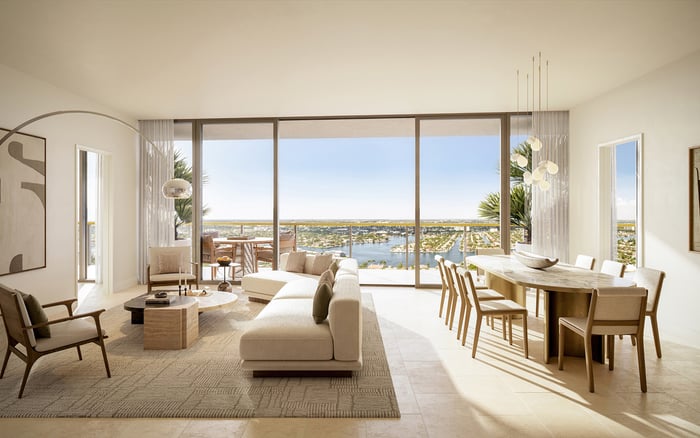
For New York and London buyers, the strongest South Florida pied-à-terre choices are less about a single trophy tower and more about matching lifestyle to district. Miami Beach and South Beach remain the classic answer for seasonal glamour and established luxury inventory, while Brickell suits finance-oriented owners who want an urban base close to business, dining, and the airport. Coconut Grove, Key Biscayne, Coral Gables, Aventura, and Wynwood or the Design District each answer a different version of the second-home brief, from privacy to family use to culture-first living.
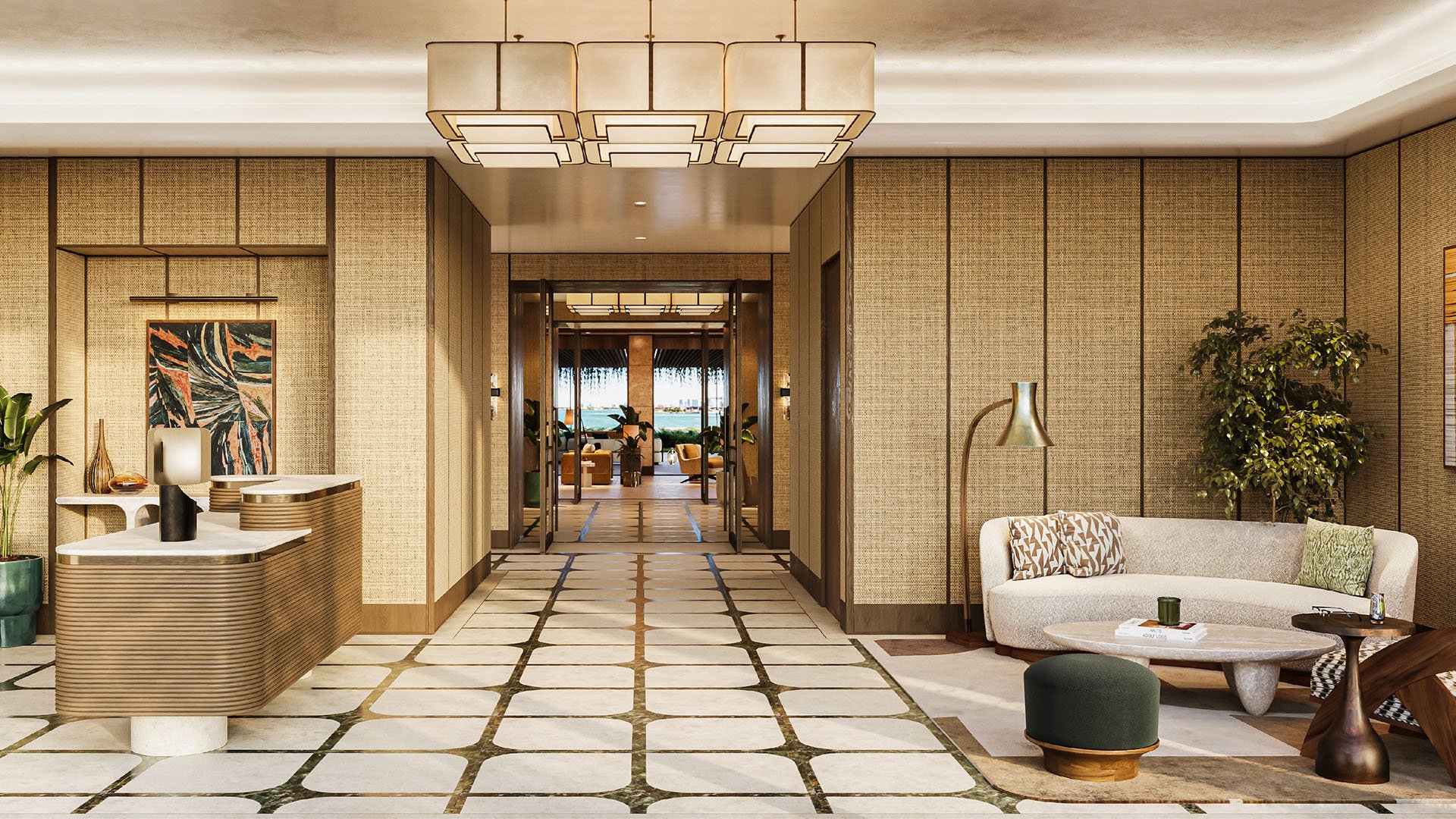
For buyers based in New York or London, the best South Florida pied-à-terre is rarely the largest residence in the flashiest tower. It is the one that functions elegantly for a life lived in intervals: long weekends, winter stretches, business trips, family holidays, and the occasional spontaneous escape when warm weather is the point of the purchase.
That changes the brief. A primary home can absorb quirks. A pied-à-terre should eliminate them. The strongest candidates tend to be turnkey or easily furnished, service-led, secure, and simple to lock and leave. In this market, buyers often gravitate toward roughly 1,000 to 1,500 square feet, frequently in the $2 million to $4 million band, while prime branded or view-driven product can command materially higher pricing on a per-square-foot basis.
The defining luxury over New York and London is not simply sunshine. It is usable outdoor living. Deep terraces, broad water views, marina access, beach access, and amenity packages centered on wellness all carry outsized weight because they deliver something those global cities cannot offer as effortlessly.
1. Miami Beach and South Beach, for the classic luxury escape
This remains the most established answer for international pied-à-terre buyers. The appeal is clear: mature luxury condo inventory, strong winter demand, and a setting that immediately feels like an arrival rather than an extension of the workweek. For owners who want a glamorous seasonal base with beach proximity and a recognizable social rhythm, Miami Beach and South Beach still set the standard.
The best residences here tend to combine strong security, meaningful outdoor space, and hotel-style services. Buildings such as The Perigon Miami Beach and The Ritz-Carlton Residences® South Beach speak to that service-heavy, lock-and-leave ideal without requiring buyers to compromise on stature.
2. Brickell, for finance buyers who want an urban foothold
Brickell is often the most intuitive choice for New York and London purchasers with business ties. It functions as Miami’s urban core, with luxury high-rise stock close to offices, restaurants, and transport links. For buyers who want to fly in, work, dine well, and leave without using a car more than necessary, Brickell is difficult to surpass.
It also aligns with the practical priority of staying within a relatively short drive of Miami International Airport. Residences such as St. Regis® Residences Brickell or The Residences at 1428 Brickell fit the profile many part-time owners seek: branded positioning, concierge culture, and a level of polish that makes repeated short stays feel effortless.
3. Coconut Grove, for buyers who want a quieter, residential rhythm
Not every international purchaser wants beachfront theater or downtown intensity. Coconut Grove appeals to those who prefer a village-like setting with marinas, waterfront character, and a lower-key tone. For a London family accustomed to elegant neighborhoods with walkable pockets of culture, or for a New Yorker seeking distance from vertical bustle, the Grove offers a softer landing.
That is why projects like Park Grove Coconut Grove and Four Seasons Residences Coconut Grove feel especially relevant to the pied-à-terre conversation. The area supports a more discreet mode of ownership while still delivering prestige, marina access, and strong lifestyle value.
4. Key Biscayne, for privacy-first waterfront living
For buyers who place privacy, security, and a more secluded residential atmosphere above pure convenience, Key Biscayne stands apart. It reads as ultra-prime and deliberately removed, appealing to owners who want to feel insulated from the pulse of the mainland while remaining close enough for regular use.
The ideal buyer here is not seeking nightlife at the doorstep. They are seeking calm, controlled access, and a residence that can sit vacant for stretches without inviting concern. In that sense, Key Biscayne often works best for owners who already know Miami well and want a retreat, not an introduction.
5. Coral Gables, for family-minded prestige
Coral Gables offers a different interpretation of the second home. Historic prestige, Mediterranean character, and generally larger residential formats make it attractive for buyers who expect family use rather than a sleek crash pad. If children, visiting relatives, or longer winter occupancy are part of the equation, the extra breathing room matters.
The neighborhood’s appeal is less about immediate beach access and more about permanence, polish, and a sense of established order. For some New York and London households, that makes Coral Gables the most logical choice, especially when the brief extends beyond a couple’s weekend residence.
6. Aventura, for resort-style practicality
Farther north, Aventura suits buyers who want a resort-oriented second home with a more family-friendly feel. Gated environments, golf adjacency, and amenity-rich living have obvious appeal for owners who use South Florida as a multi-generational retreat.
This is not the most urban answer, nor the most iconic beachfront one, but it can be among the easiest to live with. Buyers prioritizing convenience, managed living, and recreational infrastructure may find Aventura more useful than trend-driven districts closer to the urban core.
7. Wynwood and the Design District, for culture-led buyers
Some purchasers care less about sand and more about design, dining, and creative energy. For them, Wynwood and the Design District offer a more current, culture-forward version of the pied-à-terre. The draw is newer luxury development, restaurants, galleries, and an address that feels socially connected.
This lane works best for younger buyers, design-led households, and those who want their Miami base to feel distinctly different from a conventional beachfront residence. It is the choice for owners who value proximity to fashion, art, and city life over resort language.
The most successful South Florida pied-à-terre residences tend to share a predictable set of characteristics. First is service. Concierge, housekeeping options, robust security, and controlled guest circulation all matter more when an owner may be away for weeks or months at a time. Private elevator access and gated lobbies are not indulgences here. They are part of the operating logic.
Second is immediacy. Turnkey furnished product, or residences that can be furnished quickly without a bespoke build-out, are often preferred over highly customized homes. Part-time owners generally value immediate usability over design experimentation, particularly when they expect to arrive on short notice.
Third is amenity quality. Spa facilities, strong fitness offerings, rooftop or resort-style pool environments, wine storage, and direct beach access or marina privileges tend to strengthen part-time appeal more than standard condo features. The best pied-à-terre buildings function almost like private clubs with keys.
A glamorous tower can still make a poor pied-à-terre if it misses on fundamentals. Airport access is the first filter. Many buyers strongly prefer residences that sit within roughly 15 to 20 minutes of Miami International Airport, simply because weekend ownership stops feeling luxurious once every arrival becomes a logistical exercise.
Lease flexibility is the second. Seasonal rental income can be appealing, especially in Miami Beach and South of Fifth-oriented markets, but it should never be assumed. Rental performance depends on building rules and local regulation, and short-term rental restrictions make due diligence essential. Condo documents, minimum lease terms, furnishing policies, and municipal rules should all be reviewed together.
Finally, buyers should think carefully about resale timing. Trophy branding can inspire confidence, but liquidity is not always immediate. Luxury pied-à-terre inventory can take many months to trade, which means exit planning deserves the same seriousness as entry.
If the brief is elegance, immediacy, and proven winter desirability, Miami Beach and South Beach remain the strongest all-around answer. If the buyer wants a finance-friendly urban base, Brickell is the clear favorite. If the brief is lower-key luxury with a residential texture, Coconut Grove becomes especially persuasive.
The larger point is that the best pied-à-terre is not universal. It is specific. The right residence is the one that matches how often the owner flies in, whether they expect family use, how much service they want, and whether they prize privacy, culture, or beach access above all else.
What is the best overall South Florida area for a pied-à-terre? Miami Beach and South Beach remain the most established choices for buyers seeking seasonal glamour, strong inventory, and easy fly-in ownership.
Why is Brickell so popular with New York and London buyers? Brickell offers an urban, finance-oriented setting with luxury towers near offices, dining, and transport, making short business or leisure stays especially efficient.
Is Coconut Grove better than Brickell for a second home? It can be, if you prefer a quieter, more residential atmosphere with marina access and a village-like feel rather than a downtown pace.
Who is Key Biscayne best suited to? It appeals most to buyers who prioritize privacy, security, and a secluded waterfront setting over maximum convenience.
What size residence works best as a pied-à-terre? A common target is roughly 1,000 to 1,500 square feet, which is large enough for comfort yet manageable for part-time ownership.
Are turnkey residences worth the premium? Often yes, because part-time owners typically value immediate usability and simplified management more than a lengthy customization process.
Which amenities matter most for part-time owners? Security, concierge service, fitness and spa facilities, a strong pool, and either beach access or marina access usually rank highest.
Can owners offset costs with seasonal rentals? Sometimes, but only if the building and local rules permit the intended lease strategy, which must be checked carefully before purchase.
Is airport access really that important? Yes. For frequent weekend use, a residence within a relatively short drive of Miami International Airport is often materially more practical.
Are branded residences automatically the best choice? Not automatically. They often excel in service and security, but buyers should still weigh layout, leasing rules, carrying costs, and resale timing.
For a discreet conversation and a curated building-by-building shortlist, connect with MILLION Luxury.
If branded residences are on your mind — as a home or as an allocation — we would be glad to share what we are seeing, privately.
Begin a quiet conversation