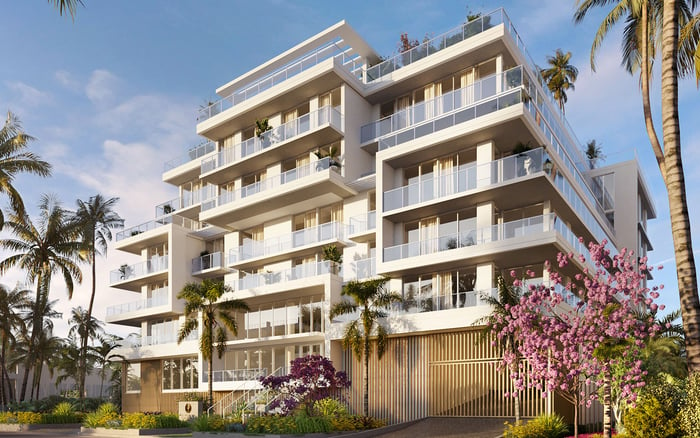
In Miami’s Design District, a polished arrival experience is only the beginning. Buyers should examine household-staff permissions, driver waiting arrangements, provider credentials, and written service terms before translating an amenity offering into an ownership budget.

In Miami’s Design District, an elegant arrival and an efficiently run household are distinct considerations. District-level hospitality should not be treated as a statement of the operating rules of a private residence.
For a buyer with a housekeeper, personal driver, or regular maintenance team, ownership value also rests on less visible details: who may enter, where they may wait, what credentials they need, and who pays for those arrangements. The cost is not limited to potential service charges. It also includes the time and coordination required when a building’s rules do not fit the household’s routine.
Retail and visitor-service hours should not be used to infer residential access hours. Establish the residential rules separately, in writing.
When evaluating Kempinski Residences Miami Design District, separate the appeal of a branded residence from the written terms governing household operations. Ask specifically about staff access, accommodation for household employees, and any associated pricing rather than inferring permissions from an amenity description.
For any residence under consideration, ask whether housekeeping, chauffeur services, laundry, pantry stocking, residence maintenance, or dog walking are available. This is a checklist for inquiry, not a statement that a particular project offers those services.
Determine which services are included, which are optional, and which are arranged through independent providers. Those distinctions affect budgeting, supervision, and accountability. Neither an amenity description nor a brand name establishes a contractual entitlement or a confirmed price.
Ask management to walk through a realistic day rather than offer a general assurance that staff are welcome. A recurring housekeeper arriving before the owner, a babysitter leaving late, and a maintenance technician attending an unoccupied residence each raise different access questions.
Request written rules covering recurring-worker registration, credential renewal, permitted hours, service entrances, elevator permissions, staff parking, and emergency access. Clarify whether credentials attach to an individual worker or a service company, and how substitutions are approved. An arrangement that suits one permanent employee may not accommodate a rotating team.
Next, establish the owner’s administrative responsibilities. Who submits documents, approves entry when the owner is away, and cancels access when employment ends? Are escorts required, and who supplies them? Ask whether registration, parking, or after-hours fees apply; do not assume they exist.
Buyers also considering Miami Tropic Residences should use the same household schedule in that evaluation. This is a comparison framework, not a statement about the project’s policies.
A motor court can support a graceful arrival without permitting a driver to remain between appointments. Valet availability likewise does not establish repeat-staging rights, overnight parking permissions, or a dedicated waiting area. These distinctions matter when a household expects a vehicle to remain immediately available.
Where a private motor court is offered, focus on operation rather than appearance. Request dwell-time limits, repeat-entry rules, and arrangements for a driver waiting while residents are upstairs. If self-parking is available, confirm whether it accommodates the intended routine and whether the driver may retain access to the vehicle.
Distinguish three scenarios: a brief pickup, several hours of standby, and an overnight arrangement. Ask where the vehicle and driver may remain in each case, what reservations or authorizations are needed, and whether charges apply.
If the household uses an outside chauffeur rather than a building-arranged service, confirm that provider’s access independently. An offered chauffeur service does not establish permission for every outside operator.
A qualified provider is not automatically an approved building vendor. Check professional credentials and property access separately. For regulated work, verify the relevant license with the applicable licensing authority.
For building approval, request insurance-certificate requirements, worker registration procedures, escort rules, delivery windows, loading access, and elevator reservation terms. Clarify renovation hours and responsibility for damage before scheduling work. Establish who monitors expiring documents and whether approval must be renewed for subsequent visits.
Security merits the same discipline. If the household uses private security, ask which licensing, insurance, background-screening, and training documentation is required. Confirm the building’s requirements separately rather than assuming professional credentials establish access rights.
When comparing Villa Miami with a Design District option, apply the same credential questions without assuming the properties have equivalent vendor procedures.
Request an itemized fee schedule rather than adding an assumed premium to monthly association dues. Check parking, move-in and move-out arrangements, elevator reservations, after-hours access, housekeeping, chauffeur service, laundry, maintenance call-outs, and emergency response. These are categories to investigate, not confirmed charges.
Sort the answers into included services, optional building services, and independently contracted services. For every optional item, request the billing basis, any minimum commitment, cancellation terms, and applicable availability restrictions. Mark unresolved items as unconfirmed rather than treating them as free.
Test that schedule against both an ordinary week and a demanding one. The latter might include an owner’s late arrival, visiting guests, and a maintenance appointment. These hypothetical scenarios can reveal dependencies that a simple amenity comparison misses.
Finally, identify who contracts with, screens, supervises, and insures each provider. A concierge introduction is not a promise that the building assumes those responsibilities.
For announced projects, confirm final operating agreements, service availability, outside-provider permissions, and pricing. Ask which written provisions govern each answer and which arrangements remain subject to change. A service concept is not an enforceable commitment.
The strongest basis for comparison is a compact ownership file: staff-access rules, driver-staging terms, vendor requirements, service responsibilities, and an itemized fee schedule. Review it against how the household actually lives, not merely how the residence is presented.
A well-matched home allows discretion and convenience to coexist with clear obligations. Before committing, resolve the practical questions that determine whether the household can function as intended.
For a discreet conversation about aligning a South Florida residence with your household’s needs, connect with MILLION.
If branded residences are on your mind — as a home or as an allocation — we would be glad to share what we are seeing, privately.
Begin a quiet conversationNo. District valet availability does not establish a residence’s parking permissions, driver waiting arrangements, or applicable fees.
Do not use those hours to infer residential access permissions. Confirm residential access hours separately through the building’s written rules.
Request rules for registration, credential renewal, permitted hours, elevator access, service entrances, parking, and emergency entry. Clarify how substitute workers are approved.
Not necessarily. Confirm dwell-time limits, repeat-staging permissions, overnight arrangements, and where both the driver and vehicle may wait.
An amenity description does not establish inclusion in association dues or verified pricing. Request the written service terms and itemized fee schedule.
Ask whether accommodation is available and whether household employees are permitted to use it. Confirm any pricing and restrictions in writing.
Verify applicable professional licenses with the relevant licensing authority. Separately confirm the building’s insurance, registration, and access requirements.
Do not assume they do. Confirm the building’s private-security access and documentation requirements separately.
Ask about parking, move-in and move-out arrangements, elevator reservations, after-hours access, and optional household services. Treat these as categories to confirm, not established charges.
Identify who contracts with, screens, supervises, and insures the provider. A concierge introduction alone does not establish that the building assumes those responsibilities.