For Boca Raton condominium buyers, the master policy is only the beginning. Replacement-cost appraisals, claim authority, deductible funding and owner-policy exclusions deserve close review before closing.
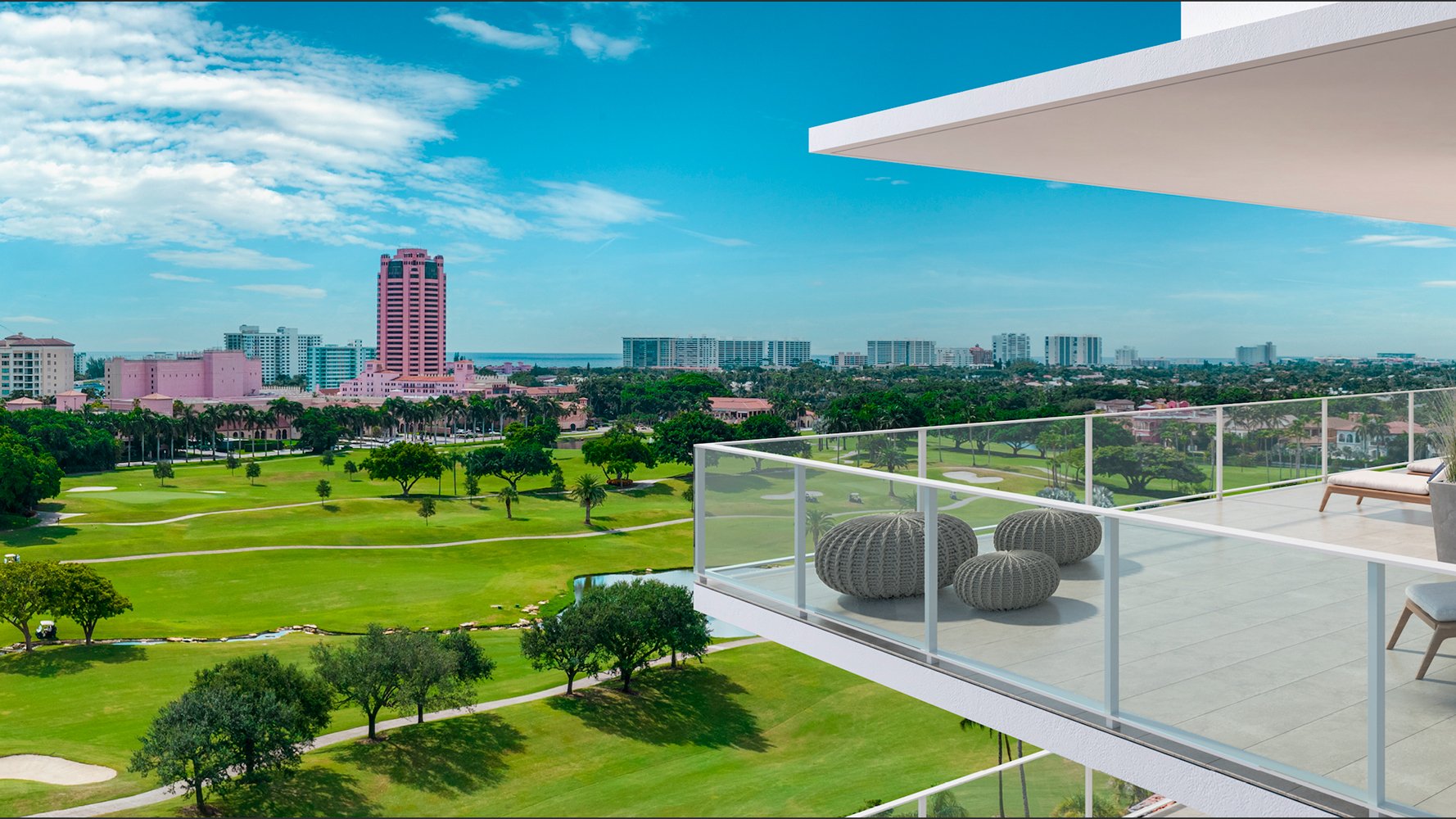
A Boca Raton residence warrants financial scrutiny as considered as its architecture. Beyond the purchase price and monthly association charge, insurance arrangements determine which costs are shared, which remain personal and which may arrive as an assessment after a loss. A master policy alone does not answer all three questions.
For buyers considering Alina Residences Boca Raton, the useful comparison extends beyond the association fee. It lies in the relationship between insured property, deductible funding, claim authority and coverage purchased for the individual residence. These are due-diligence questions, not conclusions about that project's insurance arrangements.
The framework discussed here concerns Florida condominiums. It is not a separate Boca Raton insurance regime, nor should it extend automatically to every homeowners' association. The objective is straightforward: understand how a building loss could become a personal expense before closing.
Florida condominium associations purchase property insurance for association-insured property as a common expense, subject to statutory exclusions. Those exclusions merit particular attention in a residence with substantial interior finishes.
Specified unit items excluded from association property coverage include floor, wall and ceiling coverings, electrical fixtures, appliances, water heaters, built-in cabinets and window treatments. Those items and their insurance are generally the owner's responsibility. The distinction matters even when cabinetry or flooring feels integral to the residence rather than an optional improvement.
Have the insurance adviser compare the proposed unit-owner policy, commonly called an HO-6 policy, with the master policy and endorsements. Ask how interior-property limits, exclusions and deductibles correspond to the actual residence. Second-home buyers should also examine temporary-housing coverage rather than assume the association policy addresses their personal accommodation needs.
The word appraisal can describe different insurance documents. An independent replacement-cost appraisal, or an update to an earlier appraisal, provides a basis for determining the replacement cost of association-insured property. Condominium replacement-value coverage requires a new or updated appraisal at least every three years.
That valuation is distinct from a policy's claim-appraisal procedure. One establishes the replacement-cost basis for insurance; the other requires a review of the policy's specific claim language. A recent building valuation does not answer questions about invoking a claim-appraisal clause or resolving a particular dispute.
When evaluating Glass House Boca Raton, for example, request the applicable replacement-cost appraisal and insurance documents as distinct parts of the review. Ask the adviser to reconcile the appraisal's scope with the property insured under the policy. Separately, have counsel explain any claim-appraisal provision, including its stated procedures and limits. Valuation and claim resolution are not interchangeable.
Establish claim authority through documents, not a management title or an informal assurance. Before closing, ask who may invoke appraisal, engage an adjuster, approve repair work, agree to a settlement and sign a release on the association's behalf.
Each action warrants a separate question. Request the governing provisions, applicable resolutions, contracts and insurance-related minutes that establish authority for each. Ask whether any decision requires further board action and where that approval would be recorded. The relevant documents and applicable law should guide counsel's answer.
For a buyer, the practical goal is a clear decision-making structure: who evaluates the loss, who approves spending and who can bind the association. Authority to coordinate repairs does not necessarily include authority to settle the insurance claim.
Association property policies may contain deductibles established by the board. Those amounts must be consistent with industry standards and prevailing practices for local communities of comparable size, age, construction and facilities. The board must establish them at a properly noticed board meeting.
In setting deductibles, the board may consider available funds, including reserves, or predetermined assessment authority. The deductible schedule is therefore inseparable from the association's finances. Ask not only how much the deductible is, but which funds could cover it and what owner assessment might be necessary.
Under the statutory insurance-repair framework, association deductibles, uninsured losses and damage exceeding association coverage are generally common expenses, subject to specified exceptions. A common expense is not a cost-free one: the association may need to assess owners to fund it.
An owner may instead be responsible for repair or replacement costs not paid by insurance when damage results from intentional conduct, negligence or failure to comply with the declaration or association rules. The exception can extend to conduct by family members, occupants, tenants, guests or invitees.
Where damage begins is not enough, by itself, to assign the entire association deductible to that unit's owner. Applicable law, valid governing provisions and the facts of the loss all matter. A declaration provision should not be treated as automatically overriding statutory insurance obligations.
Not every repair falls within the insurance-loss framework. When there is no insurable event, responsibility for reconstruction, repair or replacement follows the maintenance provisions of the declaration or bylaws. Common-element maintenance is generally the association's responsibility, except where the declaration assigns maintenance of a limited common element to an owner.
Buyers considering The Residences at Mandarin Oriental Boca Raton should make the same distinction in their document review: what is an insurance question, and what is a maintenance obligation? The project name alone establishes neither. Have counsel examine the relevant provisions before accepting an assurance that a future repair would be covered.
Florida residential condominium unit-owner policies must include at least $2,000 in property loss-assessment coverage, subject to statutory conditions. That required coverage carries a deductible of no more than $250 per direct property loss. It is minimum protection, not a promise to pay every special assessment.
The required coverage concerns assessments arising from direct losses of a type covered by the owner's policy. Ask the insurance adviser to explain how proposed limits and exclusions would apply to association-loss scenarios, including peril-specific exclusions. An assessment for maintenance is not equivalent to an assessment arising from a covered loss.
Before closing, assemble the master policy, endorsements, deductible schedule, replacement-cost appraisal, budget, reserve study, insurance-related minutes, assessment information and declaration. Review them together with the proposed owner policy. The strongest ownership decision rests on understanding both the insurance protection and the costs that remain yours.
For a considered approach to Boca Raton condominium ownership, explore MILLION.
If branded residences are on your mind — as a home or as an allocation — we would be glad to share what we are seeing, privately.
Begin a quiet conversationNo. Specified interior items, including coverings, appliances, built-in cabinets and window treatments, are excluded from association property coverage and are generally the owner's insurance responsibility.
Condominium replacement-value coverage requires a new or updated appraisal at least every three years. The appraisal provides a basis for determining replacement cost for association-insured property.
No. A replacement-cost appraisal concerns valuation for insurance, while any claim-appraisal procedure must be examined through the policy's specific language.
Authority must be established through the applicable documents and law. Ask counsel to review governing provisions, resolutions and other relevant records rather than assuming a manager or board representative can sign a settlement.
Deductibles must be established at a properly noticed board meeting and be consistent with industry standards and prevailing practices for comparable local communities. The board may consider available funds, including reserves, or predetermined assessment authority.
Yes. Association deductibles are generally common expenses under the statutory insurance-repair framework, subject to exceptions, and the association may need an assessment to fund them.
The origin of the damage alone does not establish that obligation. Owner responsibility may arise from intentional conduct, negligence or noncompliance, including certain conduct by occupants, tenants or guests.
Responsibility follows the maintenance provisions of the declaration or bylaws. Common-element maintenance generally belongs to the association, with an exception where the declaration assigns limited-common-element maintenance to an owner.
Florida residential condominium unit-owner policies must include at least $2,000 in property loss-assessment coverage, subject to statutory conditions. The required coverage has a deductible of no more than $250 per direct property loss.
No. The required coverage applies to assessments arising from direct losses of a type covered by the owner's policy, not every maintenance expense or special assessment.