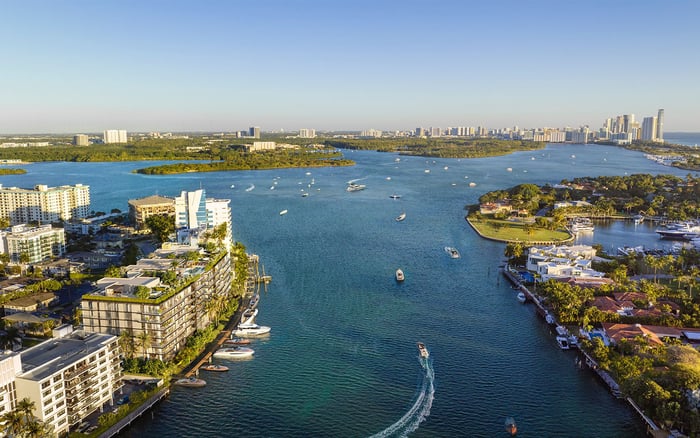
For a seasonal owner, evaluating a Bay Harbor Islands residence means examining vacancy oversight, moisture management, storm preparation, communications, access, and documented responsibility before closing.

For Silicon Valley buyers considering a seasonal residence in Bay Harbor Islands, the diligence process should extend beyond architecture, amenities, and interiors. It should establish how the home will be monitored and protected when the owner is away.
A buyer should not presume that a condominium's management team will enter a vacant residence, monitor its mechanical systems, prepare outdoor areas, or inspect private space after severe weather. The scope of service, access authority, staffing, and owner responsibility must be verified for the specific building.
The objective is a documented chain of responsibility that remains workable during an extended absence, a mechanical interruption, severe weather, or delayed travel.
Buyers comparing Alana Bay Harbor Islands with other local residences should request the current condominium documents, management policies, and emergency procedures relevant to an owner's intended use.
Ask whether authorized personnel may enter the unit, who receives system alerts, how an owner's representative is registered, and what records follow an entry. Also confirm the handling of keys, credentials, vendors, guests, deliveries, leasing, and notice requirements.
Verbal descriptions should not replace the governing documents and written building policies. Any uncertainty about rights, restrictions, insurance, or contractual responsibility should be reviewed with the appropriate qualified professional.
This article does not establish an indoor-humidity target, thermostat setting, equipment capacity, or inspection schedule. Those decisions require guidance tailored to the residence, its systems, materials, exposure, and vacancy pattern.
For a home at La Maré Bay Harbor Islands or another waterfront condominium, buyers should distinguish management of common building systems from care inside a privately owned unit. Ask how an interruption is detected, who receives an alert, who can respond, and whether that person has documented authority to enter.
A written ownership plan can identify the relevant mechanical professional, property-care representative, insurer, emergency contact, and access procedure. It can also address the owner's preferred protocol for furnishings, art, millwork, wardrobes, and electronics during a long absence without assuming that building staff will provide in-unit care.
Storm preparation should be evaluated building by building. Buyers considering Onda Bay Harbor should request the property's current procedures and determine which tasks belong to management, the owner, or an authorized representative.
Questions should cover preparation triggers, deadlines, staffing limitations, communication channels, outdoor items, vehicles, vendor access, building-system changes, evacuation, and re-entry. The buyer should also determine what happens if the owner cannot return to South Florida before conditions deteriorate.
A useful diligence exercise is to present management with a vacancy scenario and request a written explanation of its response. The answer can expose gaps in authority, timing, staffing, access, or communication before they become urgent.
No service level should be inferred solely from a building's size, branding, amenities, or presentation. Buyers should ask who is available outside regular hours, how simultaneous owner requests are prioritized, when vendors may enter, and who communicates if ordinary channels are unavailable.
The same review applies when comparing Bay Harbor Towers and The Well Bay Harbor Islands. Project selection can narrow the search, but it does not replace review of current building documents and operating procedures.
For a technology-oriented buyer, remote monitoring may be attractive, but an alert is useful only when a named person can interpret it, gain authorized access, and coordinate an appropriate response. Devices, connectivity, building permissions, privacy considerations, and professional support should therefore be assessed as one system.
Ask management to walk through a scenario in which the residence is vacant, severe weather is approaching, an alert is received, and the owner cannot travel. Determine who acts, how permission is documented, what falls outside management's role, and how the owner receives updates.
Post-event diligence is equally important. Confirm the building's process for access restrictions, private-unit entry, condition documentation, vendor return, and communication with an owner's representative. Do not assume immediate access or a particular inspection service unless it is documented.
The strongest ownership plan combines the building's written procedures with clearly assigned private responsibilities, qualified professional guidance, approved access, and an up-to-date communication tree.
Is Bay Harbor Islands suitable for a seasonal residence? Suitability depends on the specific building, residence, intended use, and the owner's ability to establish a reliable vacancy-care plan.
Will condominium management monitor a vacant unit? Do not assume it will. Confirm the scope of in-unit monitoring, access, response, documentation, and fees in writing.
What thermostat or humidity setting should an absent owner use? This article does not prescribe one. Obtain residence-specific guidance from qualified mechanical and property-care professionals.
Who should receive a mechanical or water alert? The owner should identify an authorized responder and confirm that the person can receive the alert, enter the residence, and coordinate appropriate help.
Can an owner's representative access the residence during an emergency? Access depends on current building procedures and documented authorization. Verify credentials, keys, notice requirements, and restrictions before an absence.
Who is responsible for storm preparation? Responsibility varies by property and task. Request the building's current written procedures and assign any remaining owner duties.
Should buyers rely on verbal descriptions of emergency service? No. Compare representations with current governing documents, management policies, and written responses from the appropriate parties.
How should a buyer evaluate communication resilience? Ask which channels the building uses, who sends updates, whether remote owners are included, and what backup process applies if a normal channel fails.
What should be reviewed after severe weather? Confirm procedures for re-entry, private-unit access, condition documentation, vendor coordination, and communication with the owner's representative.
What is a useful pre-closing operational test? Give management a realistic vacancy scenario and request a written, step-by-step explanation of responsibilities, limits, access, and communication.
For a tailored shortlist and next-step guidance, connect with MILLION.
If branded residences are on your mind — as a home or as an allocation — we would be glad to share what we are seeing, privately.
Begin a quiet conversation