For a Miami buyer with concentrated equity wealth, borrowing against investments requires more than a share-price calculation. Collateral eligibility, maintenance requirements and a credible repayment reserve should shape the home purchase before funds are committed.
A Miami home purchase can begin with an apparently elegant proposition: retain a substantial equity position, borrow against it and direct the liquidity toward a residence. The appeal is clear. Borrowing against eligible investments can provide cash without an immediate sale. It does not, however, remove exposure to those investments or establish that restricted shares qualify as collateral.
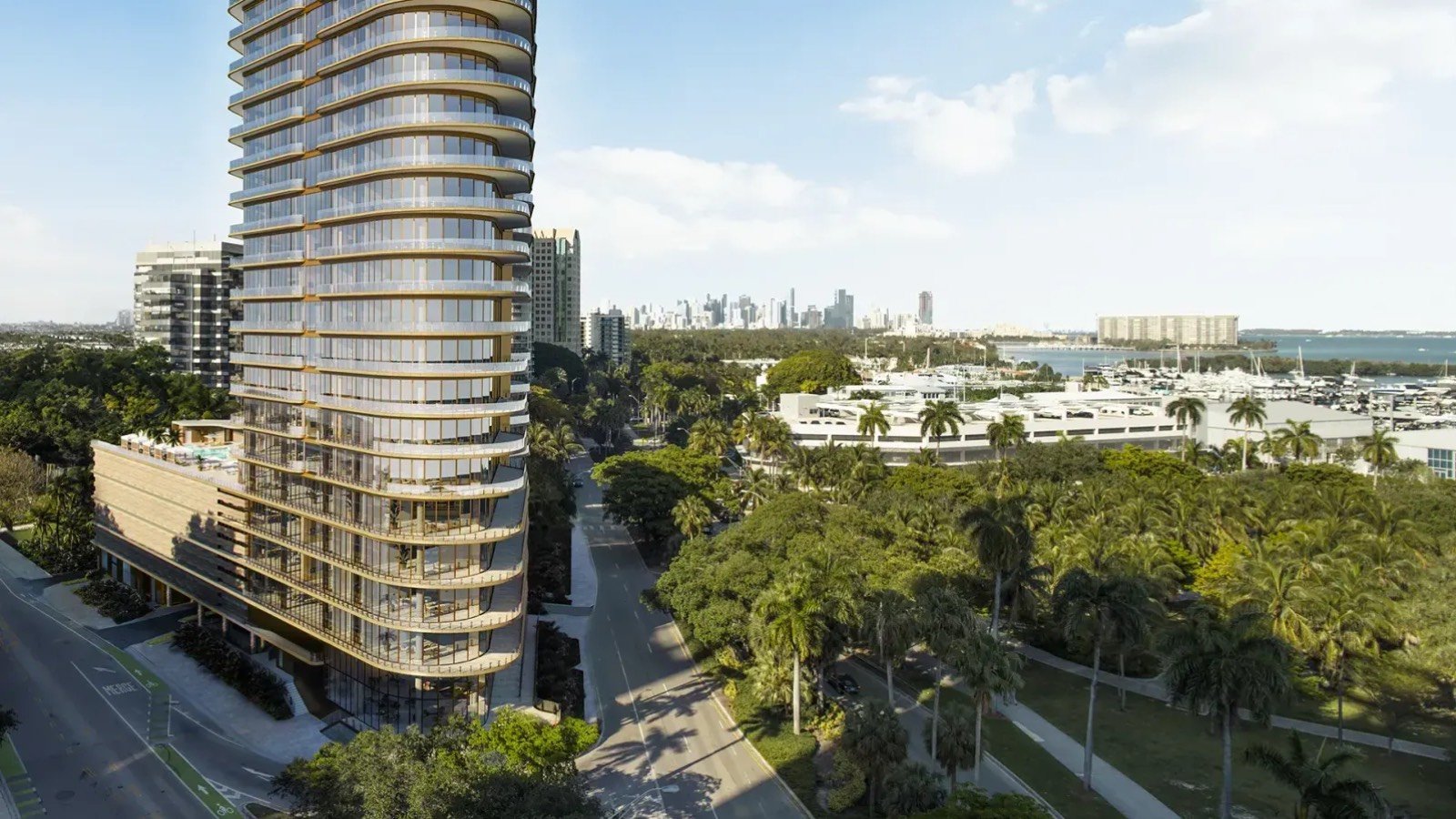
Consider a hypothetical buyer evaluating The Residences at 1428 Brickell. This is an illustrative financing conversation, not a reported transaction or an indication that any project offers a particular lending arrangement. Before discussing borrowing capacity, the buyer needs to distinguish the home loan from the investment-backed facility.
A securities-backed line of credit, or SBLOC, is secured by eligible investment-account assets rather than the home. Using its proceeds toward a purchase or down payment does not mean those securities secure the mortgage itself. That distinction determines which assets support each obligation and which terms require scrutiny.
The first question is not how much the shares are worth. It is whether the lender will accept them in their present legal and trading condition.
Collateral eligibility is lender-specific. Readily marketable, publicly traded securities may qualify, subject to the lender’s standards. Restricted stock, private equity and thinly traded shares may be excluded because resale restrictions or limited liquidity impede a rapid sale. A visible market quotation is not proof of borrowing capacity.
Restricted stock, unvested equity awards and freely tradable shares should not be treated as interchangeable. The buyer should request written confirmation identifying precisely which holdings are eligible, which restrictions were considered and what valuation applies. If eligibility depends on a future change in status, the purchase plan should not count that borrowing capacity as available today.
For a Brickell buyer, this separates a promising balance sheet from usable purchase funds. A large equity position is not a substitute for an approved collateral schedule.
Once eligibility is established, two lending values matter: the initial lending value governing borrowing at origination and the maintenance lending value governing ongoing collateral requirements. Approval on the first measure does not settle the second.
A decline in pledged securities can create a collateral shortfall even when the amount borrowed has not increased. The buyer may make no additional draw and still face a demand for more collateral or repayment. The question is not simply how much can be borrowed today, but how much room remains if the position weakens.
The same discipline applies when considering The Perigon Miami Beach. A preference for Miami Beach does not change the mechanics of investment-backed credit. Property selection and collateral analysis should proceed together; enthusiasm for a residence should not substitute for a review of the financing agreement.
When one security supplies much of the pledged value, the buyer’s immediate liquidity depends heavily on that position. Borrowing preserves exposure to its potential appreciation-and to its declines. It creates liquidity without necessarily creating diversification.
The lender conversation should address concentration explicitly: what limits apply to an individual security, how related holdings are assessed and how concentration affects lending value. The answers belong in the actual agreement, not in assumptions drawn from another borrower’s experience.
A useful planning exercise is to test share-price declines of 30%, 40% and 50%. These are suggested stress scenarios, not lending standards or predictions. Each should use the agreement’s maintenance calculations and account for any applicable changes in lending value.
For every scenario, ask how much additional eligible collateral or repayment would be required and where it would come from. The exercise is incomplete if the answer depends on selling the same declining position at a favorable price. The objective is not to predict the market, but to understand the consequences of being wrong about it.
An SBLOC maintenance call requires additional collateral or repayment within a specified period. Depending on the agreement, that period can be only two or three days. Substantial investment wealth does not eliminate this short-term liquidity risk.
If the borrower cannot meet the call, the lender can sell pledged securities to address the shortfall. A forced sale during a falling market can lock in losses and generate tax consequences. Avoiding an immediate sale at the outset does not guarantee control over the timing of a later one.
Request the cure period, notification provisions and liquidation terms in writing. Then identify resources that could be delivered within that window. A reserve that cannot be accessed in time may offer little practical protection against a near-term call.
For a buyer considering Four Seasons Residences Coconut Grove, this question belongs alongside the residential decision: can the financing withstand a portfolio setback without dictating an unwanted securities sale? The appeal of Coconut Grove should remain separate from the resilience of the funding plan.
The mortgage lender’s treatment of borrowed down-payment funds must be confirmed separately. An investment-backed facility’s availability does not, by itself, establish that a proposed mortgage structure is acceptable. Obtain an answer for the specific transaction rather than assuming one approval covers both arrangements.
SBLOCs are generally demand loans. The lender can demand repayment, so the buyer should not assume financing is guaranteed through a mortgage-like maturity date. These facilities are also typically non-purpose loans, meaning proceeds generally cannot be used to purchase additional securities. Check permitted uses against the agreement.
The repayment conversation deserves equal attention. Identify which resources would satisfy a demand, distinguishing funds available now from proceeds dependent on future events. A plan built entirely around an anticipated share-price recovery leaves the central concentration risk unresolved.
Before committing purchase funds, establish a written understanding of eligibility, valuation, concentration limits, initial and maintenance lending values, cure periods, liquidation rights and repayment provisions. Review the stress scenarios alongside the mortgage lender’s treatment of the proposed funds, with appropriate lending, legal and tax advice.
The strongest financing conversation does not begin with the maximum advance. It begins with the amount the buyer can borrow while retaining meaningful choices in an adverse market. For concentrated shareholders, that distinction can matter as much as the residence itself.
Explore South Florida residences with MILLION while keeping your financing strategy aligned with your liquidity needs.
If branded residences are on your mind — as a home or as an allocation — we would be glad to share what we are seeing, privately.
Begin a quiet conversationNo. An SBLOC is secured by eligible investment-account assets rather than the home, even when its proceeds help fund a residential purchase.
No. Eligibility is lender-specific, and restrictions or limited liquidity may make the shares unacceptable as collateral.
No. The lender must first accept the securities and determine their lending value; a market quotation alone establishes neither.
They should not be treated as interchangeable. Request written eligibility confirmation for the precise holdings and their current restrictions.
Initial lending value governs borrowing at origination. Maintenance lending value governs ongoing collateral requirements after the facility is established.
Yes. A decline in pledged securities can create a collateral shortfall even if the amount borrowed has not increased.
Depending on the lending agreement, additional collateral or repayment may be required within only two or three days.
The lender can sell pledged securities to address the shortfall. A sale during a falling market can lock in losses and generate tax consequences.
The article suggests testing 30%, 40% and 50% declines using the actual agreement and any applicable changes in lending value. These are planning scenarios, not lending standards or forecasts.
No. The mortgage lender’s treatment of those funds must be confirmed separately for the specific transaction.