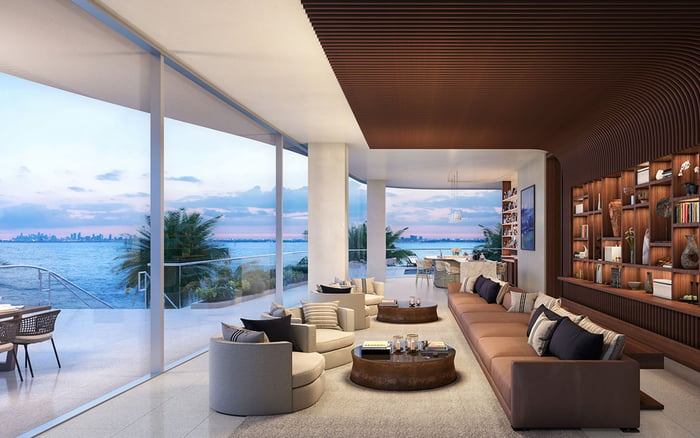
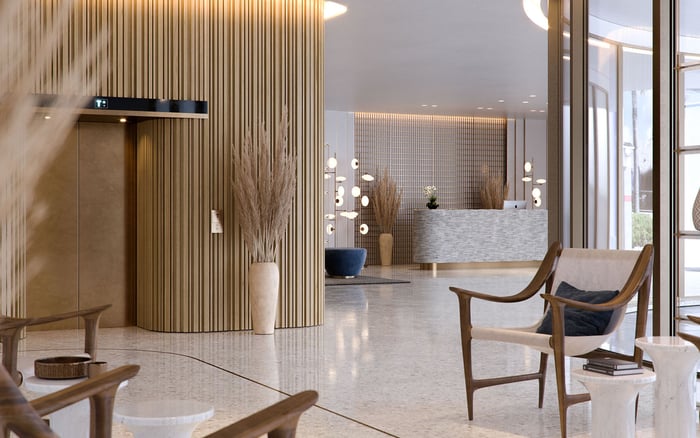
For affluent South Florida owners, the most successful estate-to-condo move is not defined by a longer amenity menu. It is defined by privacy, daily ease, storage, service, arrival, outdoor comfort, and whether the residence can absorb the rituals of a larger home without recreating its burdens.
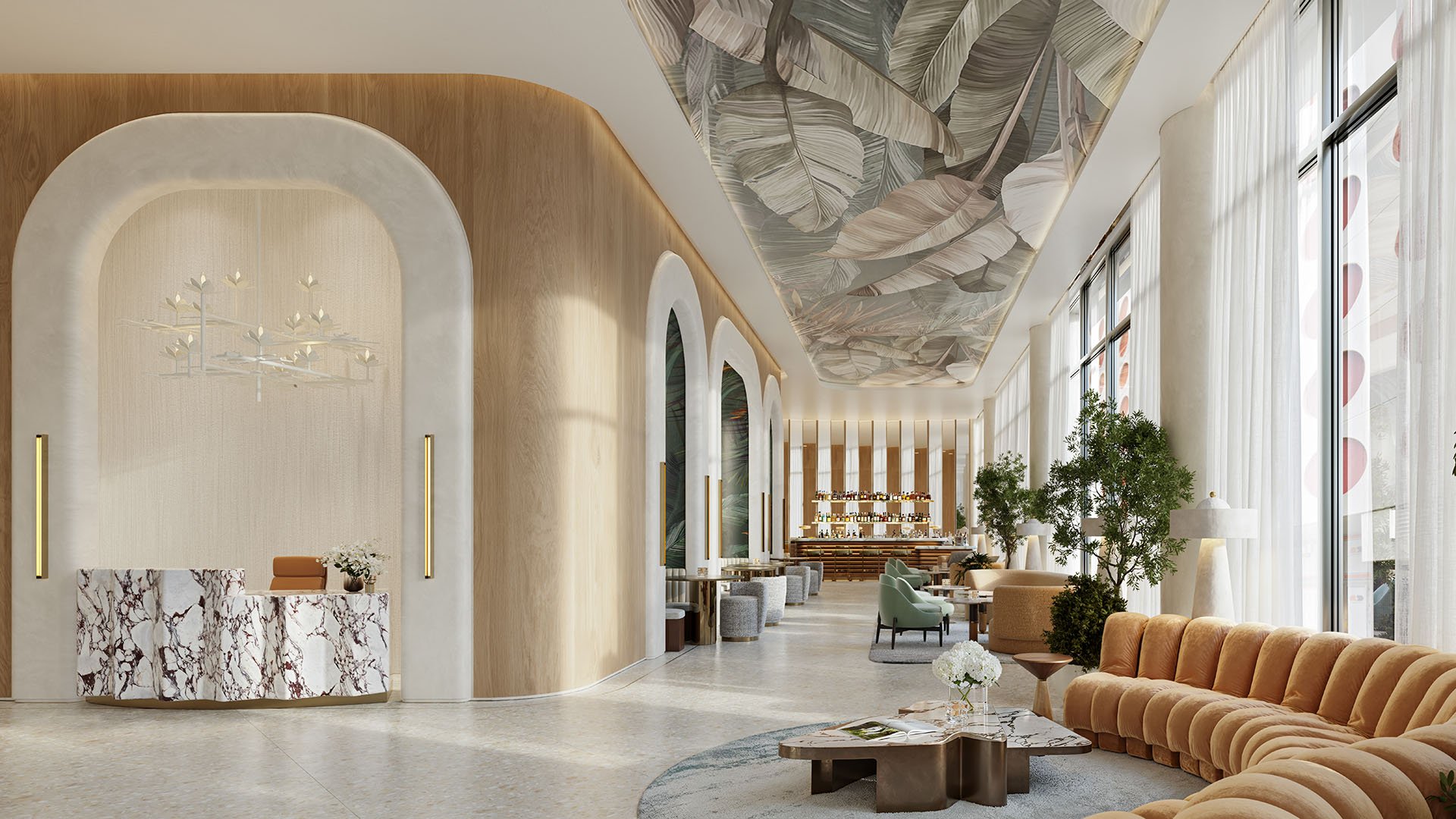
For South Florida’s estate owner, downsizing is rarely about living smaller in any conventional sense. It is about editing with precision. A well-chosen condominium should remove the friction of a large property without flattening the rituals that made the estate pleasurable in the first place: a gracious arrival, privacy from neighbors, room for art, a proper kitchen, places for family to gather, and outdoor space that feels intentional rather than decorative.
That is why another amenity floor, however beautifully photographed, is often less important than the underlying residential experience. A wellness suite, club room, or lounge may be useful, but none answers the questions that shape daily life. Can groceries arrive without choreography? Can guests enter without feeling processed? Is there enough storage for a life that was not assembled yesterday? Does the primary suite feel like a retreat, or merely a larger bedroom in the sky?
The most sophisticated buyers in Brickell, Aventura, Palm Beach, and along oceanfront corridors are not simply trading a house for a tower. They are trading responsibility for discretion, maintenance for service, and excess space for better-used space. The winning residence is not the one with the longest brochure. It is the one that feels calm on a Monday morning.
Amenity floors are seductive because they are easy to compare. A buyer can count pools, lounges, treatment rooms, wine spaces, and guest suites. But estate-to-condo downsizing is not a spreadsheet exercise. It is a lifestyle transfer, and the transfer succeeds only when the private residence carries enough weight.
A common mistake is accepting a compromised floor plan because the building offers attractive shared spaces. That bargain often reveals itself later. If the dining area cannot hold the owner’s preferred table, the building’s private dining room will not solve ordinary evenings. If the closets require a second off-site system, a spa will not compensate. If the terrace is too narrow for real use, no resort deck can replace the intimacy of stepping outside from one’s own living room.
A better lens is sequence. Picture the day from arrival to evening. The elevator, entry gallery, kitchen flow, staff access, laundry placement, pet routine, service corridor, parking experience, package management, and guest circulation all matter. These are not glamorous features, but they determine whether condominium living feels liberating or merely different.
The first thing to protect is privacy. In an estate, privacy is created by gates, landscaping, distance, and control. In a condominium, it must be created by architecture and operations. That may mean a private or semi-private elevator, a restrained corridor experience, thoughtful acoustic separation, and a building culture that understands discretion.
The second is scale. Not every downsizer wants a penthouse, but many need rooms with genuine proportion. Ceiling height, wall space, sightlines, and furniture placement can make a residence feel composed rather than compressed. Art collectors, frequent hosts, and owners accustomed to multiple living areas should study wall dimensions and transitions with the same care they once gave to landscaping or motor courts.
The third is outdoor space. A balcony can be pleasant, but a true terrace changes the psychology of condominium living. It allows morning coffee, a quiet call, a planted edge, or dinner for close friends without leaving the residence. For many former estate owners, this is the difference between feeling elevated and feeling boxed in.
The fourth is service without visibility. A luxury condominium should simplify life, not place every need in public view. The best buildings make staff, deliveries, maintenance, valet, security, and housekeeping feel integrated. When operations are clumsy, downsizing can feel like a loss of control. When they are precise, the owner gains time without surrendering dignity.
South Florida offers multiple versions of the estate-to-condo transition. In Brickell, the appeal is often proximity, skyline energy, and a lock-and-leave rhythm for owners who want a primary or secondary base with urban convenience. The key is ensuring the residence itself offers refuge from the intensity below.
Along oceanfront settings, the equation is more emotional. Owners are often exchanging gardens, docks, or acreage for the daily theater of water, light, and horizon. Here, the view is not a decorative feature. It is part of the living space, and the floor plan should honor it without forcing every room into the same posture.
In Aventura, downsizers may prioritize access, shopping, dining, boating proximity, and family convenience. The right condominium can function as a highly serviced home base, especially for owners who divide time among several residences. The test remains the same: can the home absorb ordinary life, not just seasonal visits?
In Palm Beach County and quieter coastal settings, buyers may be especially sensitive to privacy, parking ease, storage, and the ability to host family without feeling as though they have entered a hotel environment. The most appealing condominium residences feel polished but not performative.
A serious showing should be slower than most buyers expect. Walk the route from the car to the front door. Notice whether the arrival feels composed. Stand in the entry and ask whether it can receive people elegantly. Open the closets and imagine real inventory, not staged minimalism. Study where luggage goes, where golf clubs go, where seasonal objects go, where pet supplies go, and where household staff can work without crossing the center of the home.
Then test the social life of the residence. Can a couple host dinner without borrowing the building’s amenities? Can adult children stay comfortably? Is there separation between the primary suite and guest rooms? Does the kitchen support both casual mornings and catered evenings? Are there walls for important pieces, or only glass and doors?
Finally, study the building’s temperament. Some condominiums are social, some are discreet, some feel resort-like, and some feel almost private-club residential. None is universally better. The point is alignment. A former estate owner who values quiet should not be persuaded into a building whose energy depends on constant activity. Conversely, a buyer seeking connection may find a very private building too subdued.
The best estate-to-condo moves feel like subtraction with intelligence. The owner gives up roof maintenance, landscaping oversight, security staffing, exterior repairs, and the constant orchestration of a large property. In exchange, the residence should deliver comfort, beauty, and control in a more concentrated form.
This is why the conversation must move beyond amenity abundance. Amenities can enhance a building, but they cannot rescue an ill-fitting home. A residence with excellent proportion, quiet service, useful storage, meaningful outdoor space, and a graceful arrival will age better in the owner’s life than a building chosen for spectacle.
For South Florida’s ultra-premium buyer, downsizing is not retreat. It is refinement. The goal is a home that understands what was valuable about the estate and what was merely work. When that balance is right, another amenity floor becomes secondary. The daily experience becomes the luxury.
What is estate-to-condo downsizing? It is the move from a large single-family estate into a condominium residence while preserving privacy, comfort, and quality of life.
Why can amenities be less important than the residence itself? Amenities are shared enhancements, while the floor plan, storage, arrival, and outdoor space shape everyday living.
Should a downsizer prioritize square footage? Square footage matters, but proportion, circulation, ceiling height, and storage often matter more than the raw number.
What is the biggest mistake estate owners make? Many focus on the building’s lifestyle offering before testing whether the private residence can support their daily routines.
Is a penthouse always the best downsizing choice? Not always. A penthouse can offer privacy and scale, but the best choice depends on layout, service, exposure, and ease.
How important is outdoor space? Very important for many former estate owners, especially when the outdoor area is deep enough to function as a real room.
What should buyers evaluate during arrival? They should assess valet, parking, elevator access, lobby discretion, security flow, and how guests experience the entry sequence.
Can condominium living still feel private? Yes, when architecture, staffing, elevator design, acoustics, and building culture are aligned around discretion.
What areas suit estate-to-condo buyers in South Florida? Brickell, Aventura, Palm Beach, and oceanfront markets can all work, depending on the buyer’s desired pace and lifestyle.
What is the best way to shortlist comparable options for touring? Start with location fit, delivery status, and daily lifestyle priorities, then compare stacks and elevations to validate views and privacy.
When you're ready to tour or underwrite the options, connect with MILLION.
If branded residences are on your mind — as a home or as an allocation — we would be glad to share what we are seeing, privately.
Begin a quiet conversation