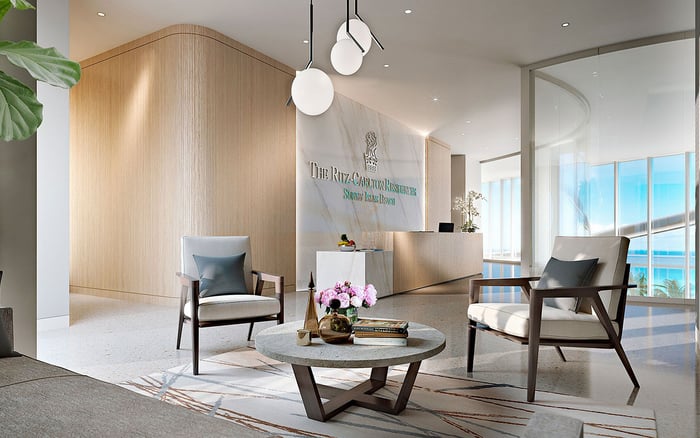
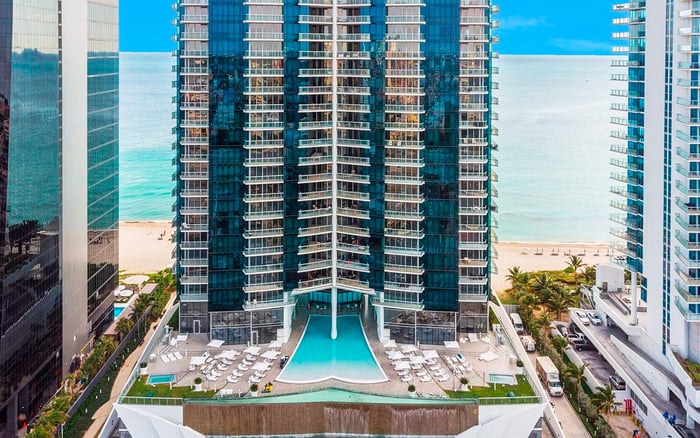
For collectors considering a Hallandale Beach residence, art stewardship should begin before contract and design decisions harden. Storage, lighting, climate control, access, and operating protocols belong in the same early review as views, finishes, and floor plans.
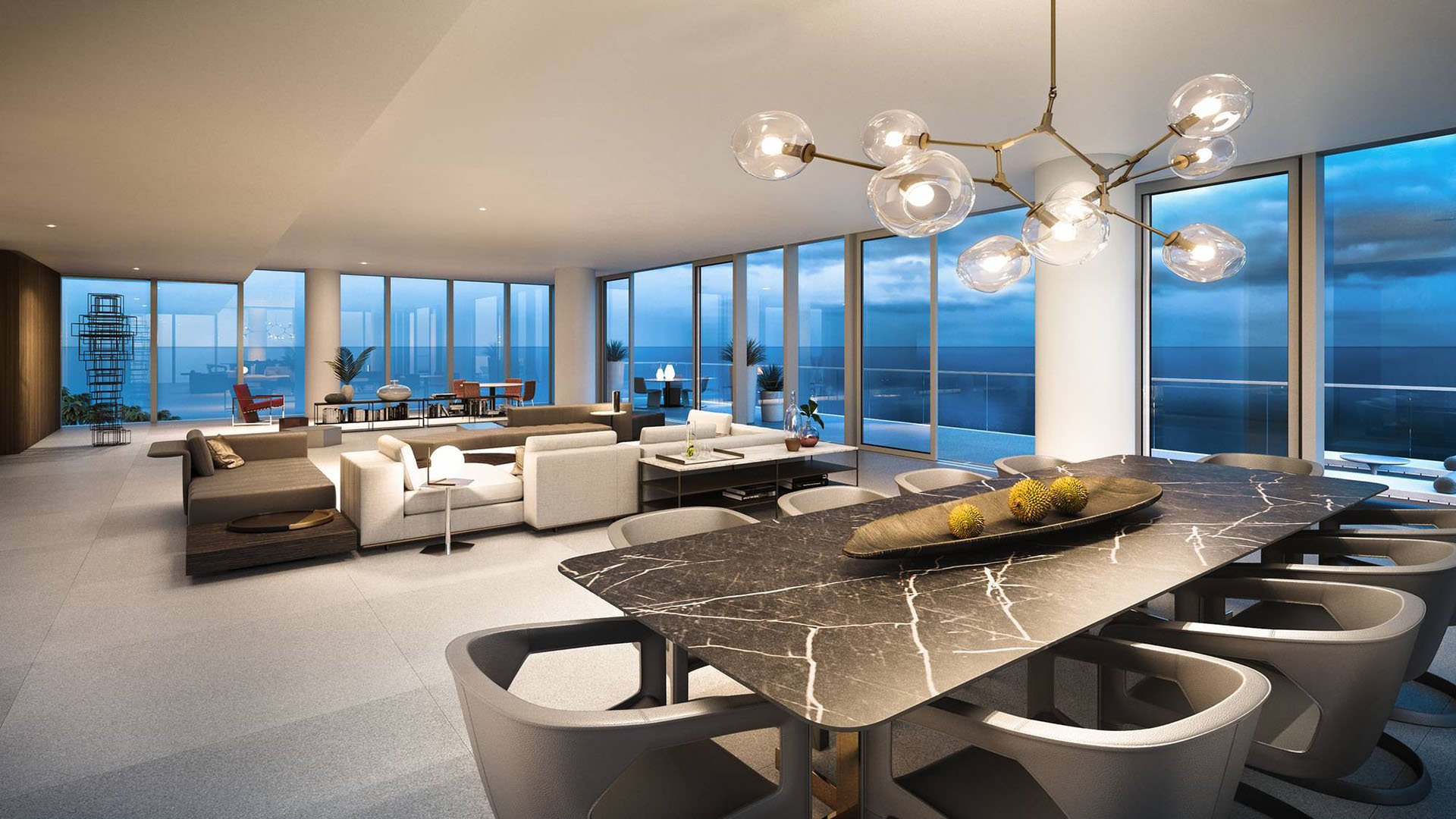
In Hallandale Beach, evaluating a new residence can easily center on outlook, volume, privacy, and finishes. For an art owner, that sequence is incomplete. The collection should be translated into a practical brief before a preferred floor plan becomes an emotional commitment.
Begin with dimensions, media, weight, framing, sensitivity, and display priority. Distinguish works intended for daily viewing from pieces that rotate, travel, or remain in storage. Record any oversized crates and packing materials that may need to be retained. This exercise is not merely curatorial. It informs wall allocation, circulation, lighting positions, service access, storage planning, and how the residence will operate during long absences.
A second-home buyer should also decide who may handle, inspect, or relocate works when the owner is away. That responsibility should be defined before move-in, not improvised after installation.
Art storage deserves more than a spare closet. Buyers should examine usable interior dimensions, door clearances, shelving or rack concepts, floor capacity, proximity to plumbing, and whether household equipment will share the room. A storage zone should allow safe retrieval without requiring pieces to be stacked, casually leaned, or carried through tight, furnished passages.
The same scrutiny applies to temporary holding space. Deliveries, uncrating, condition checks, and installation often require a protected staging area. In a vertical residence, the route from the loading point to the final wall matters as much as the room itself. Confirm the practical path, including turns, thresholds, elevator access, corridor widths, and permissions for specialist crews.
When comparing 2000 Ocean Hallandale Beach with Shell Bay by Auberge Hallandale, buyers can apply the same collection schedule and access checklist to each option. This creates a disciplined comparison across distinct residential propositions in Hallandale.
Lighting should be coordinated with the art plan before ceiling locations and control zones are fixed. A decorative fixture may establish atmosphere, but collection lighting has a separate role: supporting the scale, texture, placement, and viewing distance of individual works.
Ask the design team to map likely art walls, sculpture positions, glazing, furniture layouts, and circulation. Then review adjustability, beam direction, dimming, switching, glare, reflections, and hardware visibility. Flexibility is especially valuable when the collection rotates. A rigid scheme designed around a single installation can become restrictive after a major acquisition or a change in furniture.
Oceanfront and waterfront residences may offer compelling natural light, but buyers should still study how daylight moves through each intended display zone. Window treatments, placement, and operating routines should be considered together. The objective is not a uniformly bright interior, but a controlled visual environment in which art, architecture, and daily life coexist.
The phrase climate control can sound reassuring while leaving important questions unanswered. A collector should ask how conditions are monitored in display areas and storage, how the system performs when the residence is lightly occupied, and who receives an alert if conditions depart from the agreed operating range.
Review the relationship among air distribution, sensors, thermostats, doors, glazing, window treatments, and room use. Do not assume that a comfortable setting for people automatically addresses the needs of every work or medium. Collection-specific guidance should come from the owner’s conservator, art adviser, insurer, and qualified building professionals.
The buyer should also understand backup procedures. Who may enter, what is inspected, how quickly a specialist can be contacted, and where records are kept all belong in the ownership plan. New-construction decisions can be particularly consequential because changes to power, controls, ceilings, and millwork may be easier to coordinate before completion than after installation.
A coastal search can extend beyond a single address while preserving the same standards. Regalia Sunny Isles Beach and Rosewood Residences Hillsboro Beach can be reviewed through the same matrix used for Hallandale Beach: display walls, storage, delivery route, lighting flexibility, environmental oversight, and staff protocols.
This does not reduce the decision to a technical score. It clarifies where design ambition and collection care align, where modifications may be necessary, and where an otherwise appealing plan creates avoidable compromise. The strongest result is a residence that feels effortless because technical decisions were resolved discreetly in advance.
Before committing, request the documents and access required for a focused review. Bring the interior designer, lighting designer, art adviser, conservator, insurer, and relevant technical professionals into the conversation at the appropriate stage. Coordinate their roles through one clear record of assumptions, open questions, and approved decisions.
For a new project, identify decision deadlines for electrical work, ceiling coordination, shades, controls, millwork, and wall preparation. For a completed residence, distinguish cosmetic changes from those that may involve building procedures or specialist review. In both cases, reserve capacity for future acquisitions rather than designing only for the collection as it exists today.
When should art planning begin during a purchase? Begin before selecting the final floor plan, then refine the brief during design and technical review.
Is a standard closet suitable for art storage? Suitability depends on the collection, room conditions, access, and storage system. Obtain collection-specific professional guidance.
Why review the delivery route so early? Oversized works and crates may be constrained by elevators, corners, doors, corridors, or building procedures.
Should lighting be selected before the art layout? Develop the two together so fixture placement, controls, and flexibility support likely installations.
Does natural light remove the need for specialist lighting? No. Daylight changes, while a coordinated scheme provides controllable illumination for viewing and daily use.
Who should advise on climate requirements? Consult the owner’s conservator, art adviser, insurer, and qualified technical professionals for collection-specific direction.
What should be monitored during an extended absence? Establish professional guidance for environmental performance, alerts, access, inspection, and escalation procedures.
Should packing crates be included in the storage plan? Yes, if they will be retained. Their dimensions and access requirements should appear in the collection schedule.
How can buyers compare different residences fairly? Apply one matrix covering display, storage, access, lighting, environmental oversight, and operating protocols.
What is the principal advantage of early review? It reveals conflicts while plans, specifications, and purchase decisions can still be coordinated thoughtfully.
For a confidential assessment and a building-by-building shortlist, connect with MILLION.
If branded residences are on your mind — as a home or as an allocation — we would be glad to share what we are seeing, privately.
Begin a quiet conversation