A buyer-focused guide to verifying humidity controls, vacancy procedures, remote alerts, and maintenance responsibilities at 2200 Brickell, with clear distinctions between wellness-oriented design and documented residence-level performance.
For a buyer considering 2200 Brickell, the most consequential questions may concern the weeks when nobody is home. A beautifully finished residence deserves an equally considered vacancy plan: measurable humidity control, clear maintenance responsibilities, and someone authorized to respond when conditions change.
The project's wellness-oriented positioning emphasizes improved HVAC design, attention to thermal preferences, and an intention to design to WELL building standards. That language is not proof of completed WELL certification or a guarantee that every residence maintains a particular humidity level while unoccupied.
A unit-level humidistat, dedicated dehumidification mode, and guaranteed humidity set point remain unverified here. These are purchase-verification questions, not features to assume. Nothing in this discussion establishes that a particular residence has experienced mold, water intrusion, or HVAC drainage defects.
Temperature and relative humidity answer different questions. General moisture-control benchmarks call for indoor relative humidity below 60%, with an ideal range of 30%-50%. Humidity below 50% is preferable for controlling mold and dust mites. These are general benchmarks, not established operating requirements for 2200 Brickell.
A thermostat temperature alone is not a humidity specification. Before purchase, ask the HVAC professional responsible for the residence to document how the equipment measures and manages moisture, particularly during prolonged vacancy. Request a recommended temperature setting, a relative humidity target, and a clear explanation of how the two interact in the installed system.
Do not accept a proposed 45%-55% operating band or an approximately 65% alert threshold as an established building standard without supporting documentation. An alert threshold is not a desirable operating condition. The written plan should distinguish the target, the trigger for investigation, and the required response.
Turning air conditioning off-or setting it too warm during vacancy-can allow humidity to rise even without a plumbing leak. The objective is controlled moisture, not simply a reassuring temperature displayed on a phone.
An equipment schedule is more useful than a broad claim about enhanced air quality. Request the actual HVAC model, control specifications, operating instructions, and any available commissioning or service documentation. Have a qualified professional explain whether the installed controls regulate humidity, merely display it, or do not measure it at all.
Include bathroom and kitchen exhaust in the inspection. Moisture from showering and cooking should be vented outdoors; ask how the residence's exhaust arrangements accomplish this and have their operation checked. Request an inspection of condensate drainage and any installed overflow protections, without assuming particular safeguards are included.
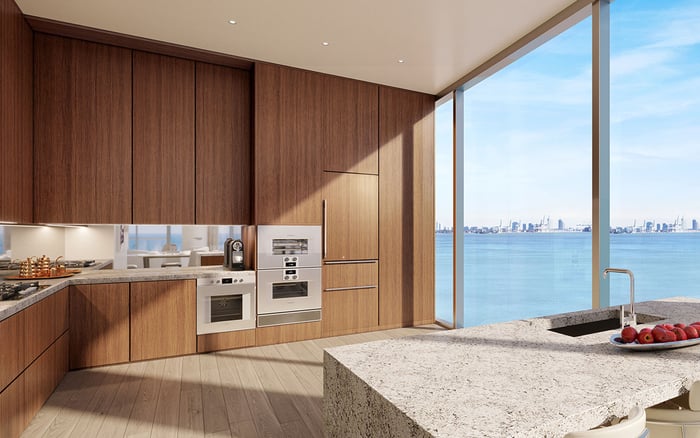
Finishes deserve the same scrutiny. Advertised finishes include ceramic and wood flooring, wood-and-stone kitchen countertops, and fully built-out closets. Confirm the purchased residence's actual materials, then ask the inspector to assess moisture-sensitive areas, including cabinetry and enclosed storage. Attractive surfaces do not establish the condition of concealed areas.
For buyers also considering Una Residences Brickell, apply the same residence-specific inspection questions. This is a comparison framework, not a claim that the projects share equipment or maintenance arrangements.
A remote dashboard is useful only when its readings lead to action. An included monitoring package, guaranteed alarm-response time, and residence-specific mold-prevention service remain unverified here. Ask what is supplied, what requires a separate subscription, and what the owner must arrange independently.
Have the installer propose sensor locations suited to the residence, including whether bedrooms and enclosed storage need separate readings. Ask whether humidity history is retained and accessible rather than relying exclusively on a current reading. Historical data can help an adviser investigate recurring changes instead of reviewing a single snapshot.
Discuss leak detection separately from ambient humidity monitoring. Ask which locations would receive leak sensors, who receives notifications, and whether automatic shutoff is proposed or permitted. Do not assume that a humidity sensor detects a plumbing leak or that a leak alarm controls the water supply.
Finally, test the communication chain. What happens when internet service fails, power is interrupted, or a device battery expires? Who receives a loss-of-connection notice? Require a designated responder and an escalation sequence, with access arrangements confirmed before departure.
The essential vacancy document is a practical allocation of duties. Request written confirmation of owner and association responsibilities for HVAC maintenance, condensate drainage, filter service, and equipment access. Establish who schedules work, who approves it, and who receives confirmation of completion.
Ask management about requirements for unoccupied residences, emergency-entry procedures, after-hours contacts, and authorization for an owner's representative. If a humidity alert arrives while you are overseas, access should already be resolved. Confirm response commitments directly rather than assuming concierge or building staff provide in-residence inspections.
Request a departure and return checklist tailored to the installed systems. It should cover approved operating settings, monitoring checks, scheduled visits, and instructions for documenting unusual conditions. Keeping interiors clean and dry remains a basic moisture-control measure; technology does not replace that discipline.
Before closing, assemble a concise operating file: final equipment information, manuals, warranties, inspection findings, control instructions, and written maintenance assignments. Include the agreed vacancy settings and the names of those authorized to change them. Ask that unresolved items be addressed through the appropriate purchase-document process with your advisers.
The specified appliances are Thermador and Bosch equipment or comparable alternatives. Verify what is actually installed rather than treating the advertised brands as the final schedule. Apply the same discipline to every operating assumption: confirm the equipment, the relevant instructions, and the person responsible for service.
If The Residences at 1428 Brickell is also on your shortlist, request an equivalent documentation package there. Compare verified provisions, not the atmosphere of a presentation.
The right purchase decision does not require a promise that moisture problems can never occur. It requires a clear understanding of how the residence will be operated, monitored, and accessed while you are away.
Before committing, seek three outcomes: documented humidity-control capabilities, an agreed vacancy plan, and a tested route from alert to authorized response. Together, they translate a wellness-oriented proposition into practical ownership due diligence.
For discreet guidance on evaluating Brickell residences and the details that support confident ownership, connect with MILLION.
If branded residences are on your mind — as a home or as an allocation — we would be glad to share what we are seeing, privately.
Begin a quiet conversationGeneral guidance recommends relative humidity below 60%, ideally 30%–50%. These are general benchmarks, not verified operating requirements for 2200 Brickell.
A guaranteed residence-level humidity set point remains unverified here. Obtain written confirmation of the installed controls and their capabilities.
No. An intention to design to WELL building standards does not establish completed WELL certification.
Turning it off, or setting it too warm, can allow humidity to rise even without a leak. Request a residence-specific vacancy operating plan from a qualified HVAC professional.
An included remote-monitoring package remains unverified here. Confirm equipment, subscriptions, alert recipients, and response arrangements in writing.
Ask to review sensor locations, humidity-history access, notifications, and behavior during power or internet interruptions. Confirm who can enter the residence after an alert.
These figures are not verified building standards here. Have a qualified professional document appropriate targets and action thresholds for the actual system.
Confirm the actual finishes and ask an inspector to assess moisture-sensitive materials, including wood flooring, cabinetry, and built-out closets.
The specified appliances are Thermador and Bosch equipment or comparable alternatives. Verify the installed models and obtain their operating and maintenance instructions.
No. This discussion does not establish mold, water intrusion, or HVAC drainage defects in any particular residence.
.jpg&width=700&height=438&fit=cover)