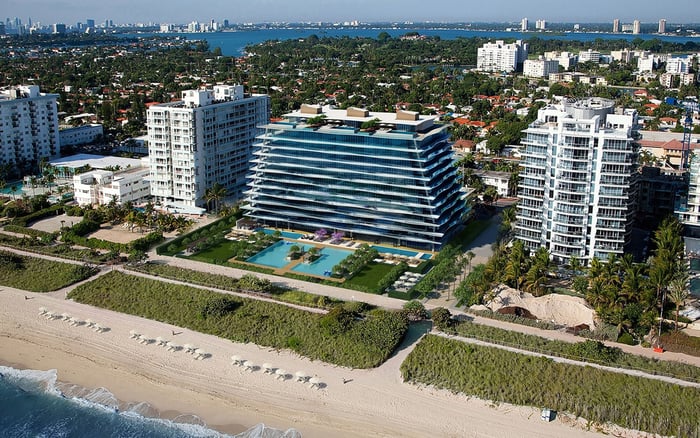
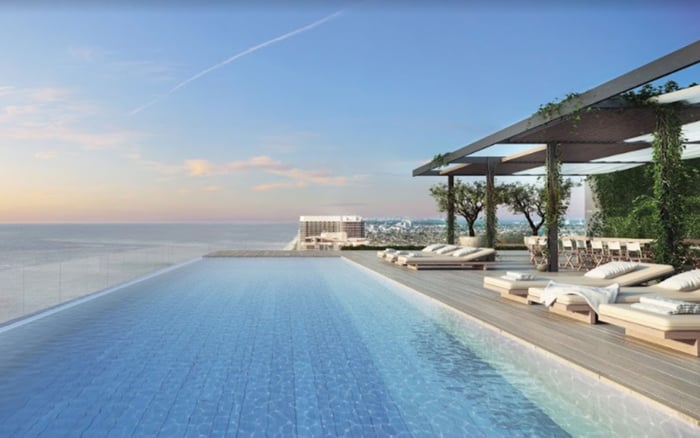
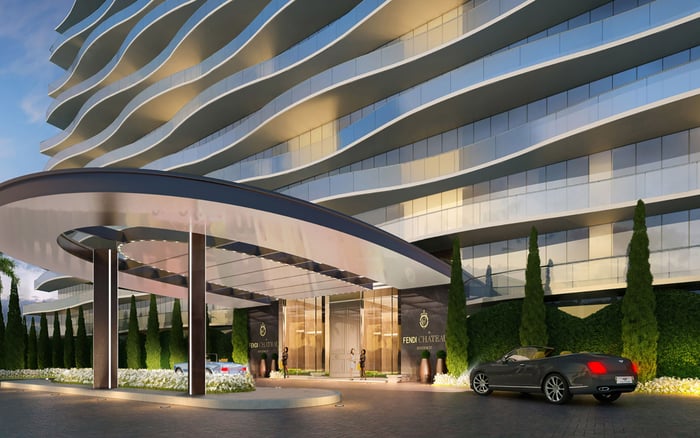
At The Surf Club, yacht compatibility begins with route geometry, not proximity to the water. Buyers should verify Haulover clearance, loaded draft, berth terms, tender permissions, and crew access in writing before closing.
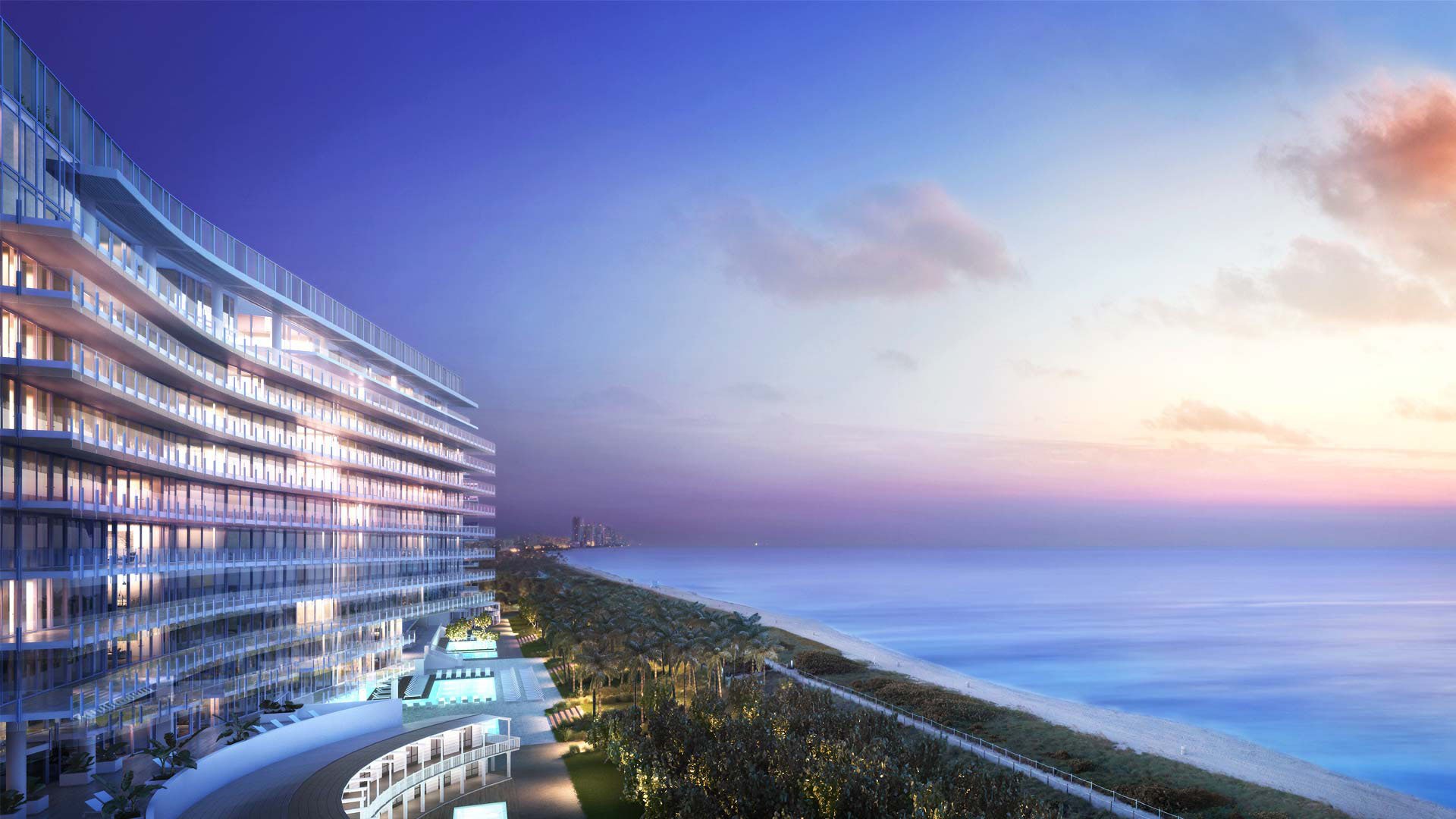
The Surf Club Four Seasons Surfside occupies an oceanfront position in Surfside, minutes from Miami Beach. That setting can make a boating lifestyle feel intuitive, but ocean proximity and vessel access are distinct propositions. An on-site marina, yacht-slip inventory, tender landing rights, and building-controlled dockage are not established and should not be treated as included without written confirmation.
For a purchaser who owns, charters, or regularly hosts a yacht, the first due-diligence document should be a complete vessel profile stating length overall, beam, loaded draft, loaded air draft, and any equipment that can be lowered. Those dimensions must then be tested against the exact route from ocean to berth, including fixed bridges, drawbridges, cables, channel depths, tide assumptions, and turning room.
A waterfront address is not the same as a navigable route, a secured berth, or a workable crew plan.
This is a waterfront and marina due-diligence exercise, not a promise of a boat slip. It also belongs among serious buyer’s guides: a technically unsuitable route can alter how the residence functions for its owner, even when the home itself is exceptional.
Baker’s Haulover is the primary ocean pass for much of Miami’s waterfront north of the Julia Tuttle Causeway, making it central to many Surfside boating plans. Its inlet bridge is a fixed span with 32 feet of vertical clearance and 125 feet of horizontal clearance. A yacht with an air draft above 32 feet cannot pass beneath it, irrespective of drawbridge schedules elsewhere.
An overhead power cable east of the bridge has 53 feet of clearance, but that greater height does not resolve the route. The bridge’s lower 32-foot clearance remains controlling. Buyers should ask the captain or marine consultant to calculate loaded air draft conservatively, identify whether antennas or other equipment can be lowered, and document every assumption.
This analysis should precede any discussion of slip length or marina prestige. If the yacht cannot physically clear the fixed span, berth availability beyond it is immaterial. Buyers comparing the wider coastline, including Rivage Bal Harbour, should apply the same vessel-first discipline rather than infer access from a waterfront outlook.
Once air draft works, underwater clearance becomes the next threshold. The passage north from Haulover Inlet toward the Intracoastal Waterway is approximately 10 feet deep. Historical dredging targets were approximately 10 feet in the ICW and 8 feet in the north channel connecting with the inlet. These are planning references, not guarantees of depth at every point.
Shoaling can reduce practical clearance. Maintained ICW channels in the area generally range from 7 to 10 feet, making recent soundings especially important for yachts drawing 8 to 9 feet or more. Depths in the Aventura, Surfside, and Bal Harbour marina corridor range from approximately 8.5 feet to more than 12 feet, but suitability still turns on the individual berth and its approach.
The latest hydrographic survey should be reviewed against loaded draft, with a stated under-keel allowance and tide assumption. Request current marina soundings for the fairway, turning basin, berth, and every shallow transition along the route. A marina’s nominal vessel capacity does not prove that a particular yacht can arrive fully loaded under current conditions.
Bill Bird Marina at Haulover Park is associated with about 150 slips, vessels up to roughly 120 feet, approximately 8.5 feet of dockside depth, and about 8 feet on approach. Those figures remain screening criteria; they do not replace confirmation of a specific berth, approach condition, beam tolerance, or availability.
Local routing can introduce restrictions separate from Haulover. The fixed bridge at Surfside has a 40-foot span and only 12 feet of vertical clearance. Farther south, the 63rd Street Bridge across Indian Creek is a double-leaf bascule bridge with 11 feet of vertical clearance at mean high water when closed. A route through Indian Creek therefore requires both an air-draft check and confirmation of the bridge’s operating schedule.
The Julia Tuttle Causeway has approximately 56 feet of fixed clearance and divides the ICW into practical operating zones for taller vessels. A berth that appears geographically close may occupy a different navigational envelope once bridge heights and opening constraints are considered.
For buyers also viewing Arte Surfside or exploring bay-oriented alternatives such as Onda Bay Harbor, the correct comparison is not simply the distance between residence and marina. It is the complete route measured against the yacht in cruising condition, together with the reliability of transfers between home and berth.
The residence and yacht must operate as one shoreside system. Because yacht landing and crew-access arrangements at The Surf Club are not documented, management should confirm whether tender drop-off is permitted, where guests may embark, how crew members enter, and what security screening applies.
The written response should also address provisioning deliveries, luggage movement, service-elevator use, loading areas, vehicle staging, and back-of-house access. A permitted guest arrival does not necessarily establish routine access for uniformed crew, caterers, engineers, or vendors. The buyer’s attorney should distinguish courtesy arrangements from durable rights and identify any condominium, hotel, security, or operational approvals involved.
If the yacht remains off site, test the transfer at the times it will actually occur. The relevant circuit includes the berth, Surfside residence, airport, provisioning vendors, repair providers, and crew housing. Traffic, after-hours access, guest luggage, chilled provisions, and last-minute departures can make a short map distance operationally complex.
Before closing, obtain written confirmation of the primary berth and a credible alternate. The file should identify slip dimensions, approach depth, current soundings, utilities, access hours, tender rules, parking, security procedures, and any vessel-size limitations. It should also allocate hurricane relocation responsibilities and clarify where the yacht may go if the principal marina cannot accommodate it.
Ask the captain to sign off on the proposed route using the yacht’s loaded dimensions. Ask the marina to confirm the berth and approach in writing. Ask property management to document guest, crew, tender, vendor, and provisioning protocols. Finally, have counsel determine whether each critical arrangement is contractual, revocable, seasonal, or merely customary.
The most sophisticated purchase decision separates three distinct assets: the residence, the berth, and the operating plan connecting them. At The Surf Club Four Seasons Surfside, that distinction preserves the discretion and ease expected of an ultra-premium home while preventing waterfront imagery from substituting for navigational proof.
For private guidance on evaluating Surfside residences alongside the practical demands of yacht ownership, connect with MILLION.
If branded residences are on your mind — as a home or as an allocation — we would be glad to share what we are seeing, privately.
Begin a quiet conversationPublic property information does not establish an on-site marina or building-controlled dockage. Buyers should obtain written confirmation rather than assume either is included.
The fixed Baker’s Haulover Inlet Bridge has 32 feet of vertical clearance. A yacht exceeding that air draft cannot transit beneath it.
The fixed span has 125 feet of horizontal clearance. Beam and handling requirements should still be tested against the complete route.
No. The lower 32-foot bridge clearance remains the controlling restriction on that inlet route.
Channel and approach depths can vary with loading, tide, and shoaling. The yacht’s loaded draft should be checked against current soundings and the latest hydrographic survey.
The passage toward the Intracoastal Waterway is described at approximately 10 feet. That planning figure does not guarantee usable depth throughout the route.
The fixed bridge at Surfside has 12 feet of vertical clearance, while the 63rd Street drawbridge has 11 feet at mean high water when closed.
Management should confirm tender drop-off, guest embarkation, security screening, and whether repeated tender use is permitted. The response should be documented in writing.
Buyers should verify crew entry, vendor screening, provisioning, luggage movement, service access, loading areas, and back-of-house protocols.
Confirm a primary berth, a credible alternate, current depths, access terms, and hurricane relocation responsibilities. Each arrangement should be identified as contractual, seasonal, revocable, or customary.