The central diligence point at this Sunny Isles Beach tower is that it has no hotel component. Buyers should therefore focus on how management controls invited guests, resident Guest Suites, vendors, staff, amenities, elevators, and entrances from Collins Avenue and the beach.
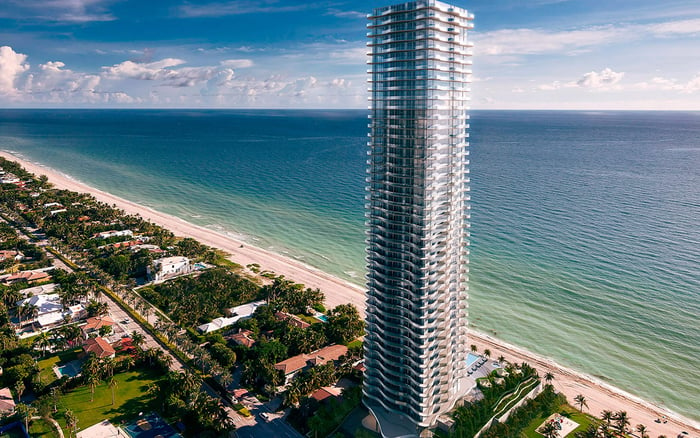
At The Ritz-Carlton Residences® Sunny Isles, the premise is often misunderstood because the name evokes a resort. The condominium at 15701 Collins Avenue is entirely residential, with no hotel on the premises and no transient-use component. The Ritz-Carlton identity defines the service platform, not a parallel hotel operation within the tower.
That distinction reframes the buyer’s central question. There should be no recurring population of hotel guests circulating among reception, restaurants, elevators, pools, and residential floors. Non-owners instead enter in defined capacities: invited guests, household staff, vendors, contractors, delivery personnel, or service providers. The diligence exercise is to establish where each group may go, how access is authorized, and when that authorization expires.
The issue is not hotel separation, but disciplined routing of every non-owner.
Among Branded Residences, this distinction is consequential. Owners can receive concierge assistance, housekeeping, valet service, and in-residence dining without an accompanying hotel population. For MILLION’s Buyer's Guides, the relevant measure of privacy is therefore operational: whether residential service remains polished while circulation stays controlled.
Marketing language is a useful starting point, but the condominium declaration, leasing restrictions, house rules, guest-registration policy, and amenity rules should govern the analysis. Counsel should identify any language permitting transient occupancy, third-party use, outside memberships, brand-program access, private events, or a future change in operating model.
The Guest Suites deserve particular attention. Eight Guest Suites are reserved exclusively for residents, while the residence count has also been stated as 209. Other totals differ, potentially because Guest Suites or other units are counted differently. Buyers should confirm the legal condominium schedule and obtain written assurance that the Guest Suites remain bookable only through residents rather than being offered as public hotel inventory.
Ask how a resident reserves a suite, who may occupy it, whether identification and preregistration are required, and whether the occupant receives access only to the suite or also to selected amenities. The answers should align across the declaration, current rules, reservation procedures, and management’s actual practice.
Privacy begins before the lobby. The grand porte cochere should be assessed as an operating environment, not merely an architectural gesture. Ask who greets an arriving vehicle, how valet staff distinguish an owner from a visitor, where guests register, whether identification is checked, and how an unannounced pedestrian arrival is handled.
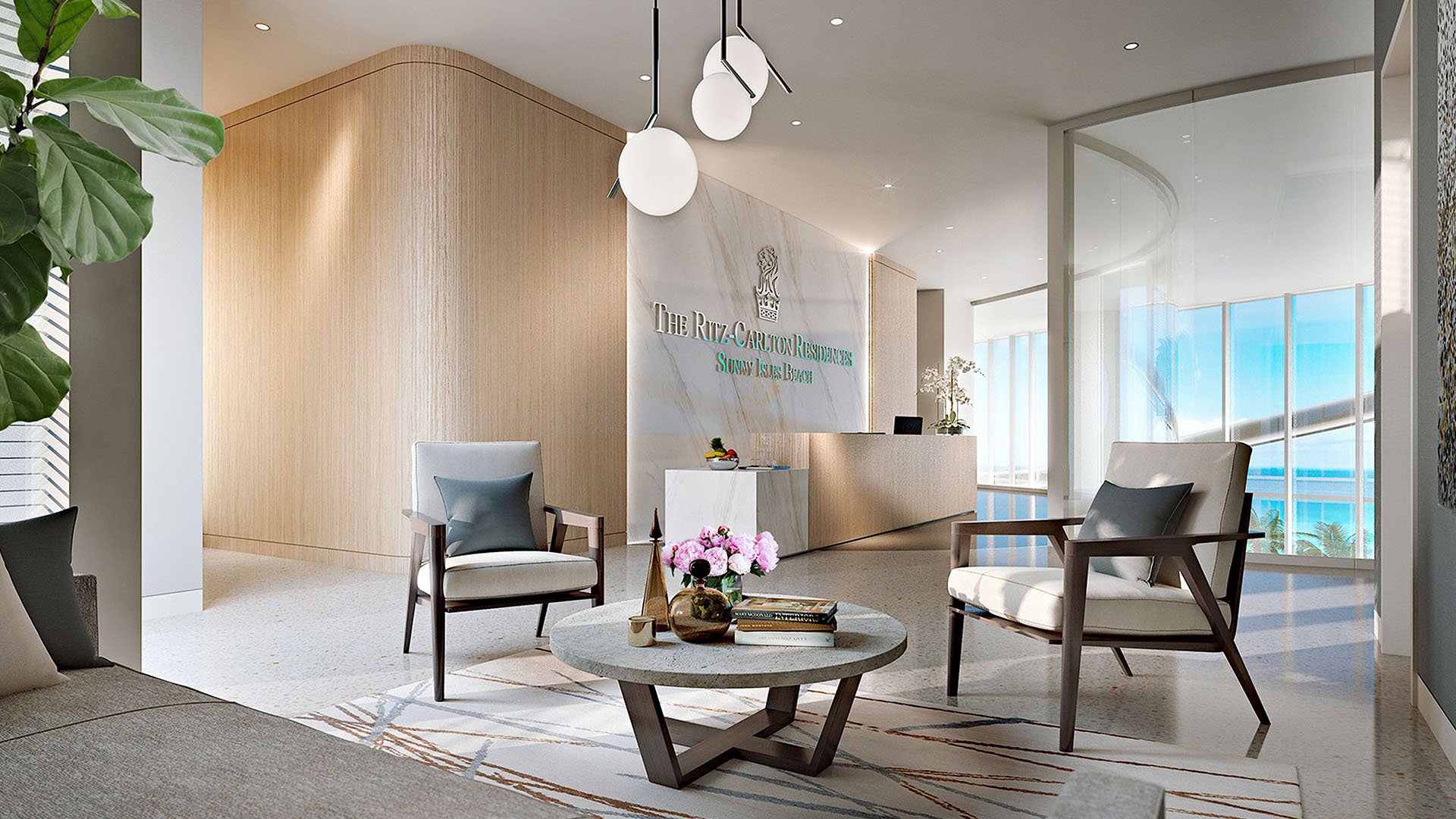
The two-story residential lobby is framed by four stories of glass overlooking the pool and beach. A private lobby lounge reinforces that intent. Even so, buyers should observe the route at different times of day and determine whether visitors wait in the lobby, proceed only after resident approval, or receive temporary credentials.
Garage and pedestrian entries matter equally. Management should demonstrate the controlled path from each entrance through the lobby and into authorized elevators. Buyers comparing Sunny Isles Beach options, including Bentley Residences Sunny Isles and St. Regis® Residences Sunny Isles, should request the same route-based explanation at every property rather than rely on broad claims of privacy.
Private elevator lobbies create a meaningful threshold at each residence. They separate a home’s landing from ordinary shared-floor circulation and unrelated units. They do not, by themselves, establish that every elevator ride is exclusive, direct, or inaccessible to other credentialed users.
The credential system is not detailed. A buyer should therefore request written rules for owners, family members, overnight guests, household employees, brokers, vendors, contractors, and delivery teams. Useful questions include whether credentials are timed, floor-specific, amenity-specific, remotely issued, revocable, or subject to an escort requirement.
Service elevators provide a mechanism for directing staff, contractors, and deliveries away from resident passenger circulation. Confirm where service personnel enter, where packages transfer custody, which corridors connect to residences, and whether a vendor can call at another floor. The strongest explanation will map the entire journey, not merely identify separate elevator banks.
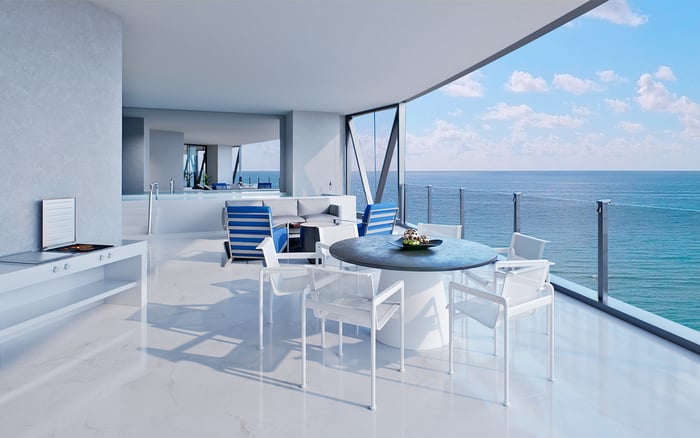
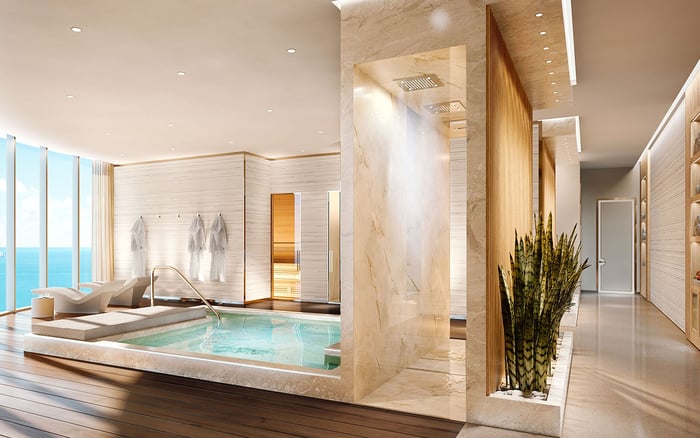
The amenity program introduces several points where hospitality and privacy meet. A private club level on the 33rd floor includes a beach restaurant, pool deck, Kids Club, spa, fitness facilities, and wellness spaces. The beach restaurant functions as a residential amenity, with pool and beach service plus in-residence delivery.
Buyers should confirm whether the restaurant accepts walk-ins, outside memberships, private-event attendees, or participants in any brand program. Similar questions apply to the 30,000-square-foot Oceanfront spa: Is admission limited to owners and their invited guests, and what credential or registration process governs each visit?
The east pool deck connects directly to the beach, making the beach-side gate a critical privacy threshold. Public shoreline traffic should not translate into uncontrolled access to the restaurant, pools, spa, lobby, or residential elevators. Beach-access controls should be explained for residents returning from the sand, accompanied guests, food-service personnel, and anyone approaching from the shoreline.
The west deck-with an outdoor massage area, lap pool, and hot tubs-and the Kids Club’s indoor and outdoor play spaces create further guest-management questions. Confirm guest limits, supervision rules, event policies, hours, and whether management can suspend or expand access. Owners considering Turnberry Ocean Club Sunny Isles can use the same entrance-to-amenity audit to compare privacy protocols consistently.
Before closing, ask management to diagram every controlled route: porte cochere, garage, pedestrian entrance, beach gate, lobby, passenger elevators, service elevators, residential floors, club level, restaurant, spa, pools, and back-of-house corridors. Each route should identify the permitted user, approval method, credential scope, and responsible staff member.
Then reconcile that operating map with the legal documents. Verify overnight-guest preregistration, identification requirements, vendor scheduling, contractor escorts, delivery handling, amenity guest limits, and enforcement procedures. Also determine which rules the board or management may change without an owner vote.
The luxury proposition becomes unusually clear once the terminology is corrected. This is not a hotel-residence tower seeking to separate two permanent populations. It is a residential-only property whose privacy depends on controlling invited and operational access with precision. The strongest diligence file will establish that the architecture, credentials, staffing practices, and governing documents all support the same residential boundary.
For discreet guidance on evaluating access, governance, and ownership at South Florida’s finest residences, connect with MILLION.
If branded residences are on your mind — as a home or as an allocation — we would be glad to share what we are seeing, privately.
Begin a quiet conversationNo. It is a residential condominium with no hotel on the premises and no transient-use component.
They may include invited guests, household staff, vendors, contractors, delivery personnel, and service providers, subject to the property’s rules.
They have been presented as eight Guest Suites reserved exclusively for residents. Buyers should confirm in writing that they are never offered as public hotel inventory.
Published counts may treat Guest Suites or other units differently. Buyers should rely on the legal condominium schedule.
No. They describe the private landing at a residence, so buyers should separately verify cab sharing and credential permissions.
Request written rules covering owner, guest, staff, vendor, and contractor credentials, including timing, floor limits, revocation, and escorts.
Its operating rules are not fully detailed. Buyers should verify whether walk-ins, outside memberships, private events, or brand-program users are permitted.
The east pool deck connects directly to the beach, so the gate is a key boundary between public shoreline traffic and private amenities.
Review the declaration, leasing restrictions, house rules, guest-registration policy, amenity rules, and provisions allowing future third-party uses.
Management should map controlled access from every arrival point through the lobby, elevators, residential floors, amenities, and service corridors.