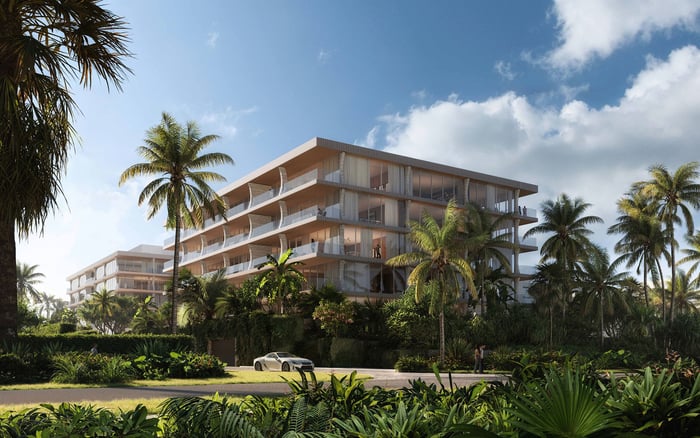
At The Berkeley Palm Beach, a promised parking space may represent separate property, an exclusive-use right, or revocable permission. Buyers should reconcile title, condominium documents, allocation records, and board authority before treating parking as part of a residence’s permanent value.

At The Berkeley Palm Beach, parking warrants the same scrutiny as the residence itself. A contract reference to “one parking space,” a sales presentation describing “reserved parking,” or an association record listing a space number may establish current use. None, on its own, establishes the legal character of that right.
The distinction is consequential. A deeded space can be separately owned property. A limited common element, commonly abbreviated as LCE, remains part of the condominium’s common elements but is allocated for a unit’s exclusive use. A license grants permission to use association-controlled property and may be conditional, movable, or revocable.
No supplied information establishes which structure applies to every residence and space at The Berkeley Palm Beach. Classification therefore demands unit-specific verification. For Palm Beach purchasers, particularly investment and second-home buyers, that precision protects both daily convenience and the assumptions carried into resale.
A deeded parking space may carry its own legal description, title, parcel identification, tax assessment, and transfer rights, although condominium restrictions can still govern who may acquire it and how it may be conveyed. The buyer’s title commitment and closing documents should reflect the claimed interest, not merely reference an informal assignment.
An LCE space operates differently. The underlying area remains a common element, while a designated residence receives exclusive use. Whether that right transfers with the unit or can be reallocated depends on the recorded condominium documents. The declaration, exhibits, plat, and amendments should establish both the allocation and any procedure for changing it.
A license is permission to use a space rather than proof of ownership. Its terms may allow an association, board, or developer to assign, condition, relocate, or withdraw parking, but the governing documents and written allocation must be reviewed to determine the actual scope of that authority.
Begin with the recorded declaration, condominium plat, exhibits, and every relevant amendment. Compare those materials with the seller’s unit deed, the proposed title commitment, any separate parking deed, and the association’s current allocation record. The precise space number should remain consistent across every applicable document.
A separate legal description, parcel identification number, or parking deed can support deeded ownership. An LCE schedule may connect the exclusive-use right to the residence. A board letter or parking sticker may confirm who currently uses a space, but it does not necessarily prove title or an appurtenant right.
The review should also establish whether parking can be transferred separately and whether any allocation can change. If separate transfers are permitted, the claimed space should appear in the relevant title or allocation records. Qualified title counsel can then distinguish recorded property rights from administrative parking arrangements.
Buyers comparing Forté on Flagler West Palm Beach and The Ritz-Carlton Residences® West Palm Beach should apply the same document-first discipline. Project branding, service levels, and building operations do not resolve who owns or controls a particular space.
Request written confirmation of the precise space number, legal classification, transferability, and any authority held by the board or developer to move, condition, or revoke the right. Ask whether the space carries a separate tax parcel, assessment, maintenance charge, transfer fee, or restriction against conveyance to a nonresident.
The contract should identify more than a quantity. It should specify whether parking is conveyed by separate deed, passes as an LCE associated with the unit, or is provided through a license. Any discrepancy among the contract, title commitment, declaration, plat, and association records should be resolved before closing.
Operational matters warrant separate review. Valet procedures, EV charging, oversized vehicles, guest access, leasing, temporary relocation, and garage rules can affect practical use without necessarily altering the underlying property classification. A valet program alone does not establish ownership of a parking space.
This distinction is relevant to both new-construction and resale acquisitions. It also matters when evaluating Palm Beach Residences or another South Florida luxury condominium where parking contributes to a residence’s utility and perceived value.
The closing decision should follow the documents rather than a general hierarchy. A separately deeded space, an LCE assigned to a unit, and a licensed space can carry different transfer rules, costs, and reassignment risks. Buyers should confirm those details for the specific residence and parking space under review.
No arrangement is automatically suitable or unsuitable. A license may function as a useful amenity, but it should not be treated as separately owned real estate without supporting recorded documents. An LCE may provide exclusive use, but its allocation and transfer procedures still require verification.
A prudent closing file contains an identified space, a confirmed classification, understood transfer rules, disclosed costs, and written clarity on any reassignment authority. In a premium West Palm Beach purchase, documentary certainty is essential.
Does “one parking space” in a contract prove ownership? No. The phrase alone does not establish whether the buyer receives title, an exclusive-use right, or a licensed assignment.
What may indicate that a parking space is deeded? A separate deed, legal description, parcel identification, title entry, or tax record may support separate ownership, subject to title review.
What is an LCE parking space? It is a common element allocated for the exclusive use of a designated unit or units under the condominium documents.
Does an LCE space transfer with the residence? That depends on the declaration, amendments, allocation records, and other governing documents for the specific condominium.
Can an LCE space be transferred independently? The governing documents must be reviewed to determine whether and how its allocation may be transferred or changed.
What is a parking license? It is permission to use a parking space rather than proof of ownership.
Can a licensed space be reassigned or revoked? The license terms and governing documents determine whether reassignment, relocation, or revocation is permitted.
Is an association assignment letter sufficient? It can confirm a current assignment, but it may not establish ownership or a recorded exclusive-use right.
Which records should a buyer compare? Review the declaration, plat, exhibits, amendments, unit deed, title commitment, any parking deed, and formal allocation records.
Should valet and EV rules be reviewed separately? Yes. Operating rules affect practical use but do not, by themselves, establish the legal classification of parking.
If you'd like a private walkthrough and a curated shortlist, connect with MILLION.
If branded residences are on your mind — as a home or as an allocation — we would be glad to share what we are seeing, privately.
Begin a quiet conversation