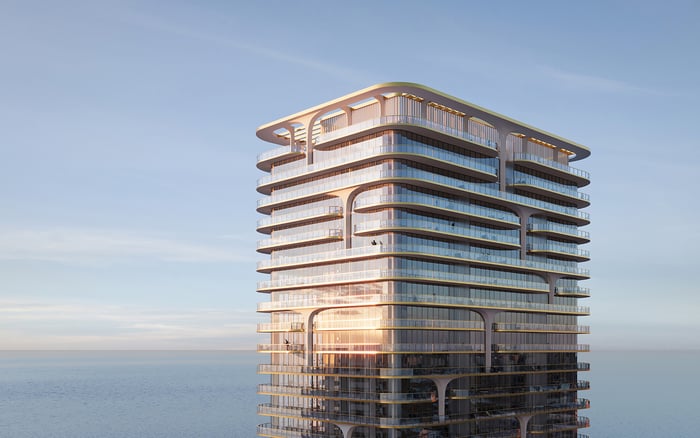
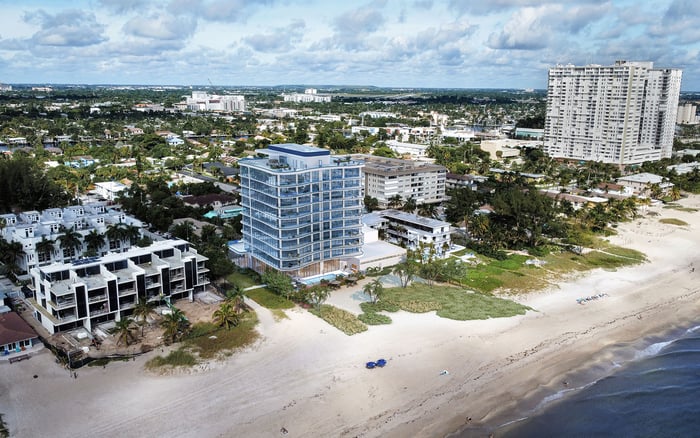
Ocean 580’s boutique oceanfront setting invites seasonal ownership, but effortless departures depend on written operating commitments. Buyers should verify hurricane responsibilities, caretaker access, backup power, interior monitoring and insurance before treating the residence as lock-and-leave.
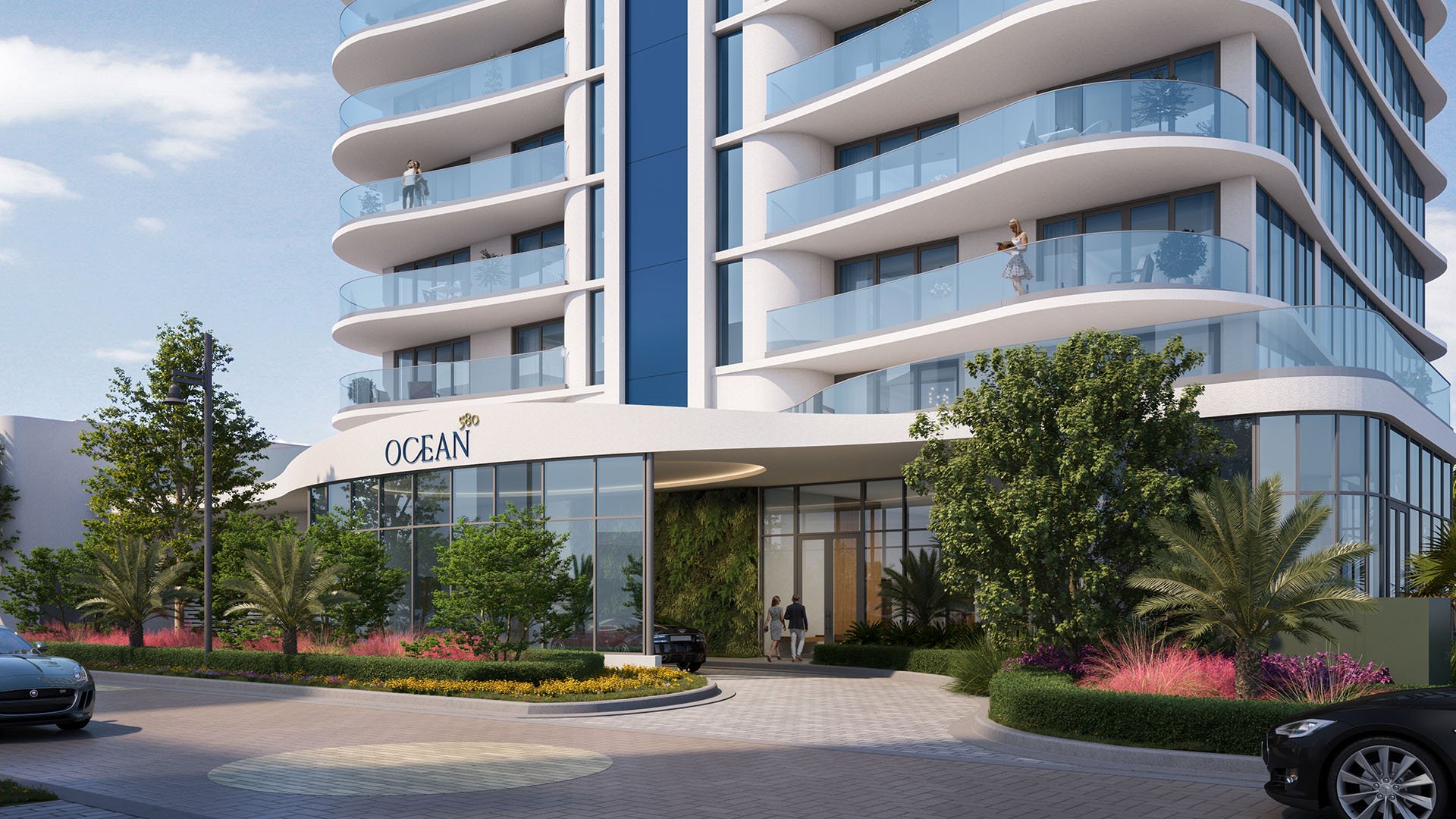
For a seasonal oceanfront owner, the most valuable amenity may be the freedom to depart without leaving responsibilities unresolved. At Ocean 580 Pompano Beach, the planned collection of 17 residences at 580 Briny Avenue offers a boutique setting. Yet privacy, generous terraces and private elevator entry do not establish an absence-management service.
Lock-and-leave is an operating arrangement, not an architectural feature. Available project details do not establish a contractual package for hurricane preparation, guaranteed residence inspections or round-the-clock concierge coverage. Before relying on those services, identify what the association will provide, what requires a separate contract and what remains the owner’s responsibility.
The essential purchase question is practical: who is authorized, available and accountable when the owner is elsewhere?
Ocean 580 is marketed as a 10-story building with 16 apartments and one penthouse. That scale may appeal to buyers seeking a more intimate residential setting, but it does not establish staffing depth or emergency capacity.
Request the proposed summer staffing schedule and distinguish building oversight from work inside individual residences. Confirm whether inspections are included, available for a fee or delegated entirely to an outside caretaker. Ask how visits will be documented and who receives photographs, incident notices and invoices.
Private elevator entry foyers require particular attention. Establish how an approved caretaker enters, whether credentials remain active during an owner’s absence and how emergency entry authorization is recorded. A service agreement should name a backup contact if the primary caretaker cannot attend.
Request the written hurricane plan before assuming management will prepare an unattended home. It should distinguish owner duties from association duties and specify preparation deadlines, access restrictions and the point at which staff or vendors stop entering residences.
Seek clear answers across three stages:
Before a storm: Who secures the residence, clears outdoor belongings and confirms completion?
During restricted access: Who communicates building status, and what happens if the owner cannot be reached?
After conditions permit entry: Who inspects the home, documents damage and authorizes urgent work?
Request the applicable service charges and spending-authorization process as well. Permission to enter is not necessarily permission to commission repairs.
For buyers also considering The Ritz-Carlton Residences® Pompano Beach, the same written responsibility checklist provides a useful basis for comparison. Neither a name nor an amenity presentation should substitute for the specific commitments attached to a purchase.
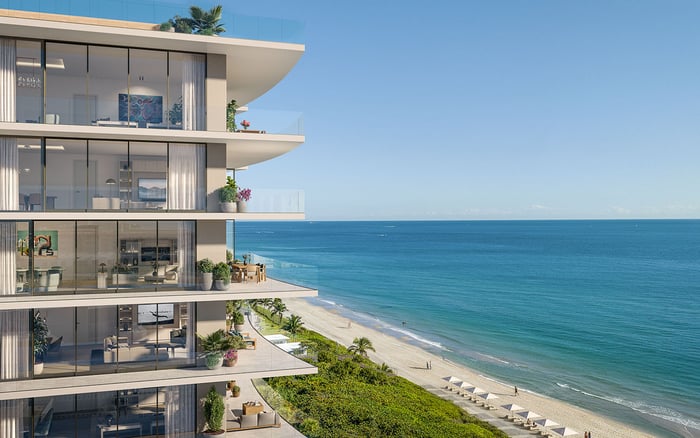
Ocean 580’s wraparound corner terraces are presented with sunrise and sunset views. Those outdoor spaces also make terrace preparation a meaningful part of seasonal ownership. Unit 902’s published layout illustrates the scale: 4,493 square feet of interior space and a 647-square-foot terrace, with four bedrooms, a den and 4½ bathrooms.
Before selecting outdoor furnishings, establish what must be removed, where it may be stored and who will perform the work. Confirm whether a caretaker can complete removal before access restrictions begin. Do not assume that association preparation of shared spaces includes a private terrace.
The described rooftop amenities include two firepits, a spa and an outdoor kitchen. Request separate closure and securing procedures for those areas, including responsibility for equipment and reopening inspections. Common-area preparation and residence preparation are distinct tasks.
Extensive glazing is central to the project’s oceanfront presentation. Buyers should nevertheless request approved window-and-door specifications, applicable design pressures and installation documentation rather than infer hurricane performance from views or renderings.
Add terrace waterproofing details and written warranty terms to that request. Clarify who evaluates water intrusion and how construction-defect claims are distinguished from storm-damage claims. These questions belong in a review of the purchase documents with qualified advisers; luxury finishes do not answer them.
Apply the same standard when reviewing Rosewood Residences Hillsboro Beach as an alternative. Compare the documentation and service obligations without assuming equivalent protection or absence-management arrangements.
Do not infer generator coverage from the building’s positioning. Obtain the proposed generator load schedule, expected operating duration and operating arrangements. Determine whether backup power serves any residence systems or only specified common-building functions.
Ask separately about elevators, security, access control and communications. Establish when elevators are taken out of service, who authorizes their restart and how shutdowns affect caretaker inspections. Private elevator entry does not itself establish continuity of access.
Parking belongs in this discussion, too. Two assigned spaces per residence are advertised, but their location and any vehicle-relocation obligations need confirmation. If a vehicle will remain over summer, identify who may move it, how keys are held and what happens if relocation is requested after the owner has departed.
Storm preparation addresses an event; summer oversight addresses an extended absence. Request written HVAC and humidity guidance suited to the residence, including instructions for an interruption in cooling or power. Do not rely on an informal thermostat recommendation without knowing who responds when conditions change.
Verify any proposed leak-monitoring equipment, its locations and its communication requirements. Identify who receives alerts and who is authorized to investigate. Monitoring is not a complete service unless a response arrangement accompanies it.
A useful departure protocol would record inspection frequency, contact priorities, approved vendors and escalation instructions. Request a closing inspection before departure and an agreed return inspection, with any additional visits and charges clearly defined.
Have qualified advisers review master windstorm and flood coverage, deductibles and owner-policy requirements alongside the association budget and reserve documentation. Do not assume specific coverage or adequate reserves. Distinguish recurring association expenses from optional inspections, storm preparation and emergency work.
If leasing forms part of the ownership plan, verify the governing documents. Advertised terms indicate a six-month minimum lease, up to twice annually, but remain provisional until confirmed. Leasing restrictions do not establish security standards or transfer all preparation duties away from the owner.
Finally, obtain the developer’s current written delivery schedule before planning a first seasonal stay. Completion estimates differ, and proposed operations should not be confused with services already in place.
The decision standard is straightforward: each essential task should have a responsible party, authorized access, a deadline, a cost and confirmation of completion. That is what makes departure genuinely easier.
For a discreet conversation about seasonal oceanfront ownership, connect with MILLION.
If branded residences are on your mind — as a home or as an allocation — we would be glad to share what we are seeing, privately.
Begin a quiet conversationOcean 580 is a planned oceanfront condominium at 580 Briny Avenue, Pompano Beach, FL 33062.
The project is marketed as a 10-story building with 17 residences, comprising 16 apartments and one penthouse.
Available project details do not establish a contractual lock-and-leave package, guaranteed unit checks or round-the-clock concierge coverage. Buyers should obtain written service commitments.
That responsibility requires confirmation in the hurricane plan and any caretaker agreement. Buyers should establish removal deadlines, storage arrangements, charges and completion confirmation.
No continuity of access is established by that feature alone. Confirm authorized entry procedures, elevator shutdown rules and post-storm access restrictions.
Residence-level backup power coverage is not confirmed. Request the generator load schedule and verify which systems it would serve.
Request written HVAC and humidity guidance, inspection frequency and leak-monitoring details. Confirm alert recipients and who can respond if cooling or power fails.
Two assigned spaces per residence are advertised, but unattended parking arrangements require confirmation. Verify space locations, relocation rules and authorization for someone to move a vehicle.
Review master windstorm and flood coverage, deductibles and owner-policy requirements with qualified advisers. Association budgets and reserve documentation also warrant review.
Completion estimates differ. Obtain the developer’s current written schedule before arranging seasonal occupancy or related services.