At Muse Residences, wellness due diligence should move beyond amenity language to unit-specific equipment, operating records, maintenance obligations and measurable service performance.
Muse Residences Sunny Isles Beach is a 47-story condominium at 17141 Collins Avenue, with direct Atlantic frontage, private beach access and residences marketed with ceilings up to 12 feet. Expansive terraces, summer kitchens, floor-to-ceiling impact glass and two private elevators reinforce the building's highly private residential character.
Yet luxury buyers should distinguish physical features from services that rely on people, contracts, maintenance and measurable performance. This distinction is especially important at Muse, where marketing has described a collaboration with Delos and Dr. Deepak Chopra that allowed residences to be customized as scientifically validated wellness homes. Such language invites investigation; it does not replace unit-specific documentation.
For resale buyers, original development materials may not reflect a residence's present condition or the current scope of association services. Confirm every material representation with management, the condominium association and the relevant equipment records.
In a wellness residence, performance is proven through records rather than adjectives.
The wellness-home package was described as addressing indoor air, water and light through purification, filtration and circadian-lighting technologies. A buyer should first determine whether those components were included in the base building, selected as an optional customization or installed and serviced independently by an owner.
Request an inventory of manufacturers, model numbers, installation dates, warranties, control interfaces and service providers. Then reconcile it with the equipment physically present in the residence. A visual inspection alone cannot establish whether a filtration system is active, correctly configured or supported by replacement parts.
Ownership and maintenance responsibilities matter equally. Condominium documents, alteration records and service agreements should clarify whether the association, owner or third-party vendor pays for consumables, repairs and monitoring. They should also identify what happens when a proprietary component reaches the end of its supported life.
A buyer may also ask whether any residence or common area holds an active WELL, Fitwel or formal Delos certification. The disclosed collaboration should not be treated as evidence of building-wide certification unless current documentation confirms it.
Air-purification language has included reducing allergens, toxins, pathogens, pollen and pollutants. To evaluate that claim for a specific home, request the installed equipment model, filter class, replacement history and available test results. Determine who changes the filters, at what intervals, how completion is documented and whether the system generates alerts when service is overdue.
Water-filtration claims require the same precision. Ask which nationally recognized quality standard is intended, where filtration occurs and whether it serves the entire residence or selected fixtures. Recent laboratory results from the unit are more useful than a general description. The maintenance file should identify cartridges or media, replacement dates, responsible parties and any shutdown procedure.
Circadian lighting is promoted as supporting natural rhythms, energy, mood, productivity and sleep. Buyers should test scenes and controls throughout the residence, then request calibration records and replacement specifications. Compatibility is critical: a sophisticated lighting concept can be compromised when failed components are replaced with products that do not reproduce the intended color range or control behavior.
Public-facing wellness descriptions do not establish unit-specific replacement intervals, calibration schedules or monitoring protocols. Before these features influence value, those details should appear in written maintenance agreements and equipment records.
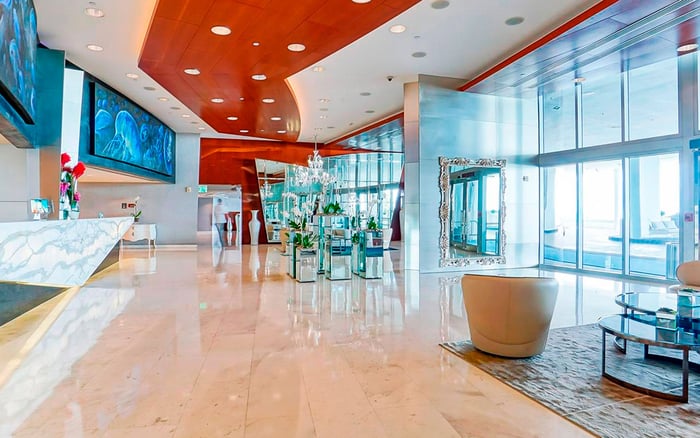
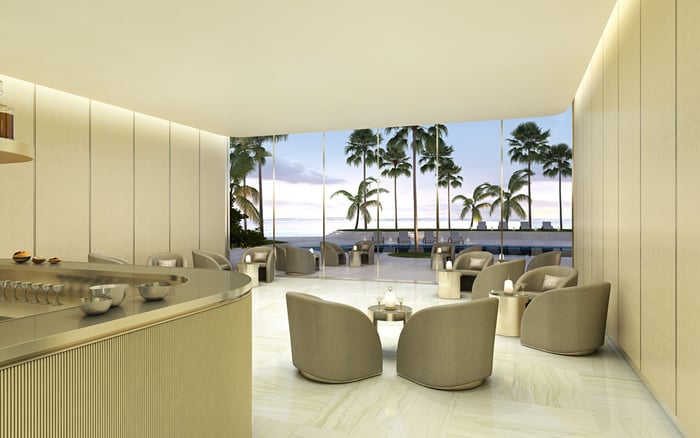
Muse promotes an infinity-edge pool and spa opening from the gallery, a fitness center and full-service spa overlooking the ocean, plus a residents-only beach club with chairs, umbrellas, cabanas and food-and-beverage service. The physical setting is compelling, but a buyer's review should focus on access, continuity and care.
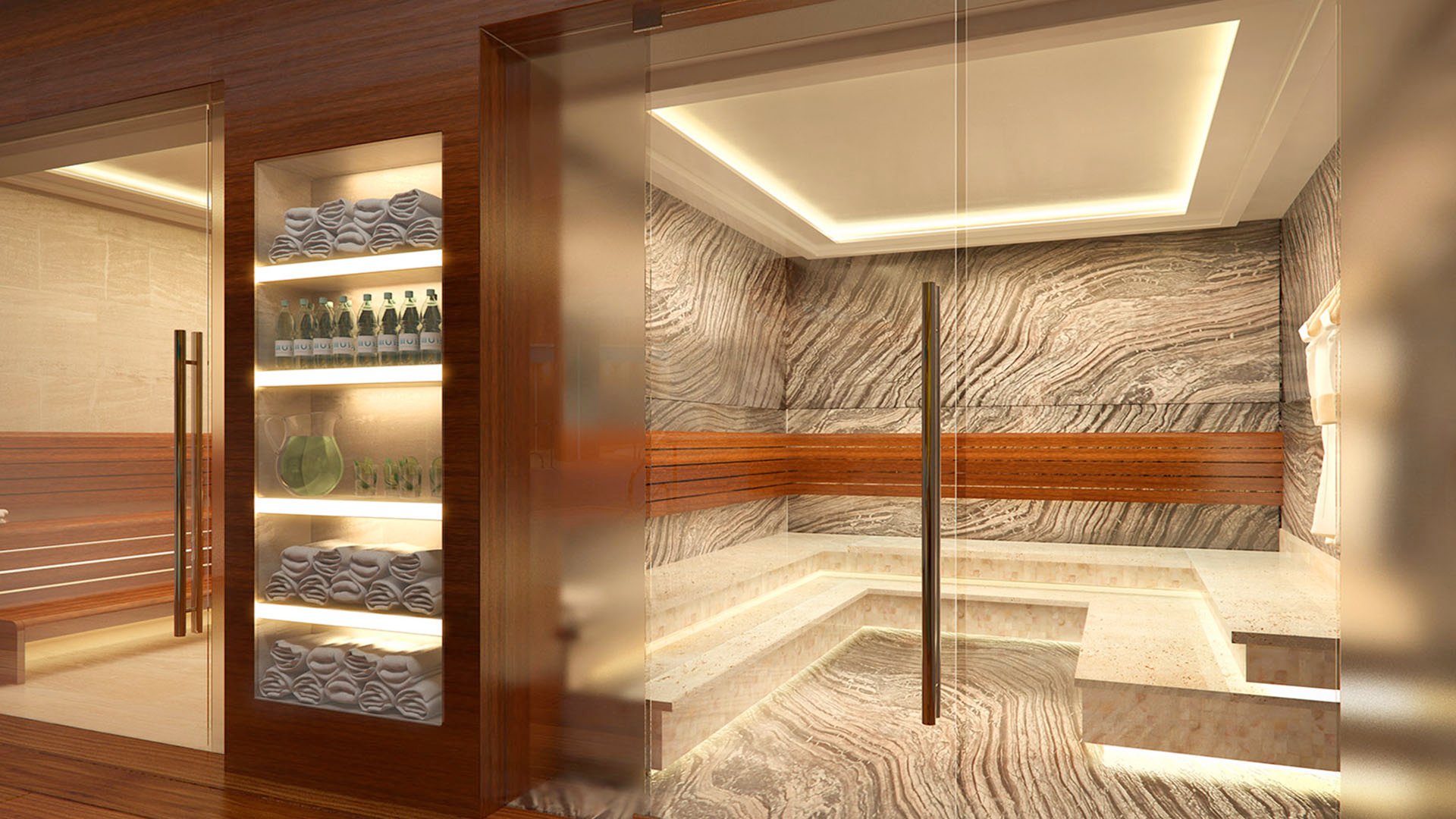
Request current operating hours, staffing levels, professional qualifications, class schedules and equipment-maintenance logs. For treatment rooms, locker areas, pool surfaces, water systems and any sauna or steam facilities currently available, seek cleaning schedules and compliance records. Pool inspection data and completed preventive maintenance provide a clearer picture than a tour conducted at an ideal hour.
Food-and-beverage service requires separate confirmation. Verify the current operator, days and hours, seasonality, minimums, guest policies and reservation requirements at the pool, beach and breakfast gallery. The gallery has been promoted as an art-adorned, Atlantic-facing breakfast space, but current menu and access details should be obtained in writing.
The broader lifestyle program includes a children's playroom, adding a family-oriented element. Buyers should confirm its current rules, supervision policy, cleaning schedule and guest access rather than assume that inclusion on an amenity list defines daily operation.
Operational diligence should extend beyond conventional wellness features. Muse has marketed a fully automated parking system. Review its maintenance contract, uptime records, typical retrieval process and emergency procedures. Ask what residents do during a malfunction and how service interruptions are communicated.
The two private elevators have been marketed with biometric technology. Confirm enrollment and deletion procedures, cybersecurity policies, authorized-user controls and backup access during power, network or biometric outages. Privacy is not merely architectural when entry depends on connected systems.
Concierge, valet and security services should be measured against written staffing hours and policies, not assumptions of hotel-level coverage. The same applies to advertised pet services, including complimentary pet walking: verify availability, limits, reservation rules and liability terms.
One-floor cooled storage also warrants inspection. Confirm who may enter, how temperature is controlled, whether readings are logged and which party is responsible for maintenance or damage. Oceanfront conditions make disciplined care of building systems especially relevant, even when an amenity appears simple.
The most useful due-diligence package combines governing documents with recent operating evidence. Request applicable budgets, service contracts, preventive-maintenance schedules, warranties, incident procedures and records of completed work. For wellness performance, prioritize indoor-air readings, water-test results, pool inspection data and service-response times.
Meeting materials can help identify recurring outages, vendor changes, deferred repairs or disputes over responsibility. Written policies should also cover reservations, guests, cancellations, fees and closures. If an important service is discretionary or seasonal, it should be evaluated differently from a contractually maintained building function.
This documentary review belongs alongside the physical inspection. An appropriate technical professional can verify installed equipment and operation, while counsel can interpret association obligations and owner responsibilities. A rigorous buyer's-guide approach combines condition, contract and continuity.
A comparative tour can sharpen the questions asked at Muse. Within Sunny Isles Beach, visits to Armani Casa Sunny Isles Beach, The Ritz-Carlton Residences® Sunny Isles and Turnberry Ocean Club Sunny Isles can help buyers compare how access, staffing and amenity reservations are presented. A wellness-focused comparison with The Well Bay Harbor Islands may further clarify which questions concern equipment and which concern ongoing service.
The objective is not to count amenities. It is to understand which promises are documented, maintained and measurable. Oceanfront design may establish the atmosphere, but dependable operations preserve the experience.
Before committing, buyers should reduce important wellness and service representations to a concise verification schedule. It should identify the system or service, current operator, evidence reviewed, maintenance responsibility, recurring cost and backup procedure. Any unresolved item can then be addressed through further inspection, document review or appropriately drafted purchase terms.
Muse offers a distinctive combination of privacy, Atlantic frontage and wellness-oriented design. Its value proposition becomes clearer when air, water, light, spa, fitness, parking and hospitality functions are examined as operating systems rather than brochure language.
For discreet guidance on evaluating South Florida's most exacting residences, connect with MILLION.
If branded residences are on your mind — as a home or as an allocation — we would be glad to share what we are seeing, privately.
Begin a quiet conversationConfirm which air, water and lighting systems are physically installed, who owns them and who is responsible for maintenance.
No. Marketing described residences that could be customized, so equipment may vary by unit and may have been an optional upgrade.
Request the equipment model, filter class, replacement history, maintenance agreement and available unit-specific test results.
Ask which quality standard applies, where filtration occurs, and for recent laboratory results and cartridge replacement records.
Calibration, controls and compatible replacement components determine whether the installed lighting continues to operate as intended.
No building-wide certification is identified in the supplied facts. Buyers should request current documentation for any claimed WELL, Fitwel or formal Delos certification.
Verify current hours, staffing, professional qualifications, class schedules, cleaning protocols and equipment-maintenance logs.
Confirm the current operator, schedule, seasonality, access policies, guest rules, reservations and any applicable charges.
Review the maintenance contract, uptime records, retrieval process, outage communications and emergency procedures.
Original marketing may not reflect present operations. Current contracts, policies, logs and meeting materials show how services are actually delivered.