Coconut Grove buyers should look beyond branded service to determine who enters the property, which spaces are shared, how rentals work, and who funds furniture replacement.

In Coconut Grove, polished service can make two residences feel similar during a tour, even when their operating structures are fundamentally different. For a 2026 buyer, the first question is not simply whether a property carries a hospitality name, but whether hotel rooms operate within, beside, or entirely apart from the residential building.
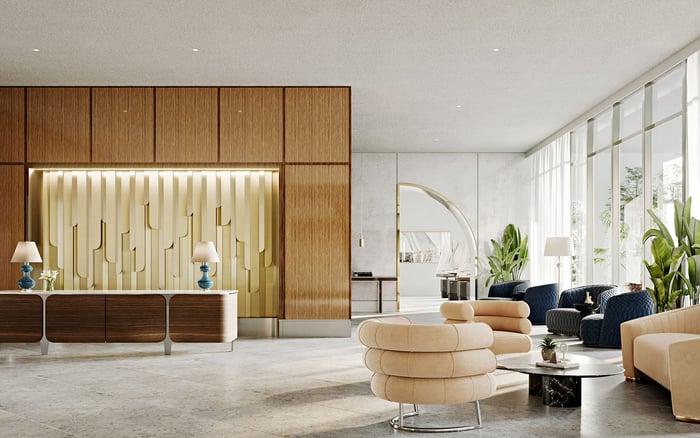
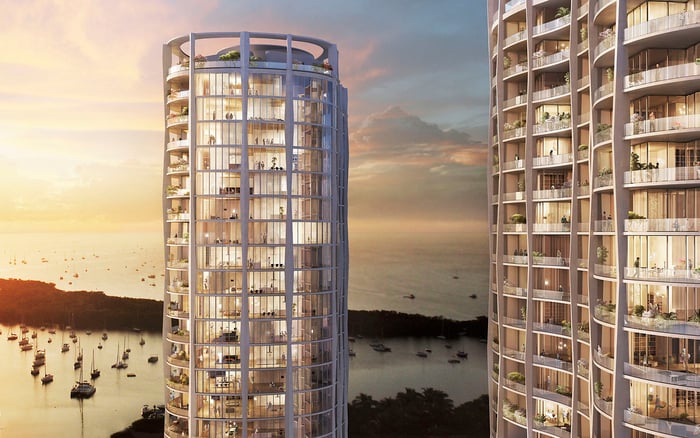
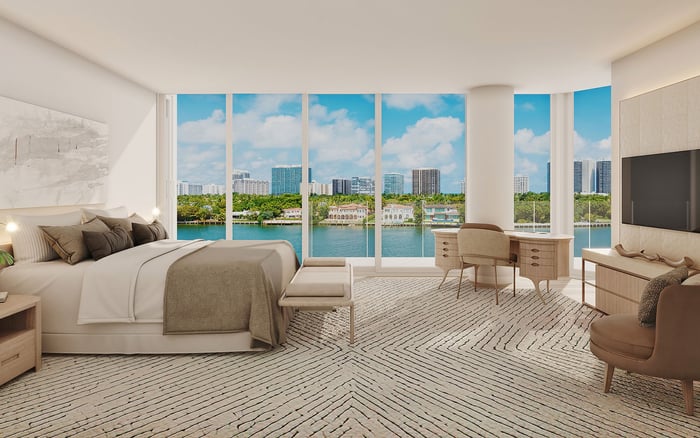
Mr. C Tigertail Coconut Grove is a residential condominium with no on-site hotel component. The two-building development comprises the 21-floor Tigertail Tower, with 134 residences, and the 22-floor Bayshore Tower, with 95. Private terraces, open layouts, premium appliances, and expansive glazing are paired with hotel-style services, but the homes are not configured as hotel inventory.
That distinction can reduce routine contact with transient hotel guests. It does not mean the property functions as a quiet, minimally staffed condominium. Multiple pools, spa facilities, café dining, in-home delivery, children’s facilities, lounges, bars, and social areas can still generate a lively flow of residents, visitors, and employees.
The Ritz-Carlton Coconut Grove presents a different diligence question. An operating luxury hotel occupies 3300 SW 27th Avenue, while Ritz-Carlton-branded condominium residences stand next door at 3350 and 3400 SW 27th Avenue. Proximity to an active hotel makes the precise boundaries among hotel, residential, and shared operations especially important.
The word “amenity” reveals little about who may actually use a space. Before contracting, request a plan classifying every lobby, elevator, pool, spa, fitness room, restaurant, parking area, and service corridor as residential-only, hotel-only, or shared. Written operating rules should align with the physical circulation observed during a visit.
At Mr. C Residences, privacy features include private high-speed elevators, above-ground parking with security surveillance, a porte-cochère, and staffed service. A 24-hour concierge and personalized assistance create a hospitality profile without introducing hotel rooms into the towers. Even so, buyers should establish whether the café, spa, bar, or food-and-beverage venues admit outside patrons and how private events affect circulation.
The same exercise belongs on any Grove shortlist. A buyer comparing Four Seasons Residences Coconut Grove or Park Grove Coconut Grove should ask identical questions rather than infer access rules from branding, renderings, or service language.
Privacy is an operating system, not merely a private-elevator label. Ask how visitors are registered, where they wait, which floors their credentials unlock, and whether overnight guests face separate limits. Confirm the permissions assigned to residents, hotel guests, outside diners, contractors, housekeeping personnel, valet teams, and delivery staff.
At the Ritz-Carlton addresses, adjacency to the hotel does not establish that all amenities are shared. Nor does it prove that residential spaces are exposed to hotel traffic. The documents and access map must establish both points. Buyers should also inspect arrivals at different times, noting whether residential and hotel vehicles use the same approach, valet queue, or porte-cochère.
Mr. C Miami Coconut Grove operates as a separate boutique hotel with its own reservations, guarantees, cancellations, and guest policies. Its Miami Beach area is designated for “Mr. C guests” and includes two beach chairs and towels. Residence owners should not treat that off-site hotel privilege as included unless their ownership documents expressly say so.
This is the key distinction for branded residences: a recognized service identity does not automatically confer access to every hotel-branded benefit. Nor does it automatically turn a residence into a condo-hotel unit.
Rental flexibility has several layers. Association rules may permit leasing, but that permission is not equivalent to participation in an official, building-wide hotel rental pool. An individually advertised furnished unit proves only that a particular owner has marketed a residence, not that the building operates a branded program.
For the Ritz-Carlton residences, available information does not confirm a branded, building-wide hotel rental pool. The stated terms include a 30-day minimum lease and as many as 12 leases per year. Those terms could accommodate monthly or seasonal occupancy while limiting nightly turnover, but buyers should verify them against the current declaration, amendments, and association rules.
If rental income is part of an investment thesis, request the actual rental agreement before assigning value to it. Review management fees, owner-use restrictions, blackout periods, stay limitations, housekeeping charges, insurance requirements, furniture standards, marketing rights, and termination provisions. Ask who controls pricing and whether participation is optional.
A second-home purchaser may care less about projected income and more about neighboring turnover. The same lease rules reveal how often occupants can change, how guests receive credentials, and whether move-in procedures differ for tenants. For readers of MILLION Buyer’s Guides, that operational texture is often more consequential than an amenity count.
FF&E refers to furniture, fixtures, and equipment. In a hospitality-oriented residence, the category may encompass lobby furnishings, pool furniture, restaurant or lounge pieces, in-unit rental packages, linens, electronics, and other items, depending on the governing documents and any rental arrangement.
Unit-level FF&E reserve balances, contribution formulas, and replacement obligations are not established for these Coconut Grove properties. Buyers therefore need the applicable association budgets, financial statements, reserve information, and rental documents. Ask whether an FF&E charge is included in regular assessments, billed separately, deducted from rental revenue, or imposed when a package must be refreshed.
Scope matters as much as cost. Determine whether the association, a hotel operator, a rental manager, or the individual owner selects replacements. Clarify whether owners outside a rental program have any in-unit furnishing obligation and whether brand standards survive a management change. No projected return should be treated as net until these potential costs and deductions are understood.
A disciplined comparison matrix should have five columns: guest population, space classification, credential rules, rental framework, and FF&E responsibility. Complete it only with governing documents and written confirmations, then test the answers against the building’s physical layout.
Apply that framework beyond the two principal case studies. Buyers considering wellness-led The Well Coconut Grove can use the same matrix to distinguish marketed experience from binding access and cost provisions. Architecture and service set the tone, but documents determine who enters, who pays, and what remains private.
For confidential Coconut Grove acquisition guidance and document-focused property comparisons, connect with MILLION.
If branded residences are on your mind — as a home or as an allocation — we would be glad to share what we are seeing, privately.
Begin a quiet conversationNo. It is a residential condominium without an on-site hotel component, although it offers hospitality-style amenities and service.
Tigertail Tower has 134 residences across 21 floors, while Bayshore Tower has 95 residences across 22 floors.
The residences at 3350 and 3400 SW 27th Avenue sit adjacent to the operating hotel at 3300 SW 27th Avenue.
The available facts do not define every boundary. Buyers should obtain a written plan identifying residential-only, hotel-only and shared spaces.
No branded, building-wide hotel rental pool is confirmed by the available public information. Independently marketed condominium rentals do not establish one.
A 30-day minimum lease and up to 12 leases annually have been reported, but buyers should verify current governing documents and rules.
Request the rental agreement, management fees, owner-use limits, furniture standards, stay restrictions and any FF&E replacement obligations.
It is funding associated with replacing furniture, fixtures and equipment. The applicable documents should define the covered items, contribution method and responsible party.
That beach area is advertised for Mr. C hotel guests. Residence owners should obtain written confirmation rather than assume access.
Review visitor registration, key-fob permissions, elevator access, overnight-guest rules, staff entry, deliveries, parking and valet rights.