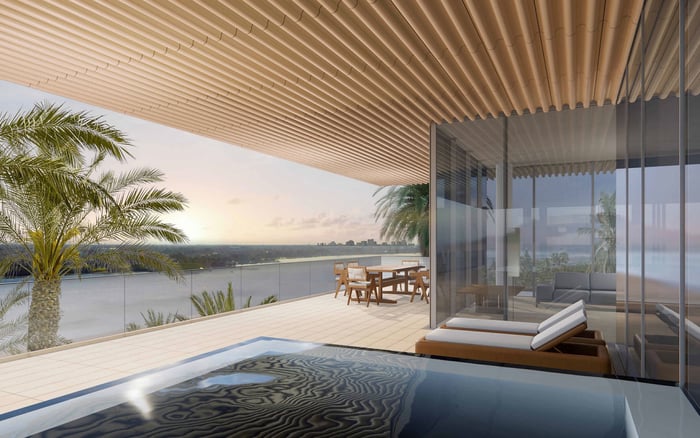
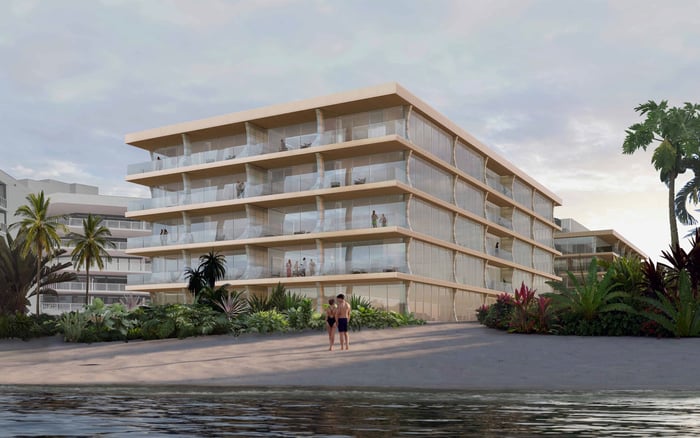
A buyer-focused framework for comparing Alba and Mr. C Residences West Palm Beach through flood exposure, critical-equipment elevation, emergency power, and document-led due diligence.

Storm resilience in a luxury condominium extends beyond visible features. Buyers comparing Alba West Palm Beach and Mr. C Residences West Palm Beach should examine how the building protects critical systems, maintains essential services, and communicates emergency procedures.
A useful comparison begins with property-specific documentation rather than assumptions about location, branding, or construction type. Flood exposure, site access, equipment placement, backup power, and operating plans should be reviewed as connected parts of one resilience strategy.
Resilience is not one specification, but a chain of protected systems and documented operating decisions.
Buyers should request the elevation certificate, current site survey, flood-zone determination, and relevant approved plans for each property. These materials can help frame questions about grade, drainage, access points, equipment rooms, and the routes used to service critical infrastructure.
The review should identify the elevation reference used in project documents and show where important mechanical and electrical components sit in relation to that reference. A broad statement about elevation is less useful than a plan that locates individual components and their associated controls, conduits, ventilation paths, and service access.
Water management also deserves a system-level review. Buyers can ask how vulnerable openings are addressed, how water is directed away from essential spaces, and whether staff can safely inspect or isolate affected equipment during severe conditions. The goal is not simply to identify a raised component, but to understand whether the full operating chain has been considered.
Critical infrastructure may include electrical switchgear, transfer equipment, pumps, elevator controls, access-control hardware, communications equipment, and generator components. The exact configuration must be confirmed for each property through plans and written specifications.
Equipment elevation should be considered alongside protection, redundancy, and accessibility. A component may be positioned above a stated benchmark while a connected control, cable route, air intake, or service path remains exposed. Buyers should therefore trace each essential service from its power source to the point where residents depend on it.
This approach makes comparisons more precise. Instead of asking whether a building has resilient systems in general, buyers can ask where those systems are located, what supports them, which dependencies could interrupt them, and what documentation confirms the answer.
The phrase “generator-backed” does not establish which services continue during an outage. A meaningful review requires the generator specifications, emergency load schedule, transfer design, fuel plan, and operating procedures.
The load schedule should identify every supported circuit or system. Buyers can separately confirm whether backup power covers required life-safety functions, elevator service, domestic-water pumping, wastewater systems, access control, communications, ventilation, common-area conditioning, or any service within individual residences. No category should be assumed without written confirmation.
Elevator questions should address how many cars can operate, whether operation is automatic or managed, and how emergency use affects resident service. Water and wastewater questions should focus on whether pumping remains available throughout the building. Cooling questions should distinguish between conditioned common spaces and service inside private homes.
Generator capacity is only one part of continuity planning. Buyers should request the fuel type, available capacity, expected runtime under the documented emergency load, testing practices, and refueling procedures. They should also ask whether delivery access could be affected during the same conditions that caused the outage.
Transfer equipment determines how supported loads move to backup power. The review should clarify whether transfer is automatic, whether any systems require staff intervention, and how competing loads are managed. Written procedures can also show who is responsible for testing, monitoring, escalation, and resident communication.
Endurance estimates should be read with their assumptions. Runtime can depend on the selected load, equipment operation, fuel availability, and refueling access. A useful written response explains the operating scenario rather than presenting an isolated duration.
Buyers considering other West Palm Beach options, including Forté on Flagler West Palm Beach and The Ritz-Carlton Residences® West Palm Beach, can apply the same matrix. A fair comparison uses equivalent documents, definitions, and operating assumptions for every property.
The process should separate verified capabilities from unanswered questions. If a plan, schedule, or written response is unavailable, buyers can record the item as unconfirmed rather than infer that a safeguard is present or absent. This keeps the analysis disciplined and avoids turning incomplete disclosure into a project conclusion.
A focused diligence package may include:
Elevation certificate and current site survey
Flood-zone determination and relevant approved plans
Mechanical and electrical equipment locations
Generator specifications and emergency load schedule
Transfer-equipment design and operating sequence
Fuel capacity, runtime assumptions, and refueling plan
Testing, maintenance, and resident-communication procedures
Written explanations of elevator, water, wastewater, access, and cooling continuity
After collecting the documents, buyers should connect them to the resident experience. Which entrances remain usable? How would residents reach their floors? Which water, sanitation, communications, access, and cooling services continue? Who manages the response, and how are changes communicated?
For Alba and Mr. C Residences West Palm Beach, the shared buyer’s lens is straightforward: verify equipment elevation, trace supported loads, test endurance assumptions, and obtain written answers before assigning value to storm-resilience claims.
For confidential guidance on West Palm Beach residences and document-led due diligence, connect with MILLION.
If branded residences are on your mind — as a home or as an allocation — we would be glad to share what we are seeing, privately.
Begin a quiet conversationUse the same document-based framework for both properties, covering site conditions, equipment elevation, emergency loads, fuel, transfer equipment, and operating procedures.
Request the elevation certificate, current site survey, flood-zone determination, and relevant approved plans.
Critical services can be interrupted if equipment or connected controls and service routes are vulnerable. Buyers should verify locations through plans and written specifications.
No. Buyers should review the emergency load schedule to identify the specific circuits and systems supported.
Confirm how many elevators can operate, how service is managed, and whether emergency use changes resident access.
Each service may depend on different pumps, controls, and supported loads. Written confirmation should explain which functions continue during an outage.
Review fuel type, capacity, runtime assumptions, testing practices, refueling procedures, and delivery access.
Transfer equipment controls how supported systems move to backup power. Buyers should confirm whether the process is automatic or requires staff action.
Record unavailable documentation as unconfirmed rather than assuming a safeguard is present or absent.
Compare equivalent plans, schedules, definitions, and operating assumptions across every property under consideration.