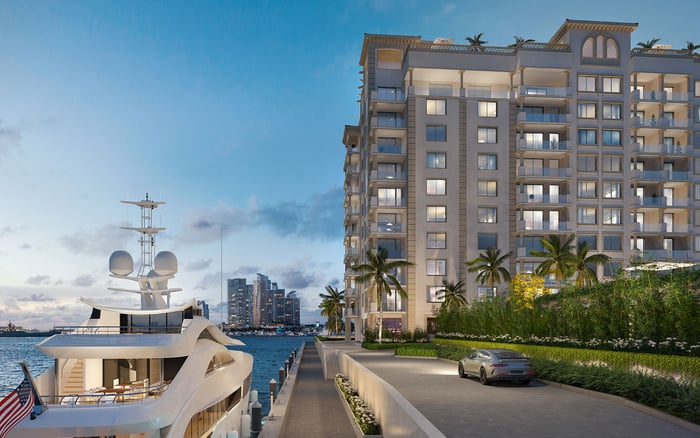
Loading access can shape routine deliveries, catered events, art installation, household staffing, provisioning, and major move-ins. Buyers should obtain the controlling documents, written policies, and verified route specifications before contracting.

At Continuum Club & Residences North Bay Village, buyers should treat loading access as an important due-diligence issue. Furnishings, art, catering teams, household vendors, renovation materials, and routine provisions may all depend on service routes and operating rules that are not apparent from a residence's floor plan.
The essential questions concern control, capacity, scheduling, and enforcement. Buyers should identify the documents governing the loading area, determine who administers reservations, and verify whether the stated procedures could change before or after occupancy.
The elegance of daily life often depends on service routes residents never see.
Request architectural exhibits identifying each loading bay, service entrance, receiving area, back-of-house corridor, and freight-elevator connection. The plans should establish whether residential deliveries are physically separated from other building operations or converge along a shared route.
If infrastructure is shared, ask who receives booking priority during busy periods. A residential installation, commercial delivery, and private event could require overlapping arrival windows. Buyers should understand how conflicts would be resolved, which party controls the calendar, and whether residential booking periods are protected.
Confirm whether the developer, condominium association, management team, or another operator will control each service area. Ask which proposed procedures may be amended, who has amendment authority, and how owners would receive notice of a change.
Buyers comparing North Bay Village choices such as Shoma Bay North Bay Village and Tula Residences North Bay Village can apply the same review. The relevant issue is not simply whether a loading area exists, but whether its access rules suit the household's expected routine.
Obtain the loading area's vehicle-height clearance, weight limit, bay dimensions, and permitted vehicle types in writing. Ask whether larger trucks may enter or whether vendors must transfer goods to smaller vehicles. Any restriction could affect delivery planning, vendor selection, and the feasibility of receiving unusually large pieces.
The full route matters. Request the service-elevator cab dimensions, door width, weight capacity, and booking policy, then trace the path from the vehicle to the residence. A piece may fit inside the home yet fail to clear an entrance, corridor turn, elevator door, or other point along the route.
Before commissioning oversized artwork, furniture, stone, millwork, or another difficult installation, give the vendor verified measurements and written access rules. Determine whether elevator protection, supervision, deposits, cleaning charges, or damage assessments apply. Treat dimensions and procedures as planning inputs rather than assumptions.
Ask where groceries, flowers, prepared meals, wine, dry cleaning, and routine parcels would be received. Depending on the governing policy, different categories may follow separate paths through a lobby, valet area, package room, or service entrance.
Package procedures warrant a separate review. Confirm whether temperature-controlled storage is available, how age-restricted shipments are handled, whether oversized parcels can be held, and whether delivery to the residence is offered. Determine permitted holding periods and the procedure used when storage capacity is reached.
Obtain delivery hours in writing, including any weekend or holiday limitations, reservation lead times, and rules for unscheduled vehicles. A buyer who expects to be away regularly should also ask whether an authorized representative may accept deliveries and what documentation that arrangement requires.
Private entertaining can expose service constraints. Determine whether residents may engage any vendor that satisfies the building's requirements, whether an approved list applies, or whether another food-and-beverage arrangement governs catered events.
For each contemplated event format, verify arrival windows, preparation and staging areas, freight access, staffing rules, waste removal, and any occupancy restrictions. Ask whether rental furniture, floral installations, entertainment equipment, and specialty lighting require separate reservations. If an event could extend beyond standard service hours, confirm the after-hours procedure and applicable charges.
Vendor insurance deserves equal scrutiny. Obtain the required coverage limits, certificate wording, submission deadlines, licensing requirements, and any worker documentation. Clarify whether approval applies to the vendor company, each individual worker, each visit, or a specified approval period.
Household staff and repeat service providers need a predictable entry process. Confirm preregistration requirements, identification screening, access credentials, security escorts, and after-hours procedures. Ask whether recurring personnel may receive standing authorization or must be registered for every visit.
Buyers should also distinguish recurring services from one-time installations. Housekeeping, private-chef visits, pet care, maintenance, and floral service may be governed differently from moving companies, art handlers, contractors, or event vendors. Written classifications can prevent confusion after closing.
If marine provisioning is relevant to the purchase, verify whether goods may be delivered near the water, who may accept or hold them, and how refuse or restricted materials are handled. Land-side loading approval should not be assumed to authorize a separate marine delivery route.
A buyer also considering Onda Bay Harbor can use the same distinction when evaluating residential receiving and boat-related provisioning. Seamless household operations depend on clearly assigned routes and responsibilities.
Request the move-in and alteration policies before contracting. Review reservation procedures, contractor hours, elevator protection, deposits, cleaning charges, material deliveries, and debris removal. Ask whether initial move-ins follow different scheduling rules from later installations or renovations.
A large installation may require several coordinated bookings rather than a single delivery slot. Confirm whether staging is permitted, how long a vehicle may remain in the loading area, whether empty packaging can be held temporarily, and who is responsible for restoring protected common areas.
For artwork and custom furnishings, ask what happens when an item cannot travel through the standard service route. Any alternative path should be approved in writing before an order becomes noncancelable or a vendor schedules specialized equipment.
Request the declaration, proposed rules, management policies, vendor requirements, and relevant architectural exhibits. Marketing language may describe an intended experience, but buyers should rely on the documents that establish operating authority, scheduling procedures, vendor compliance, and amendment rights.
Submit a written scenario list reflecting the household's actual plans. Examples may include a full-home furniture installation, a large artwork, recurring flowers, wine deliveries, private-chef service, a catered dinner, regular housekeeping, and boat provisioning if applicable. Written responses can expose ambiguities that a general amenities presentation does not address.
For discreet guidance on evaluating South Florida residences and their operational details, consult MILLION.
If branded residences are on your mind — as a home or as an allocation — we would be glad to share what we are seeing, privately.
Begin a quiet conversationService policies can affect furniture installation, catering, routine deliveries, household staffing, alterations, and provisioning. Buyers should obtain the governing documents rather than rely on general marketing language.
Request plans showing loading bays, service entrances, receiving areas, corridors, and freight-elevator connections. Written operating policies should identify who controls each route.
Confirm vehicle-height clearance, weight limits, bay dimensions, and permitted vehicle types. Ask whether larger deliveries must be transferred to smaller vehicles.
Obtain the cab dimensions, door width, weight capacity, route clearances, and booking rules before ordering an oversized piece.
Confirm where parcels are received, how long they may be held, and whether oversized or temperature-sensitive items can be accommodated. Ask what happens when storage capacity is reached.
Verify vendor eligibility, arrival windows, staging areas, freight access, staffing rules, waste removal, after-hours procedures, and applicable charges.
Request the required coverage limits, certificate wording, submission deadlines, licenses, and worker documentation. Clarify whether approval applies per company, worker, visit, or approval period.
Ask about preregistration, identification screening, credentials, escorts, and after-hours entry. Determine whether standing authorization is available for repeat personnel.
If marine deliveries are relevant, confirm the authorized route, who may accept or hold goods, and how refuse or restricted materials are handled. Do not assume land-side approval covers marine access.
Request the declaration, proposed rules, management policies, vendor requirements, architectural exhibits, and move-in and alteration procedures. Submit household-specific scenarios for written clarification.