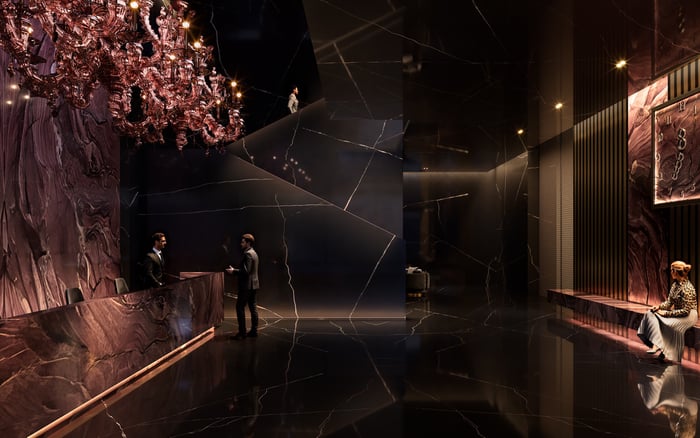
A discreet furnishing strategy for flexible ownership at ORA by Casa Tua: what to remove, what to separate, and which storage, access, and rental provisions to confirm before welcoming guests.

A considered flexible-use residence feels complete without revealing everything about its owner. At ORA by Casa Tua Brickell, that distinction belongs at the center of the furnishing conversation. The project is marketed as fully furnished, with flexible ownership and short-term, seasonal, and long-term rental options. For a buyer, the question is less what to add than what should remain exclusively personal.
Interiors are marketed as furnished and finished by m2 atelier, with layouts spanning studios through four bedrooms. That foundation suggests a clear approach: maintain a cohesive guest environment while keeping identity, valuables, and personal routines outside it. The precautions below are recommendations for owners, not representations of included storage or building policy.
Start with belongings whose value cannot be measured by replacement cost. Passports, financial records, legal documents, private correspondence, family photographs, and devices containing personal information should not become part of a guest-ready residence. The same principle applies to heirlooms, significant jewelry, and objects of sentimental importance.
Consider keeping those items elsewhere rather than relying on an assumed private cupboard. A closed drawer is not a security arrangement; neither is a decorative cabinet. If you intend to retain valuables on site, first establish what storage is permitted and how access would work.
Artwork warrants a separate decision. A piece selected for personal meaning may be better reserved for owner stays, while a replaceable decorative work can support the residence's atmosphere. Before making substitutions, confirm whether the furnishing or rental arrangements impose approval, inventory, or replacement requirements.
A furnished residence need not feel anonymous. Texture, restrained accessories, and a consistent palette can create warmth without leaving a personal archive on display. Favor additions you would be comfortable having handled, photographed, or replaced, subject to any applicable furnishing requirements.
The advertised Italian-designed kitchens and bathrooms already provide a design framework. Rather than planning a wholesale refit, distinguish decorative additions from changes that could require permission. Built-in cabinetry, altered locks, and installed safes should remain proposals until their acceptability is confirmed.
For buyers also considering Cipriani Residences Brickell, the useful comparison is not an assumed equivalence in rental rights. It is whether each property's documented furnishing and use conditions suit the owner's intended way of living. A compelling interior and a workable ownership arrangement are separate decisions.
Walk-in closets are among ORA's advertised residence features, but they do not establish lockable owner-only storage. Before allocating a closet to a private wardrobe, ask whether exclusive owner storage is permitted, whether hardware changes require approval, and who could retain access.
If private storage is approved, define its contents narrowly. Personal clothing, selected toiletries, and a small owner-use kit are easier to inventory than an accumulation of belongings left between visits. Ask how the arrangement would be communicated to housekeeping and rental personnel, and whether it affects the space available to guests.
Divide possessions into three categories: guest inventory, approved owner storage, and items removed before every rental. This is a proposed organizational system, not an ORA service. It also clarifies when off-site storage may be the simpler option.
ORA residences are promoted with smart-home technology and prewiring. That makes digital privacy part of furnishing, not an afterthought. A television signed into a personal account or a tablet linked to private messages can disclose more than a shelf of photographs.
Where equipment and management arrangements permit, use guest-facing profiles rather than personal credentials. Remove saved payment details and review connected devices before each handover. Ask whether guest connectivity can be separated from owner devices; do not assume a particular Wi-Fi configuration is provided.
The planned digital concierge is described as supporting rental management, housekeeping scheduling, and guest communications. Confirm what information an owner would share, who would receive it, and how permissions would be managed. Do not assume this service establishes any particular cybersecurity or access-control standard. Share personal calendars, travel plans, and household instructions only as needed.
Privacy extends into ordinary rooms. Remove prescription packaging, appointment reminders, monogrammed correspondence, and personal address books. Review mirrors, countertops, bedside drawers, and any surfaces that might appear in rental photography. The aim is discretion, not austerity.
Every residence is advertised with a washer and dryer, making laundry supplies and linen organization part of the handover plan. Keep guest-ready linens clearly distinguished from any personal collection. Wine coolers are advertised only in select residences; where applicable, decide whether bottles belong to the guest inventory or should be removed.
Buyers weighing The Residences at 1428 Brickell alongside ORA can apply the same personal test: how much of home should remain in place during an absence? The answer should guide due diligence without presuming the properties share operating arrangements.
ORA's short-term rental offering is marketed with a three-night minimum. Confirm that provision in final condominium and rental-management documents rather than treating it as an unconditional entitlement. Storage permissions, alterations, furniture replacement, and access procedures also require direct confirmation.
Plans call for separate residents' and short-term check-in/check-out lobbies. That is a specific arrival arrangement, not a guarantee that residents and rental guests remain completely separate throughout the property. Likewise, establish who may enter a residence, under what circumstances, and how any owner-only area would be handled.
Before the first guest stay, prepare a dated inventory and photographs of the guest-ready interior. Record what has been removed, review devices and accounts, and obtain written clarity on unresolved access questions. The objective is a residence that feels generous to guests while preserving a clear private life for its owner.
For a discreet conversation about matching a Brickell residence to your intended use, connect with MILLION.
If branded residences are on your mind — as a home or as an allocation — we would be glad to share what we are seeing, privately.
Begin a quiet conversationYes. The residences are marketed as fully furnished and finished by m2 atelier, with layouts ranging from studios through four bedrooms.
Short-term, seasonal, and long-term rental options are marketed. Eligibility and operating conditions should be confirmed in final governing and rental-management documents.
No unconditional entitlement should be assumed. Confirm the marketed three-night minimum and any applicable conditions in the final documents.
Advertised walk-in closets do not establish lockable owner-only storage. Verify storage permissions, hardware approvals, and access arrangements before relying on one.
Consider removing identity documents, financial records, private correspondence, irreplaceable valuables, and devices containing personal information. These are recommended precautions, not stated ORA requirements.
Permission for safes and lock changes is not established here. Obtain written confirmation before planning either installation.
Where supported, use guest-facing profiles, remove saved payment information, and review connected devices before handover. Confirm available connectivity and access controls rather than assuming they are included.
It is described as supporting rental management, housekeeping scheduling, and guest communications. Owners should confirm how personal information and permissions would be handled.
No. Separate residents' and short-term check-in/check-out lobbies are described, but that does not establish complete separation elsewhere in the property.
Every residence is advertised with a washer and dryer. Wine coolers are advertised only in select residences.