A discreet buyer’s guide to evaluating neighboring development risk before purchasing luxury real estate in Brickell Key, with practical questions for view protection, construction exposure, approvals, timing, resale, and contract diligence.
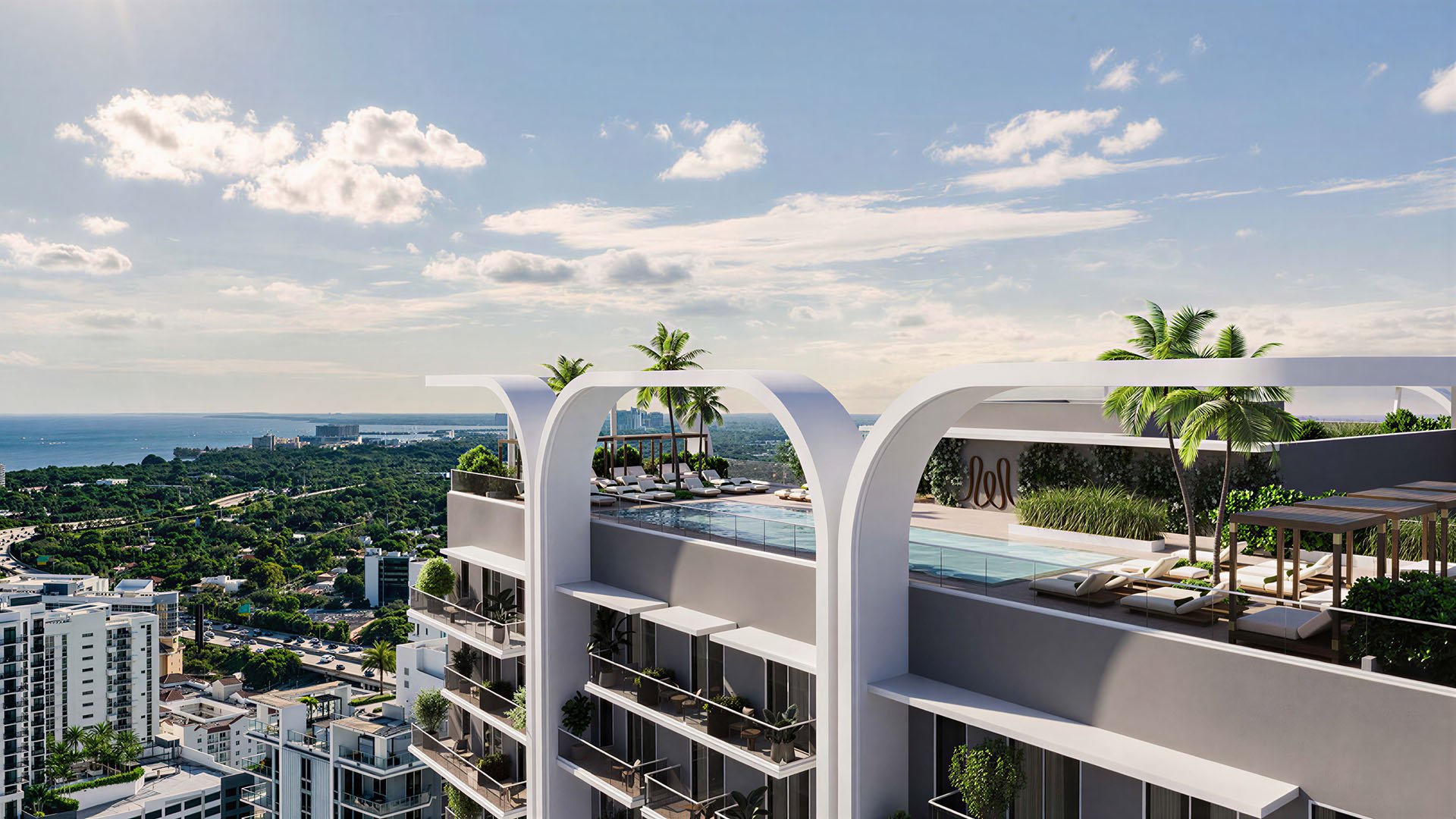
In Brickell Key, the most expensive risk is often the one most easily admired during a showing: the view. A water view that feels permanent at 4 p.m. may still require serious diligence before it becomes part of an offer strategy. The question is not simply whether another building could rise nearby. It is whether future change could alter privacy, light, noise, access, resale psychology, or the way a residence lives day to day.
For the ultra-premium buyer, neighboring development risk should be treated as a design, legal, and investment question at once. The right inquiry is calm and specific: what exactly surrounds the building, who controls it, what could change there, and how would that change affect the residence being purchased? This is where a polished view corridor, a balcony line, and an elegant marketing deck must be translated into practical due diligence.
Brickell buyers often compare island privacy with the broader energy of the mainland. When evaluating that difference, it can be useful to study nearby luxury offerings such as The Residences at Mandarin Oriental, Miami, Baccarat Residences Brickell, and St. Regis® Residences Brickell as part of a wider conversation about exposure, approach, privacy, and long-term positioning.
The first question should be physical: what parcels, structures, easements, rights of way, open areas, parking areas, waterfront edges, and service zones are adjacent to or near the residence? A buyer should ask for a clear explanation of the immediate surroundings from multiple angles, including the views from the main living areas, bedrooms, terraces, elevator landings, amenity decks, and arrival sequence.
The second question should be control: who owns or manages the land or improvements around the building? A neighboring parcel with a stable use may feel different from one with an uncertain future. The buyer does not need speculation. The buyer needs a disciplined map of what exists, what is controlled by the condominium, what is controlled by another owner, and what could be subject to future application or redevelopment.
This is especially important for waterfront residences, where value may be influenced by orientation, openness, sight lines, marina activity, pedestrian patterns, and the atmosphere of the approach. Ask the team to separate what is owned, what is shared, what is public, what is private, and what is merely assumed.
A sophisticated buyer should ask whether any approvals, applications, hearings, filings, variances, design reviews, or public-facing proposals are known for nearby properties. The answer should be documented and carefully worded. Vague comfort is not enough. A sentence such as “nothing is happening” is not the same as a review of what has been filed, discussed, or permitted.
The point is not to become an urban planner. The point is to understand where uncertainty lives. If a nearby site has no known activity, ask whether that conclusion is based on current research or casual familiarity. If activity exists, ask what stage it is in, what remains subject to change, and whether timing could overlap with your anticipated ownership period.
For new-construction buyers, the same discipline applies inside the purchase itself. Ask how the developer describes surrounding conditions, future views, construction sequencing, and the possibility of changes beyond the project boundary. A residence may be exquisitely designed, yet still depend on external conditions that are not under the seller’s control.
Development risk is not only about blocked views. It is about the lived experience between closing and resale. Ask how a neighboring project could affect noise, dust, truck routes, valet access, guest arrival, pet walks, terrace use, outdoor dining, pool quiet, gym privacy, and the light quality inside the home.
A high-floor residence may have a different sensitivity from a lower residence. A corner line may be more exposed to a future tower than an interior-facing line. A terrace that is perfect for morning coffee may be more vulnerable to construction staging than a view from a primary bedroom. Ask the broker, attorney, and building representatives to discuss the specific unit, not the building in general.
For buyers comparing island living with mainland convenience, a project such as Una Residences Brickell may prompt useful questions about elevation, outlook, approach roads, and how a residence relates to future growth around it. The goal is not to avoid dynamic neighborhoods. The goal is to price and select with open eyes.
Before signing, ask your attorney to identify what the contract says, and does not say, about views, surrounding conditions, neighboring work, disclosures, construction impacts, and the buyer’s remedies. Many luxury buyers focus intensely on finish packages and amenity descriptions, but the more consequential language may be the language that limits reliance on anything outside the four corners of the agreement.
Ask whether any representations about views or neighboring conditions are enforceable, aspirational, or simply illustrative. Ask whether marketing renderings are incorporated into the agreement or excluded from it. Ask whether you are relying on verbal assurances and, if so, whether those assurances can be converted into written representations. Silence can be expensive.
This is a core buyer’s-guide principle: if a feature is central to your willingness to pay, it deserves legal review. A panoramic outlook, a sense of quiet, or a private terrace edge should not remain an assumption if it materially affects your purchase decision.
Even if you are buying for personal use, ask how a future buyer may evaluate the same uncertainty. Resale psychology matters in luxury real estate because buyers at the top of the market are often purchasing confidence as much as square footage. If a future project is under construction, recently announced, or still unresolved, the buyer pool may ask harder questions and demand clearer pricing logic.
Ask your advisor to model three narratives: the best case, the neutral case, and the uncomfortable case. In the best case, the surrounding environment remains consistent or improves. In the neutral case, change occurs but does not materially reduce the residence’s appeal. In the uncomfortable case, a key view, privacy condition, or lifestyle advantage becomes less distinctive.
This does not automatically mean a buyer should walk away. It may mean negotiating differently, choosing a more resilient line, selecting a higher floor, favoring a different exposure, or comparing alternatives such as 2200 Brickell when lifestyle priorities extend beyond the island itself.
The most effective luxury buyers create a brief written risk memo before submitting a final offer. It does not need to be theatrical. It should identify the residence, the view corridors that matter, adjacent properties, known unknowns, questions answered, questions unresolved, and the buyer’s tolerance for each category.
A strong memo might include what would make you renegotiate, what would make you cancel, what you can live with, and what must be confirmed before deposit exposure increases. It should also include photographs taken from the actual residence at different angles, not just the most flattering view from the terrace.
Discipline is especially valuable in Brickell, where the emotional appeal of skyline, bay, service, restaurants, privacy, and convenience can quickly compress the decision process. A written memo slows the room down. It allows the buyer, attorney, family office, lender, and advisor to focus on the same risk rather than interpreting elegance as certainty.
Should I assume a Brickell Key view is protected? No. Treat every important view as a diligence item and ask what could change around the residence.
Who should answer development-risk questions? Your broker, attorney, building representatives, and other qualified advisors should each address the parts within their expertise.
Is neighboring development risk only about high-rise construction? No. It can also involve access, staging, noise, light, privacy, traffic flow, and amenity experience.
Should I ask these questions before making an offer? Yes. The best leverage usually exists before the contract is signed and before deposits become more meaningful.
Can renderings be relied on for future views? Ask your attorney. Renderings may be illustrative, and the contract should control what is actually promised.
Are lower floors always riskier than higher floors? Not always. Risk depends on exposure, neighboring sites, sight lines, elevation, and how the residence is used.
What if no nearby project is currently known? Ask how that conclusion was reached, what was checked, and whether any future application could still arise.
Should investors evaluate this differently from end users? Investors should be especially focused on resale narrative, rental appeal, timing, and buyer confidence.
Can development risk be negotiated into price? Sometimes. If a risk is real but tolerable, it may influence offer structure, contingencies, or pricing discipline.
What is the best practical step before signing? Create a written risk memo that separates confirmed facts, assumptions, open questions, and deal breakers.
For a confidential assessment and a building-by-building shortlist, connect with MILLION.
If branded residences are on your mind — as a home or as an allocation — we would be glad to share what we are seeing, privately.
Begin a quiet conversation