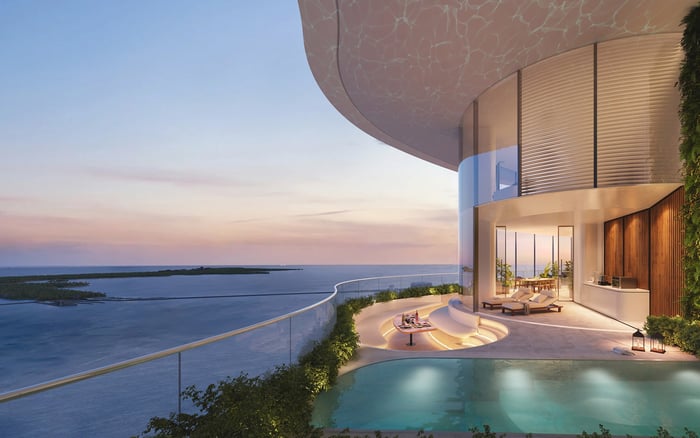
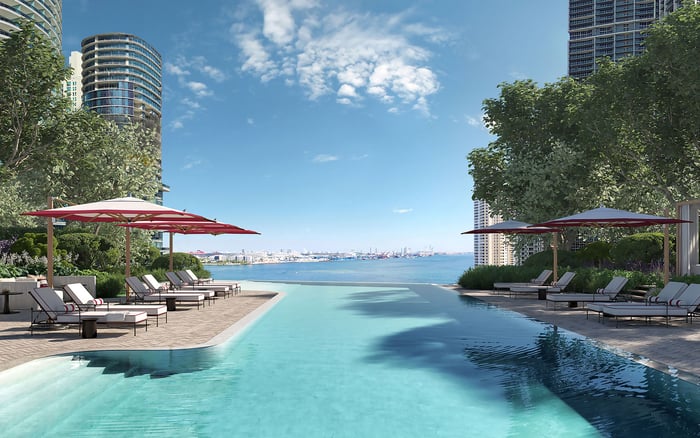
A discreet buyer’s guide to the brand licensing questions that matter before purchasing branded luxury real estate in Brickell Key and the surrounding Brickell market.

In Brickell Key, where privacy, water views, and proximity to the financial district shape buyer expectations, a luxury residence is rarely judged on square footage alone. The name on the building, the promise of service, and the lifestyle language around a project can shape both desire and pricing. For branded residences, the essential question is not simply whether the brand is admired. It is what the brand is legally obligated to provide, for how long, and under what conditions.
A brand license is the contractual bridge between a developer, an operator or manager, and the name that appears in the sales gallery. It may govern design standards, service protocols, marketing rights, amenity concepts, staff training, operating approvals, and the use of logos or marks. For a buyer, especially one considering a primary home, pied-à-terre, or long-term investment, the license can affect daily life and future resale perception.
The most refined buyers in Brickell are not dazzled by a label alone. They ask how the label is protected. They review whether the brand has continuing oversight or only a limited role. They consider whether the residence they are buying would remain equally compelling if the brand changed, narrowed its involvement, or disappeared from the building’s identity.
The first question is simple: what exactly is licensed? A name on exterior signage is very different from a comprehensive hospitality, design, or service platform. Ask whether the brand license covers the residential tower, shared amenities, food and beverage concepts, wellness spaces, concierge standards, interior design elements, staff uniforms, digital experiences, or owner programming.
This matters because sales language can feel seamless while contracts are precise. A buyer comparing projects such as 888 Brickell by Dolce & Gabbana should separate the aesthetic aura of a brand from the enforceable obligations behind it. If the brand’s role is primarily design driven, the value proposition may be different from a residence where ongoing services are also subject to branded standards.
Ask for plain-language clarity on what continues after closing. Does the brand remain involved in operations? Does it approve future renovations to common areas? Does it require periodic compliance reviews? Does the association have direct rights, or are rights held only through the developer or operator? These are not adversarial questions. They are the vocabulary of sophisticated ownership.
The duration of the license is central. A buyer should ask when the license begins, how long it runs, whether it renews automatically, and who controls renewal. A building marketed as branded today may be subject to agreements with finite terms. If renewal depends on performance, fees, brand consent, or association cooperation, those conditions should be understood before purchase.
Termination provisions deserve equal attention. Ask what events could cause the brand license to end. Common triggers in licensing structures may include uncured defaults, failure to meet standards, unpaid fees, change of control, improper use of brand marks, or operational noncompliance. The point is not to assume instability. It is to understand what must happen for the brand to remain in good standing.
For pre-construction buyers, this review is especially important because the finished ownership experience is still ahead. The commitment being purchased is partly physical and partly contractual. If a branded relationship can end before delivery or shortly after turnover, a buyer should know what remedies, disclosures, or transition plans exist.
Brand value is never abstract inside a condominium budget. Ask which costs are included in purchase pricing, which appear in association dues, and which may be assessed separately. Licensing fees, management fees, brand compliance costs, training, inspections, uniforms, operating platforms, marketing approvals, amenity programming, and replacement standards can all affect the economics of ownership.
When evaluating Brickell projects such as Cipriani Residences Brickell, buyers should distinguish between the emotional appeal of a hospitality name and the recurring cost structure required to support the experience. A beautifully serviced lobby has a budget. A distinctive amenity program has labor. A protected brand environment requires oversight.
Ask whether fee increases are capped, indexed, discretionary, or tied to operating budgets. Ask whether the association can approve or challenge branded expenditures. Ask whether owners have visibility into brand-related line items. The answers may not change a buyer’s desire, but they can sharpen the assessment of value.
Brand licensing can bring discipline to a property, which is often part of its appeal. It can also impose rules that owners should understand before closing. Ask whether the brand has approval rights over signage, common-area renovations, amenity changes, staff presentation, third-party vendors, events, photography, leasing collateral, or commercial uses of the residence.
Inside the private residence, ask where the brand’s authority ends. Are owners required to use approved interior packages? Are future renovations subject only to condominium rules, or also to brand guidelines? Are there restrictions on how an owner may market the unit for resale or lease? In a new-construction environment, model residences and renderings can create expectations that later collide with technical standards, association rules, or brand protocols.
Buyers considering Baccarat Residences Brickell may be drawn to the resonance of a luxury identity, but the durable question is governance. Who protects the identity, who pays for that protection, and who has authority when owners, management, and the brand disagree?
A branded residence can command attention in resale conversations, but the licensing terms may affect how that attention is presented. Ask whether an owner can use the brand name in resale marketing, whether the association or brand must approve listing language, and whether the brand can restrict photography, staging references, or digital advertising.
Transfer questions also matter. Does a buyer of a resale unit receive the same branded privileges as the original purchaser? Are there transfer fees connected to club access, amenities, or branded services? Are certain privileges personal to the first owner? These details can influence buyer depth when it is time to sell.
Rental policy should be reviewed with equal care. Some branded residences may be protective of image, guest experience, and building security. Ask how leases are approved, whether minimum lease terms apply, and whether tenants receive access to branded services. Do not assume that a luxury brand automatically supports flexible leasing. For the buyer’s guides audience, the wiser approach is to treat rental rights as a legal and operational issue, not a marketing assumption.
A strong brand can enhance a building, but it should not be the only reason to buy. Brickell Key buyers should still evaluate view corridors, floor plate efficiency, terrace depth, privacy, parking, marina or waterfront adjacency where applicable, noise exposure, elevator service, construction quality, reserves, and association governance. The brand is an overlay. The real estate is the foundation.
This is why comparable context matters. A buyer may compare a branded residence with St. Regis® Residences Brickell, an unbranded waterfront condominium, or a boutique building with exceptional privacy. Each can be compelling for a different reason. The disciplined question is whether the brand premium is supported by architecture, location, service, and contractual durability.
Branded residences are most persuasive when the promise is coherent from arrival sequence to owner services. If the license is narrow, the building should still stand on its own. If the license is broad, the buyer should understand the cost and governance required to keep that promise intact.
Before signing, ask your attorney and advisory team to focus on the brand license, condominium documents, management agreement, budget, and sales disclosures as a connected package. The key questions are practical: What is licensed? Who controls the license? How long does it last? What can terminate it? Who pays? What standards apply? What rights do owners have if the brand changes? How are disputes handled? What happens at turnover? Can future boards alter the branded experience?
The most valuable answer is not always yes or no. Often, it is clarity. A buyer who understands the license can price the residence more intelligently, negotiate with more confidence, and avoid confusing atmosphere with obligation.
What is a brand license in luxury real estate? It is the agreement that allows a development to use a brand’s name, standards, and related identity under defined conditions.
Should I review the brand license before buying in Brickell Key? Yes. It can affect services, fees, standards, marketing rights, and the long-term identity of the property.
Can a branded residence lose its brand? It can if the governing agreements allow termination or nonrenewal. Buyers should ask what events could trigger that outcome.
Does the brand always manage the building? Not necessarily. A brand may be involved in design, service standards, operations, or only selected elements.
Are branded residence fees usually separate from condo dues? They may be included, separate, or reflected through management and operating budgets. The documents should clarify the structure.
Can I use the brand name when reselling my unit? Ask whether resale marketing is restricted or requires approval, since brand marks are usually carefully controlled.
Do brand rules affect renovations? They can, especially in visible areas or where design standards are protected. Private interior work may still face association rules.
Is brand licensing more important in pre-construction purchases? It is especially important because buyers are relying on future delivery of both the building and the promised experience.
Should investors treat brand licensing differently? Investors should focus on resale language, rental rules, transfer rights, fees, and whether the brand premium is durable.
What is the best way to shortlist comparable options for touring? Start with location fit, delivery status, and daily lifestyle priorities, then compare stacks and elevations to validate views and privacy.
For a confidential assessment and a building-by-building shortlist, connect with MILLION.
If branded residences are on your mind — as a home or as an allocation — we would be glad to share what we are seeing, privately.
Begin a quiet conversation