At Rosewood Residences Hillsboro Beach, insurance due diligence requires three separate inquiries: the value insured by the association, coverage for code-driven rebuilding costs, and responsibility for interior finishes. Marketing language alone cannot resolve any of them.

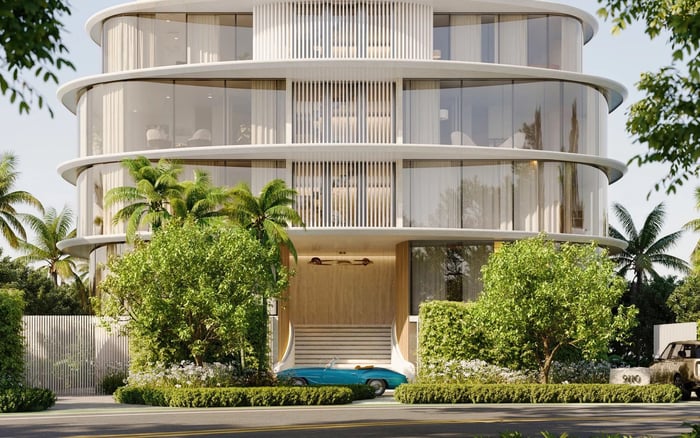
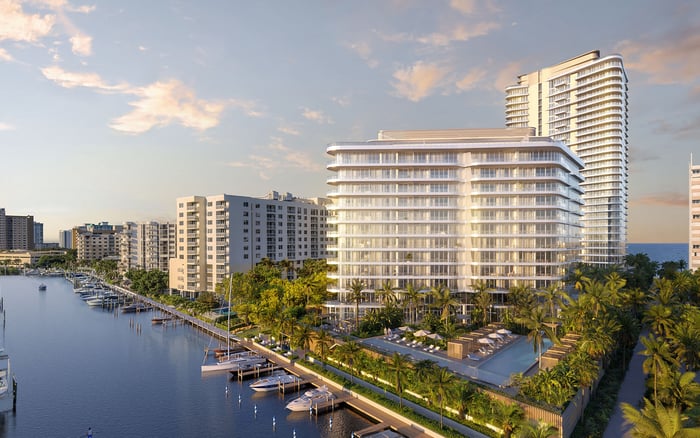
Rosewood Residences Hillsboro Beach comprises 92 ultra-luxury condominium residences and villas on Millionaire’s Mile, at 1180 Hillsboro Mile. For a buyer, however, the distinction between an elegantly delivered home and a comprehensively insured home warrants separate scrutiny.
Marketing language alone should not be treated as confirmation of the final master-policy limit, insured building value, replacement-cost appraisal, carrier, or policy wording. Buyers should also verify deductibles, ordinance-and-law sublimits, and the treatment of owner-selected upgrades. An omission from a brochure is not evidence of inadequate coverage. The answers belong in the insurance and governing documents.
Three inquiries should remain separate: how much association property is insured, whether code-related rebuilding expenses are covered, and which interior components fall outside required association coverage. A satisfactory answer to one does not resolve the others.
The first inquiry is valuation. A residence’s purchase price is not a substitute for the association’s replacement-cost valuation of insured property. Buyers should not treat the acquisition figure as evidence that the building carries an equivalent amount of reconstruction protection.
Florida’s condominium insurance statute permits replacement-cost limits to be based on an independent insurance appraisal or an update of a prior appraisal, with replacement cost determined at least every three years. The review is therefore both numerical and documentary: what property was valued, when was the valuation determined, and how does it relate to the policy limit?
Request the replacement-cost appraisal alongside the complete master policy and endorsements. Ask the association’s insurance adviser to explain the appraisal’s scope and reconcile it with the insured property described in the policy. The objective is not simply to find a large limit, but to understand what that limit is intended to rebuild.
For buyers comparing Rosewood with The Ritz-Carlton Residences® Pompano Beach, the same discipline applies. A comparison should not assume equivalent insurance simply because both residences appear on the same shortlist.
Ordinance-and-law coverage addresses a different question. After damage, rebuilding may require compliance with applicable building requirements, rather than simply replacing damaged property with its former equivalent. Ordinary replacement-cost coverage should not be assumed to include those additional costs.
Two questions require explicit answers: does coverage address required demolition of undamaged portions, and does it address increased construction costs imposed by current building requirements? Ask where those protections appear in the policy, what sublimits apply, and how the relevant endorsements modify coverage.
General descriptions of ordinance-and-law protection do not establish the actual coverage or sublimits in Rosewood’s association master policy. Review the insurance contract itself with the association’s insurance adviser.
For oceanfront due diligence, named-storm and flood protection also warrant review with the insurance adviser. Confirm the applicable policies, exclusions, limits, and deductibles rather than inferring protection from the coastal setting. These are review priorities, not findings that Rosewood lacks any particular coverage.
Florida’s condominium insurance statute requires association property coverage for condominium property as originally installed or replaced with like kind and quality, subject to specified exclusions. Those exclusions define a crucial boundary between association and owner responsibility.
Required association coverage excludes personal property and floor, wall, and ceiling coverings within a unit that serve only that unit. Other exclusions include unit-serving electrical fixtures, appliances, water heaters, water filters, built-in cabinets, countertops, and window treatments.
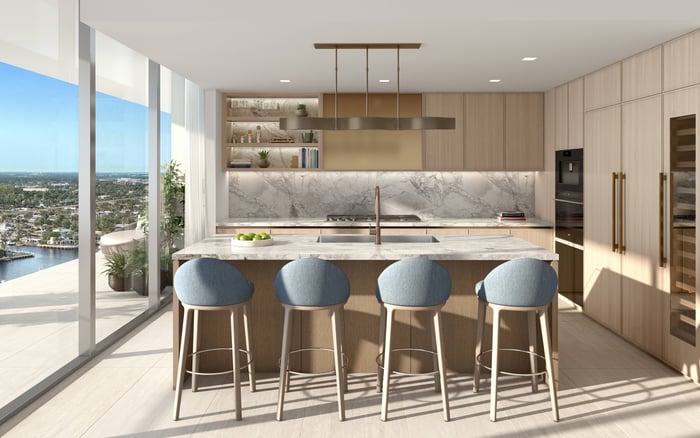
This is not simply an upgrades issue. Cabinetry or flooring may require owner-level attention even when installed by the developer. A buyer who makes no changes to the delivered residence should still determine which finishes the owner must insure.
Descriptions such as “fully finished,” “turnkey,” or “walls-in” should not be treated as proof that the association insures every interior finish. They describe a delivery condition or shorthand expectation, not a complete allocation of insurance responsibility.
The practical exercise is a room-by-room comparison of standard specifications, actual selections, and the property assigned to owner coverage. Retain documentation for custom work, and seek limits that reflect the replacement cost of the finishes the owner must insure-not a generic allowance for furniture.
Unit-owner insurance should address property excluded from the association’s required coverage, not merely movable possessions. An owner policy should also be evaluated alongside the master policy, rather than in isolation.
Ask the insurance adviser how the proposed owner policy coordinates with amounts recoverable under another policy covering the same property. Review any excess-coverage wording and clarify how overlapping property is handled.
The same discipline is useful when considering Four Seasons Hotel & Private Residences Fort Lauderdale or Rivage Bal Harbour alongside Rosewood. Neither a name nor a finish description substitutes for a property-by-property coverage review. This comparison supports no conclusion about those projects’ policies.
Association deductibles and uninsured reconstruction expenses can create common-expense exposure for owners. The inquiry is not only whether a loss is covered, but how costs outside the insurance recovery would be allocated.
Request the deductible schedule, governing documents, and reconstruction-cost allocation provisions. Have counsel explain the allocation rules and the insurance adviser explain the policy’s response. Keeping those roles distinct avoids confusing an association’s authority to allocate costs with an insurer’s obligation to pay them.
Do not assume that loss-assessment coverage will pay every association assessment. Review the owner policy’s assessment protection against the exposures identified in the association documents.
Before relying on coverage, assemble the complete master policy and endorsements, replacement-cost appraisal, deductible schedule, governing documents, and reconstruction-cost allocation provisions. Separately, compare the residence’s standard specifications with its actual finishes and upgrades.
The goal is a clearly explained boundary: what the association insures, what the owner insures, which code-related costs receive protection, and which expenses may remain shared obligations. At Rosewood, these are due-diligence questions, not verified insurance deficiencies. Resolving them allows the residence’s design and setting to be considered with a clearer understanding of ownership responsibilities.
For a discreet perspective on South Florida luxury residences and buyer priorities, explore MILLION.
If branded residences are on your mind — as a home or as an allocation — we would be glad to share what we are seeing, privately.
Begin a quiet conversationNo; buyers should verify limits, insured building value, carrier, policy wording, deductibles, and ordinance-and-law sublimits in the insurance documents. An omission from marketing materials does not demonstrate inadequate coverage.
No. The purchase price is not a substitute for the association’s replacement-cost valuation of insured property.
Florida’s condominium insurance statute requires replacement cost to be determined at least every three years. Limits may be based on an independent insurance appraisal or an update of a prior appraisal.
It addresses code-related rebuilding costs that should not automatically be assumed to fall within ordinary replacement-cost coverage. Review protection for required demolition of undamaged portions and increased construction costs.
Review the complete association master policy and endorsements with the insurance adviser. General descriptions of ordinance-and-law protection do not establish the project’s actual coverage.
No. Flooring serving only the unit and built-in cabinets are among the exclusions from required association coverage, even when installed by the developer.
No. Turnkey, fully finished, and walls-in descriptions should not replace a review of the policy and the allocation of responsibility for interior property.
Yes. It should address property excluded from required association coverage, with limits reflecting the replacement cost of finishes the owner must insure.
That should not be assumed. Review the owner policy’s assessment protection alongside association deductibles and reconstruction-cost allocation provisions.
Request the complete master policy and endorsements, replacement-cost appraisal, deductible schedule, governing documents, and reconstruction-cost allocation provisions. Compare standard specifications with actual finishes and upgrades for the unit-level review.