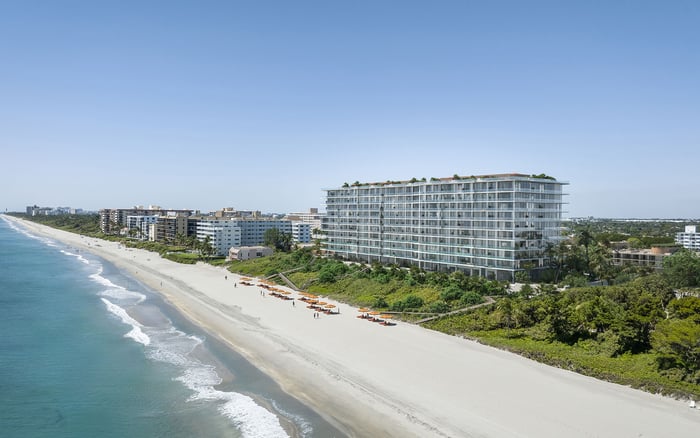
A practical due-diligence framework for evaluating marina access, dockage rights, vessel fit, bridge clearance, operating rules, and costs before buying a luxury condominium in Pompano Beach.

For a boating buyer, the view from a Pompano Beach condominium is only the beginning. The more consequential question is whether the property suits the vessel, cruising habits, and ownership horizon. Even a polished marina can present limitations involving slip rights, vessel dimensions, bridge clearance, water depth, operating rules, insurance, or transferability.
The distinction between waterfront and oceanfront living is especially important. A residence may face the water without providing dockage, while a property with inland access may offer a more practical boating arrangement. This is one area where operational details can matter as much as architecture and finishes.
Buyers comparing local offerings such as Armani Casa Residences Pompano Beach and The Ritz-Carlton Residences® Pompano Beach should evaluate the residence and boating plan as separate but connected decisions. Never infer marina privileges from branding, proximity, renderings, or a water view.
Ask the seller and association to define the slip arrangement in writing. Is the boat slip deeded with the unit, assigned by the association, licensed, leased, shared, or secured through a separate operator? If there is a waiting list, request its rules rather than relying on an informal estimate.
Transferability is equally important. Determine whether the right passes automatically with the residence, requires approval, can be reassigned, or terminates upon sale. Confirm whether a purchaser may own a slip before taking title to a boat, whether an entity may hold the right, and whether unused dockage can be rented to another resident.
Review the governing documents, marina agreement, current rules, meeting records, budget, insurance requirements, and any disclosed plans affecting docks or seawalls. The contract should clearly identify what the transaction includes. A listing description is no substitute for documents reviewed by the buyer's attorney.
Slip length alone does not establish compatibility. Provide the marina manager with the vessel's overall length, beam, draft, air draft, propulsion configuration, and any tender or platform that alters its dimensions. Ask how measurements are taken and whether the rules impose a lower maximum than the physical berth appears to accommodate.
Then examine the entire route from berth to open water. Fixed bridge clearance can be decisive for a yacht with a tower, antennas, outriggers, or an upper helm. Movable bridges may introduce schedules, procedures, or practical delays. Consider depth throughout the route and at the slip, accounting for changing water levels and the vessel's loaded draft.
A captain, marine surveyor, or other qualified professional can test the route and turning geometry for the specific vessel. Buyers considering W Pompano Beach Hotel & Residences or Waldorf Astoria Residences Pompano Beach can apply the same discipline even when dockage would be arranged elsewhere: map the actual berth-to-residence experience before making an offer.
The physical berth is only one component. Ask about access hours, security procedures, guest policies, loading areas, parking, fuel restrictions, shore power, water, pump-out arrangements, deliveries, maintenance work, storm preparation, and the use of captains or crew. Confirm who responds after hours and who bears responsibility when equipment fails.
Rules can also shape the lifestyle. Clarify whether liveaboards, charter activity, commercial use, personal watercraft, tenders, boat lifts, dock boxes, exterior storage, or major onboard work are restricted. If the buyer anticipates frequent guests or crew, verify access credentials and service circulation in advance.
Request an itemized explanation of marina charges and how they may change. Costs may fall outside ordinary condominium assessments, so identify application fees, recurring slip charges, utilities, deposits, insurance, maintenance obligations, and potential capital work. Ask whether dock, piling, electrical, dredging, or seawall expenses belong to the association, operator, slip holder, or another party.
Insurance warrants separate attention. Confirm the required vessel coverage, liability limits, additional insured language, hurricane plan, and proof-of-coverage deadlines. The buyer's insurance adviser should review these obligations before the contingency period expires.
For buyers who prioritize the residence first, Ocean 580 Pompano Beach offers another local point of comparison. The analysis remains personal: determine whether on-site dockage, nearby third-party dockage, or no boating component best supports the intended use and resale strategy.
Before signing, assemble a marine-specific checklist alongside the condominium review. The offer can address satisfactory review of dockage rights, governing documents, costs, insurance, vessel compatibility, and route constraints, subject to guidance from the buyer's attorney and marine professionals.
Document every material answer. Obtain the applicable documents, dimensions, rules, approvals, and fee schedules rather than relying on conversation. If the contemplated vessel is central to the purchase, identify it precisely and make compatibility a documented question. In Pompano Beach, the most elegant buying decision is not simply a residence near the water. It is a residence where legal rights, physical access, and daily operation align.
Does a water view mean a condominium includes dockage? No. Water frontage, marina proximity, and the legal right to use a slip are separate matters requiring written verification.
What does deeded dockage mean for a buyer? It generally indicates a recorded ownership interest, but counsel should review the title documents, restrictions, and transfer mechanics.
Is an assigned slip the same as a deeded slip? Not necessarily. An assigned slip may remain subject to association authority, eligibility rules, reassignment, or termination.
Which vessel measurements should be checked? Confirm overall length, beam, draft, air draft, propulsion details, and extensions such as platforms, tenders, towers, or outriggers.
Why does bridge clearance require professional review? Vessel height and water conditions can affect safe passage, while bridge type and operation can shape the practical route.
Should a buyer rely on the slip's advertised length? No. Physical dimensions, governing rules, measurement methods, and maneuvering space should all be evaluated.
What marina expenses should be requested? Ask for recurring charges, utilities, deposits, insurance obligations, maintenance responsibilities, and potential capital costs.
Can a condominium owner rent an unused slip? Only if the controlling documents and operator rules permit it. Eligibility and rental restrictions should be confirmed in writing.
Who should inspect the boating route? A qualified captain, marine surveyor, or other appropriate professional can assess vessel fit, access, depth, and maneuverability.
What should be resolved before making an offer? Clarify the dockage right, transfer terms, vessel compatibility, route constraints, rules, costs, insurance, and documentary contingencies.
To compare the best-fit options with clarity, connect with MILLION.
If branded residences are on your mind — as a home or as an allocation — we would be glad to share what we are seeing, privately.
Begin a quiet conversation