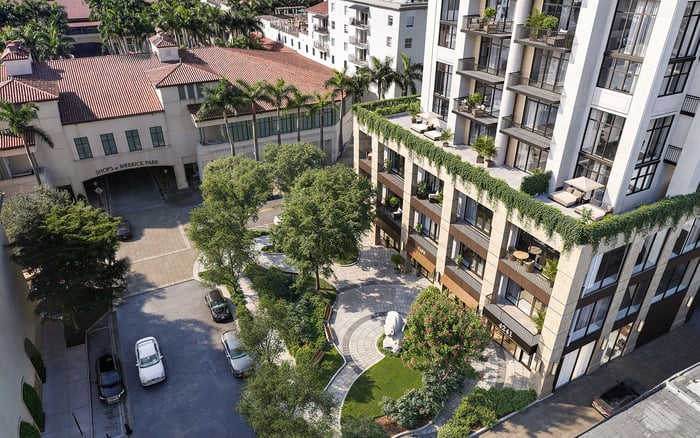
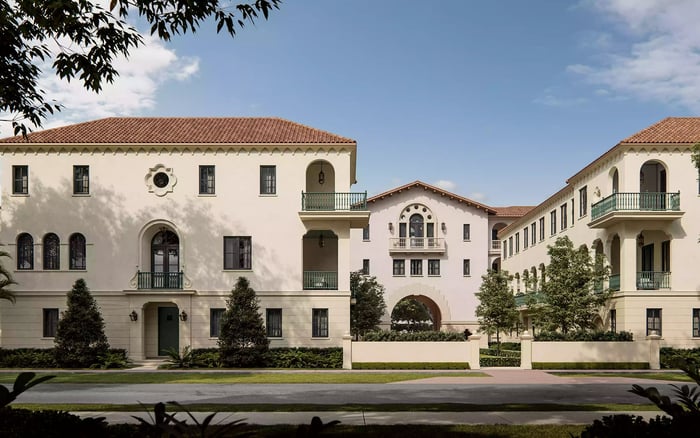
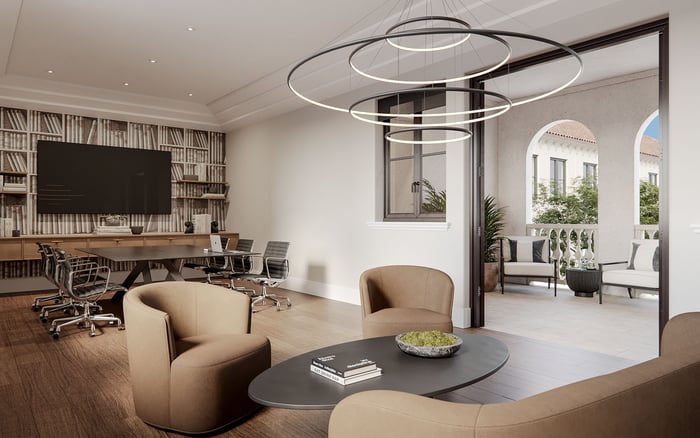
At Cora Merrick Park, the most compelling residence may not simply be the highest available. Orientation, elevation, sightlines, daylight, noise exposure, and the durability of a view corridor all shape daily comfort and future marketability.
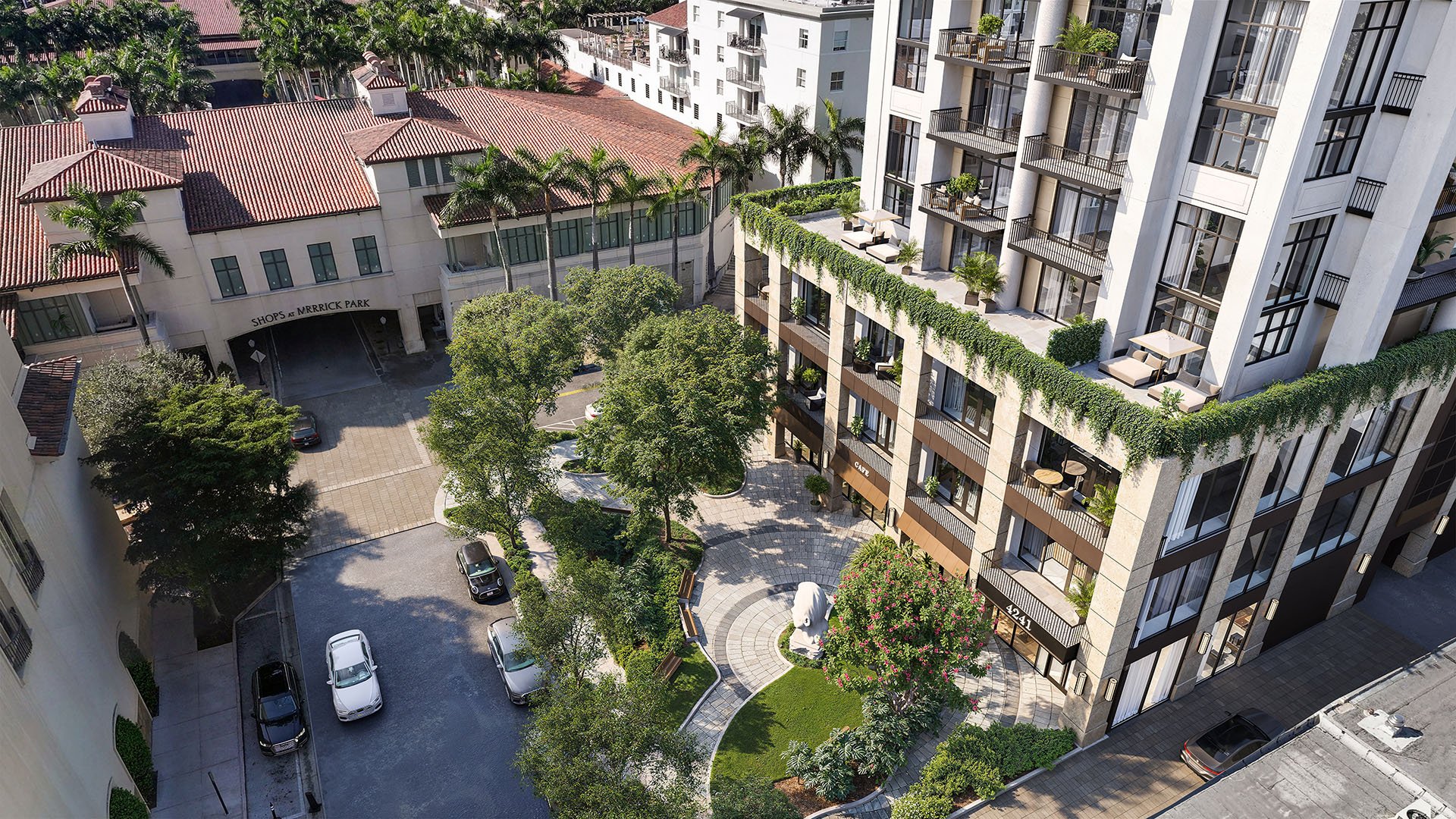
At Cora Merrick Park, choosing a residence is partly an exercise in reading the building vertically. In condominium terminology, a line is the stack of similar residences occupying the same position on successive floors. That position shapes orientation, natural light, privacy, noise exposure, outlook, and proximity to neighboring structures.
This distinction is especially important in Coral Gables’ Merrick Park district, where the visual experience is urban and landscaped rather than defined by an uninterrupted ocean horizon. Treetop canopies, plazas, active promenades, neighboring architecture, and occasional skyline glimpses can each give a residence its character. The strongest choice is therefore not automatically the line with the broadest marketing label, but the one whose exposure best aligns with how its owner intends to live.
A useful view analysis begins close to the glass. Buyers should first identify nearby balconies, windows, roofs, mechanical areas, public spaces, and amenity zones. The middle distance may include landscaping, streets, plazas, and neighboring buildings. Only then should the eye move toward the more distant urban or skyline outlook.
This layered approach clarifies the distinction between openness and privacy. An inward-facing residence may enjoy an attractive amenity outlook yet experience more visual interaction with shared areas. An outward-facing line may feel broader while still aligning with windows in another building. Buyers comparing Ponce Park Coral Gables and The Village at Coral Gables can apply the same discipline: evaluate the actual geometry surrounding the residence, not simply the setting’s general prestige.
Cardinal orientation affects when sunlight enters a residence and how intense it feels. In South Florida’s subtropical climate, this is both an aesthetic and a practical consideration. A buyer who values bright mornings may choose differently from one who prefers softer light at breakfast and stronger illumination later in the day.
Glazing and balcony design also matter. The depth and placement of outdoor space can moderate direct sun, influence interior brightness, and affect thermal comfort. Those architectural elements may also shape privacy by changing how easily neighbors can see into living areas or across terraces.
Rather than asking whether a line is simply “bright,” examine the light room by room and hour by hour. Consider how the principal bedroom, living room, kitchen, and outdoor space relate to the exposure. Usable daylight is more valuable than intensity alone, particularly when glare or heat could limit time spent beside the windows.
Elevation can materially alter the experience within a single line. A higher floor may clear a nearby obstruction, open a longer view corridor, or reduce direct sightlines from neighboring properties. It may also provide greater visual separation from street and retail activity below.
Yet height does not automatically correct an unfavorable relationship between buildings. A higher residence can still face another tower, overlook a busy amenity deck, or receive demanding afternoon sun. Conversely, a lower residence may draw character from mature landscaping or a treetop canopy. The correct comparison is line plus floor, not either variable in isolation.
For readers accustomed to buyer’s guides, this is where a stacking plan becomes more useful than a conventional floor plan. The floor plan explains the interior arrangement; the stacking plan helps reveal what sits beside, below, above, and beyond it.
Lines facing active retail promenades may provide lively, landscaped outlooks and a stronger connection to the district. The trade-off can be greater exposure to movement and noise. Lines oriented toward quieter residential streets may offer more calm and privacy, although their outlook may be less animated.
Neither condition is universally superior. A pied-à-terre owner who values an energetic urban lifestyle may prefer visual activity. A full-time resident working from home may prioritize a quieter exposure and limited overlook. The relevant question is whether the line’s atmosphere suits the buyer’s routine without requiring compromises that become more noticeable over time.
Direct window-to-window sightlines deserve particular scrutiny, as do neighboring balcony positions, relative elevations, and exposure to public or amenity spaces. Privacy is not a generalized building attribute. It is a geometric relationship specific to each line and floor.
A long-term outlook depends partly on what can change around it. An open corridor over an undeveloped parcel should not be valued in the same way as an orientation with more resilient visual depth. Buyers should assess adjacent parcels and neighboring buildings rather than rely solely on preconstruction renderings or broad view descriptions.
The same principle applies when comparing nearby urban luxury options such as Four Seasons Residences Coconut Grove. The project may change, but the investment question remains consistent: which aspects of the outlook are intrinsic to the residence, and which depend on conditions beyond the owner’s control?
A careful review should include the official floor plate, site plan, survey, and current zoning records. These materials are essential before making directional claims about a specific residence or assuming an open view is protected.
Resale appeal often rests on balance rather than spectacle. A line combining usable daylight, limited overlook, quieter exposure, and a resilient outlook may speak to a broader future audience. By contrast, a dramatic view can lose some appeal when accompanied by persistent glare, public exposure, or a vulnerable corridor.
The practical objective is to identify permanent attributes and price temporary advantages cautiously. Orientation is inherent to the line. Current openness over a neighboring site may not be. Elevation can improve separation, but it should be assessed alongside noise, sunlight, glazing, and balcony geometry.
At Cora Merrick Park, sophisticated selection means treating the residence as part of a three-dimensional urban setting. The best line is the one that remains persuasive after the rendering is set aside and daily life becomes the measure.
What is a condominium line? A line is a vertical stack of similar residences occupying the same position on successive floors.
Does a higher floor always have a better view? No. Greater elevation may clear obstructions, but orientation and nearby buildings still shape the outlook.
Which lines may offer more privacy? Lines with limited window-to-window sightlines and less exposure to public or amenity spaces may feel more private.
Are inward-facing residences less desirable? Not necessarily. They may offer attractive amenity or landscaped views, subject to activity and overlook.
How does orientation affect natural light? Cardinal exposure changes the timing and intensity of daylight throughout the residence.
Can balconies improve comfort? Balcony design can moderate sunlight and influence shade, privacy, thermal comfort, and outdoor usability.
Should buyers pay a premium for an open view? Only after assessing whether the corridor is durable or vulnerable to future development.
What should buyers review before selecting a line? Review the official floor plate, site plan, survey, neighboring buildings, adjacent parcels, and current zoning records.
Can a quieter line support long-term appeal? It can, especially when calm exposure is paired with useful daylight, privacy, and a resilient outlook.
What makes a line broadly marketable for resale? A balanced combination of light, privacy, manageable noise, and durable views can appeal to more buyers.
To compare the best-fit options with clarity, connect with MILLION.
If branded residences are on your mind — as a home or as an allocation — we would be glad to share what we are seeing, privately.
Begin a quiet conversation