A buyer-focused editorial on how privacy, governance, construction quality, reserves, resiliency, rental rules, and exit liquidity shape the long-term case for boutique residences in Bal Harbour.
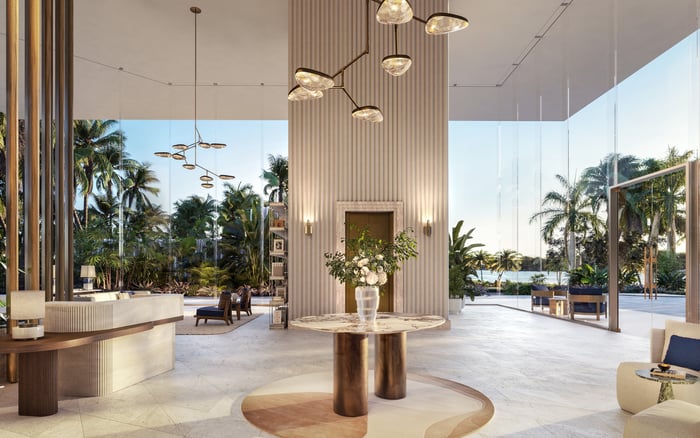
A boutique residence in Bal Harbour can feel like the purest expression of coastal privacy: fewer neighbors, a quieter arrival, a lobby that reads more like a private club than a hotel, and a scale that lets the building recede into daily life. For many buyers, that intimacy is the appeal. The more important question is whether it is supported by the structure, governance, and financial discipline required to make the purchase durable over a full ownership cycle.
Bal Harbour buyers are not simply purchasing a view or a building. They are buying into a compact civic geography where scarcity, discretion, retail proximity, beach access, and address prestige all matter. Yet boutique scale cuts both ways. A smaller building may offer more control and less congestion, but it can also concentrate costs among fewer owners. That is why a serious long-term purchase should be evaluated less like a trophy and more like a private operating company.
The most seductive boutique buildings make ownership feel effortless. The elevator is quiet, the staff understands the rhythm of the residents, and the common areas are not overwhelmed by transient traffic. But the balance sheet behind that serenity matters. Reserves, insurance planning, maintenance schedules, and association governance should be central to the conversation from the start.
In a smaller condominium, a roof, facade, mechanical system, pool deck, elevator modernization, or structural repair can have an outsized effect on each owner. That does not make boutique ownership unattractive. It simply means buyers should favor buildings where the association is realistic about future costs, transparent about capital planning, and disciplined about collections. The most elegant lobby in Bal Harbour is not a substitute for a well-funded reserve posture.
This is especially important for buyers comparing established buildings with new-construction alternatives. A newer project may offer updated systems and current design expectations, while an established property may offer mature location value and a known ownership culture. The right choice depends on whether the building’s obligations are visible, understood, and appropriately priced.
In South Florida, quality is not only marble, millwork, and appliances. It is envelope performance, waterproofing, concrete health, window systems, balcony detailing, mechanical reliability, drainage, and the way a building ages under salt, wind, humidity, and sun. For a long-term Bal Harbour buyer, the invisible elements often matter more than the photogenic ones.
A boutique residence works when the building has the physical confidence to support its lifestyle promise. That includes practical matters: how water is managed, how common areas are protected, how service spaces function, how deliveries are handled, and whether the design can be maintained without constant disruption. A residence may be beautiful on day one, but a serious purchase asks how it will feel in year seven, year twelve, and beyond.
This is where comparisons across nearby ultra-luxury product can sharpen the eye. A buyer studying Bal Harbour may look at Rivage Bal Harbour for contemporary expectations in the village, while also considering the established presence of Oceana Bal Harbour as part of the broader conversation about address, architecture, and long-term positioning.
In a boutique building, governance is not an administrative afterthought. It is a central amenity. A thoughtful board, capable management, clear rules, consistent enforcement, and informed owner participation can protect both lifestyle and value. Poor governance can do the opposite, even in a superb location.
Buyers should understand how decisions are made, how projects are approved, how reserves are funded, and whether the building has a culture of addressing issues early. A small association may be nimble, but it can also become personal. The best buildings maintain a professional tone, documented processes, and an owner base aligned around preservation rather than short-term convenience.
Rental rules deserve particular attention. A building with a quiet residential identity may protect its atmosphere by limiting transient use. That can support privacy and owner enjoyment, but it may narrow the investor pool. A more flexible rental framework may appeal to some buyers, but it can change the feel of the building. For an investment-minded purchaser, the question is not simply whether rentals are allowed. It is whether the rules support the brand of ownership the buyer is paying for.
The post-Surfside era has made structural diligence, inspections, reserves, and maintenance obligations impossible to treat casually. This is not a reason to avoid boutique condominiums. It is a reason to be exacting. A serious buyer should understand the building’s physical condition, the association’s approach to required work, and the likely direction of operating costs.
Insurance is part of that discipline. Premiums, deductibles, coverage structure, and the association’s ability to absorb changes all affect the real cost of ownership. In a small building, the per-unit impact can be meaningful. Buyers who focus only on purchase price may miss the more important measure: total cost of ownership over time.
Resiliency also includes the daily practicality of living near the water. Oceanfront appeal is powerful, but coastal exposure demands maintenance discipline. The best long-term buildings do not deny that reality. They plan for it, budget for it, and communicate it clearly.
Resale in a boutique Bal Harbour residence depends on more than the glamour of the address. It depends on how many buyers will understand and value that exact product when it returns to market. Smaller buildings can create rarity, and rarity can be valuable. But rarity is strongest when the building’s story is legible: strong location, good condition, coherent design, clean governance, sensible costs, and rules that match the buyer profile.
A highly personalized residence may be exquisite but less liquid. A floor plan that lives naturally, with gracious outdoor space, protected views, sensible service circulation, and flexible rooms, tends to travel better across market cycles. Design restraint can be an advantage. In Bal Harbour, understatement often has more staying power than spectacle.
Nearby coastal comparables can help refine this judgment. The boutique sensibility in Surfside, including The Delmore Surfside and Arte Surfside, gives buyers additional context for privacy, scale, and design ambition along the same luxury corridor. Across the water, Bay Harbor Islands projects such as Bay Harbor Towers illustrate how buyers may compare quieter residential settings against immediate oceanfront prestige.
The right boutique purchase in Bal Harbour should satisfy both emotional and technical standards. Emotionally, it should feel rare, calm, and deeply livable. Technically, it should offer clarity: on reserves, insurance, inspections, maintenance, rental policy, governance, and future capital needs.
The buyer should not confuse low unit count with low complexity. In fact, a smaller building can require more sophisticated diligence because each owner has a larger proportional stake in the building’s choices. Privacy is valuable, but only when the shared asset is managed with seriousness.
A strong long-term purchase will usually have several traits in combination: a location that is hard to replicate, a building with either modern systems or a credible maintenance culture, an association that plans ahead, costs that are explainable, and a residence that will make sense to the next buyer. The ideal outcome is not merely owning something exclusive. It is owning something exclusive that remains rational.
Is a boutique residence in Bal Harbour a good long-term purchase? It can be, if the building combines privacy with strong governance, reserves, maintenance planning, and clear rules.
Why do reserves matter more in a smaller building? Fewer owners may share major expenses, so inadequate reserves can translate into more noticeable assessments.
Should buyers prefer new construction or an established boutique building? Neither is automatically better. The stronger choice is the one with clearer physical condition, cost visibility, and ownership alignment.
How important are rental rules in a boutique condominium? Very important. Rental policy shapes privacy, building culture, operating stability, and the future buyer pool.
Does oceanfront location guarantee resale strength? No. Location helps, but resale strength also depends on condition, governance, pricing, design, and total ownership costs.
What should buyers review before making an offer? They should review association financials, reserves, insurance, inspection history, rules, meeting materials, and planned capital work.
Can low unit count increase risk? Yes, because costs and governance decisions are concentrated among fewer owners, which makes diligence especially important.
What makes a boutique building feel truly luxurious? Quiet service, privacy, thoughtful design, reliable systems, and a resident culture that protects the building’s atmosphere.
How should buyers think about insurance costs? They should treat insurance as part of the total ownership cost, not as a secondary line item.
What is the best way to shortlist comparable options for touring? Start with location fit, delivery status, and daily lifestyle priorities, then compare stacks and elevations to validate views and privacy.
For a tailored shortlist and next-step guidance, connect with MILLION.
If branded residences are on your mind — as a home or as an allocation — we would be glad to share what we are seeing, privately.
Begin a quiet conversation