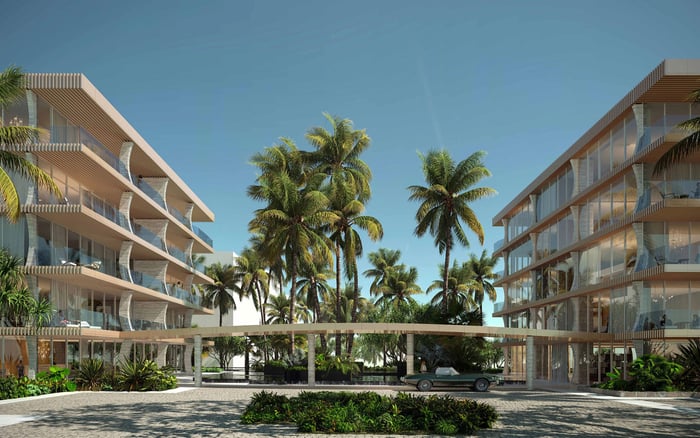
Private dining is an appealing part of Mandarin Oriental residential ownership, but access to an elegant venue is not the same as an included catered evening. Buyers in Miami and West Palm Beach should document event pricing, service obligations, booking rights, and the contractual standing of sales promises before committing.
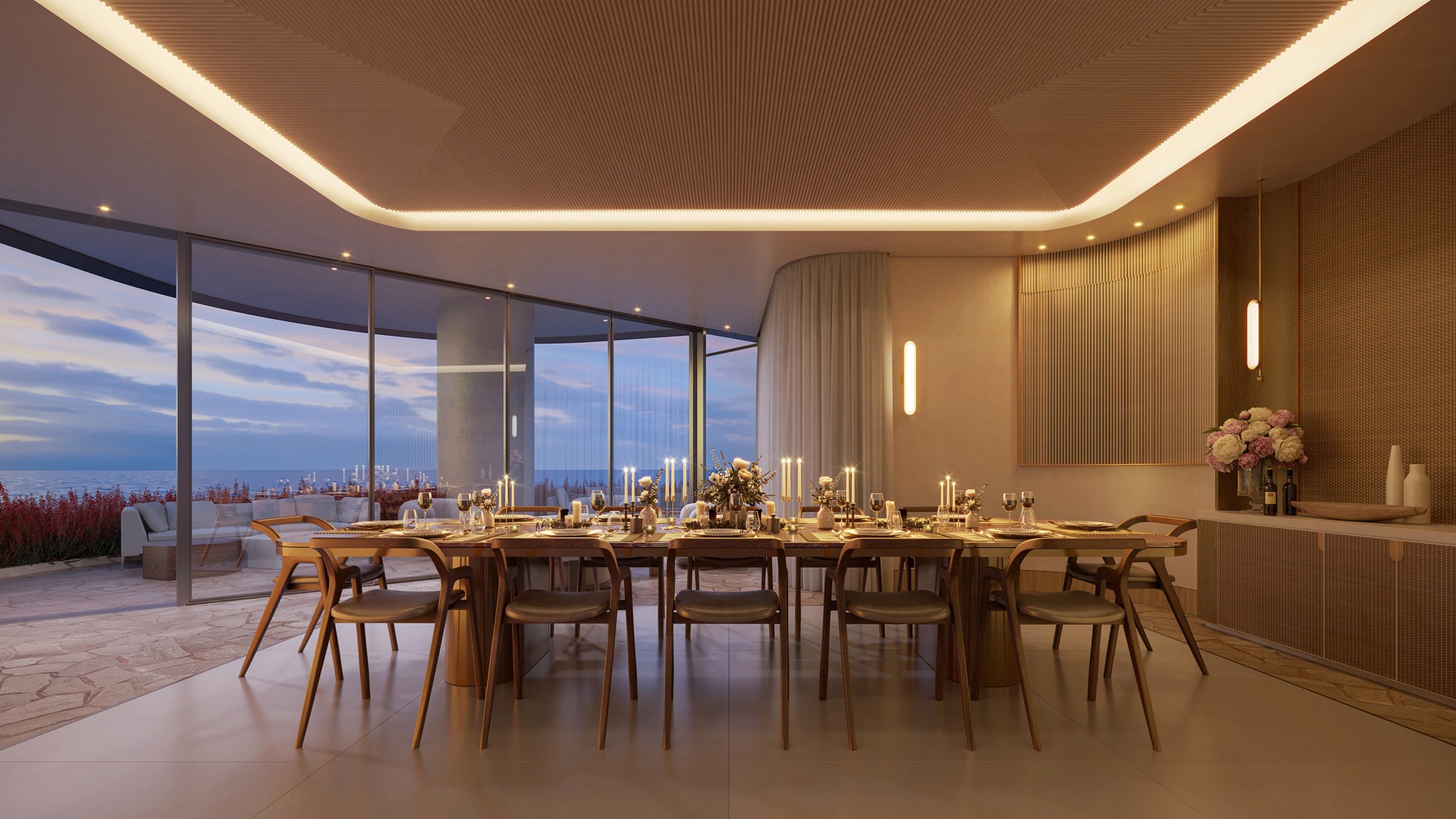
A private dinner should feel effortless: a considered menu, a beautifully prepared room, and service that allows the host to remain fully present. For a buyer, that ease begins with documentation. A dining room, a chef’s kitchen, and concierge assistance describe distinct parts of the experience. None, on its own, establishes what an owner pays or what an operator must deliver.
At The Residences at Mandarin Oriental, Miami and Mandarin Oriental Residences, West Palm Beach, that distinction is especially relevant. Both planned projects describe settings for private entertaining, but comprehensive resident-event pricing has not been publicly established. Buyers should treat the facilities as a starting point, then request written terms governing access, execution, and charges.
An unpublished fee is not necessarily a nonexistent fee. Nor should an advertised service be treated as a binding obligation without reviewing the applicable purchase and operating documents.
On Brickell Key, The Residences at Mandarin Oriental, Miami is a Swire Properties development with a planned resort-style podium offering more than 100,000 square feet of amenities. The planned program includes private dining facilities, chef’s kitchens, restaurants, landscaped pools, private cabanas, and executive work lounges.
The South Tower’s planned facilities include a private dining room and wine cellar, indoor/outdoor dining, and a chef’s kitchen. A dining pavilion is planned with an outdoor grill, while a tea pavilion includes a chef’s kitchen and indoor/outdoor entertaining space. Separately, a 19th-level residents’ lounge is planned with a chef’s kitchen, show kitchen, and two flexible spaces for private dining or meetings.
Buyers should request a venue-by-venue schedule rather than a general assurance about entertaining. Which rooms are resident amenities? Which require a separate reservation agreement? What kitchen equipment, furniture, and service support accompany each booking?
The planned hotel program also includes dining venues and access to occasion and business-event facilities, including a grand ballroom, private meeting rooms, and an events terrace and lawn. Document those access rights separately from residential amenity rights, including any shared-use or commercial-event restrictions.
Planned along the Intracoastal Waterway at 5400 N. Flagler Drive, Mandarin Oriental Residences, West Palm Beach is described as a collection of 87 residences. Its planned program includes a private alfresco dining concept, a business centre, and private event spaces.
That intended amenity offering is not a complete catering arrangement. It remains publicly unspecified whether private events require Mandarin Oriental personnel, an approved caterer, a minimum spend, or a separate service charge. Final association budgets and itemized event charges for staffing, gratuity, kitchen use, and food-and-beverage minimums have not been publicly disclosed.
Ask for written clarification of operating hours, reservation response expectations, staffing commitments, and event-support responsibilities. Guaranteed response times and staffing ratios have not been publicly established. A buyer expecting recurring dinners should therefore document the practical service arrangement, not simply the availability of a room.
The core document request should include the current declaration and amendments, offering documents and exhibits, bylaws, house rules, association budgets, reserve schedules, and relevant management, branding, and hotel-access agreements. Have counsel identify which provisions govern residential amenities and which govern separately purchased services.
Then request a written allocation of expenses. Establish whether regular assessments cover venue maintenance alone, access, reservation assistance, or any event staffing. Separately identify food, chefs, servers, tableware, alcohol, setup, cleanup, and security.
Miami’s advertised concierge assistance with reservations and arrangements does not establish that catering or event coordination is included in assessments. At either project, do not let the word “included” remain undefined. Ask what is included, for whom, under which conditions, and in which controlling document.
These are due-diligence requests, not statements that either development has adopted a particular billing policy.
Request an itemized sample contract for the kind of occasion you expect to host. A seated dinner and a business reception may require different arrangements; ask for an illustration tailored to each rather than an informal estimate covering only the menu.
The sample should identify room fees, food-and-beverage minimums, menu and beverage charges, staffing, administrative charges, gratuity, taxes, rentals, audiovisual equipment, corkage, deposits, cancellation terms, cleaning, and overtime. Ask which items are mandatory, which are optional, and what can change after the reservation is confirmed.
Service-charge transparency deserves its own written explanation. Ask who receives the charge, whether any portion goes to staff, whether gratuity is additional, and who has authority to change the fee. Request the calculation basis as well: which line items attract the charge, and whether additional charges apply to it.
The goal is a complete payable total with stated assumptions-not a headline price that leaves staffing or cleanup unresolved.
A beautifully equipped room has limited practical value if its rules do not suit the owner’s hosting habits. Document guest eligibility, capacity, reservation lead times, booking priority, blackout dates, cancellation procedures, and whether a venue is shared with hotel guests or commercial events.
For owners with an established chef or caterer, request explicit permission for outside personnel and kitchen access. Clarify approval requirements, alcohol rules, corkage, insurance documentation, cleanup responsibilities, and any required onsite supervision. These are questions to resolve, not verified restrictions at either project.
Ask who coordinates the event when several parties are involved. A clear written assignment of responsibilities can distinguish reservation assistance from full event management and identify who handles changes on the evening itself.
For a buyer also considering Cipriani Residences Brickell, apply the same document requests without assuming that dining arrangements or charges are equivalent. Compare written access rights, included services, event totals, and change provisions-not brand associations alone.
Finally, preserve material sales promises concerning the operator, hotel access, chef availability, included catering, or fee waivers. Ask whether each assurance forms part of the executed agreement. In Miami, referenced restaurants, businesses, and operators may change, and representations concerning them should not be relied upon.
The most useful purchase file separates contractual commitments, current operating rules, illustrative prices, and unresolved questions. That clarity supports the luxury buyers actually want: entertaining with confidence, without discovering the terms after the invitations are sent.
For a discreet perspective on South Florida residential ownership, explore MILLION.
If branded residences are on your mind — as a home or as an allocation — we would be glad to share what we are seeing, privately.
Begin a quiet conversationThe planned facilities include a private dining room and wine cellar, dining and tea pavilions, and a 19th-level residents’ lounge with kitchens and flexible dining or meeting spaces.
The planned program includes a private alfresco dining concept, a business centre, and private event spaces. Buyers should request written catering terms separately.
Do not assume that event food, staffing, setup, or coordination is included. Buyers should request written confirmation of included services and separately billed expenses.
Request the declaration and amendments, offering documents and exhibits, bylaws, house rules, budgets, reserve schedules, and relevant management, branding, and hotel-access agreements.
It should identify venue fees, minimum spend, food, beverages, staffing, service and administrative charges, gratuity, taxes, rentals, deposits, cancellation, cleaning, and overtime.
Ask who receives it, whether any portion goes to staff, whether gratuity is additional, how it is calculated, and who can change it.
Do not assume that outside chefs or caterers are permitted. Request written rules governing outside personnel, kitchen access, approvals, and required supervision.
The planned hotel program includes access to facilities such as a grand ballroom, private meeting rooms, and an events terrace and lawn. Buyers should document the terms of access separately from residential amenity rights.
Guaranteed response times and staffing ratios have not been publicly established. Buyers should request specific written commitments covering service expectations and event support.
Request written confirmation and ask counsel whether the promise is incorporated into the executed agreement. Distinguish contractual commitments from marketing descriptions and illustrative pricing.