A buyer-focused guide to documenting parking entitlements, valet key custody, vehicle-release authority, and chauffeur logistics at two West Palm Beach residential projects.
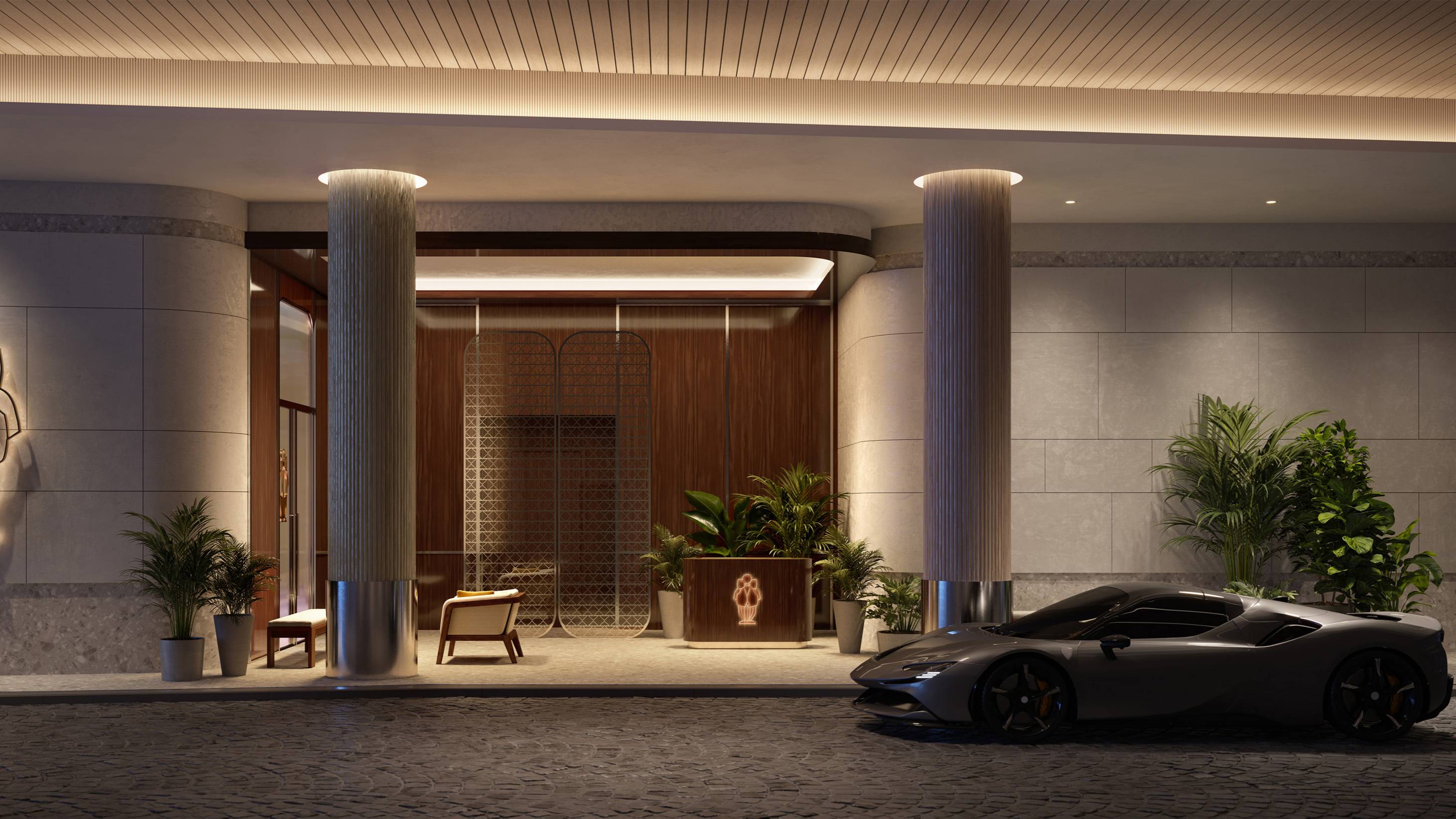
For a luxury buyer, the arrival experience is more than an amenity. It determines whether a morning departure, a late-night return, or a chauffeur pickup feels effortless. At Mr. C Residences West Palm Beach and Maison D'Or South Flagler, the essential distinction is between a marketed service and a documented right.
Both projects advertise round-the-clock valet service. That establishes a service offering-not the number of spaces attached to a residence, permission to self-park, or authority to release a vehicle to a driver. Buyers should request those details in writing, in documents tied to the residence they intend to purchase.
An omission from public materials is a question to resolve, not evidence that a policy or facility does not exist. The objective is a purchase file that explains how the arrival experience will work for your household.
Mr. C is marketed at 320 Lakeview Avenue, West Palm Beach, FL 33401. Its disclosed building features include an above-ground parking garage with security surveillance and electric-car charging ports. Its service offering includes 24-hour valet for residents and guests.
Parking allocation requires particular care. Public marketing contains conflicting descriptions: assigned resident spaces, potentially multiple spaces for some residences, versus 100% valet parking with no assigned spaces. Neither description should substitute for a buyer's contractual entitlement.
Request the condominium documents, the relevant purchase-agreement exhibit, and a signed, buyer-specific developer clarification. These should identify the number of parking entitlements, whether a particular bay is reserved, and whether an owner may access that bay directly. An assigned-space description does not, by itself, establish permission to self-park.
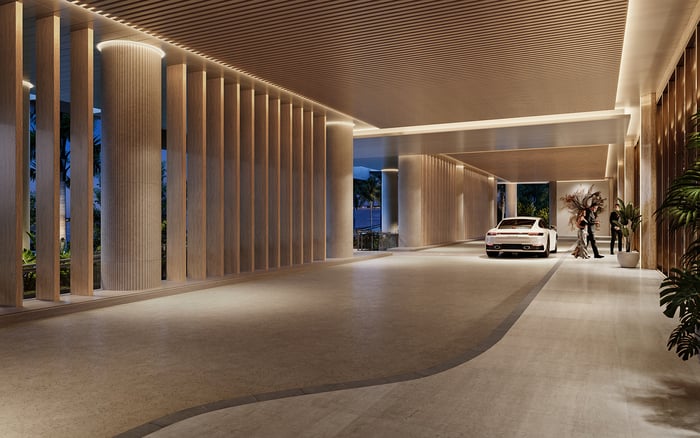
Separate dedicated arrivals, lobbies, and valet for hotel guests and residents are also advertised. Ask for the circulation plan and operating rules that explain that separation. Confirm whether resident vehicles have distinct queuing, retrieval, and access arrangements; do not assume separate arrivals resolve every operational question.
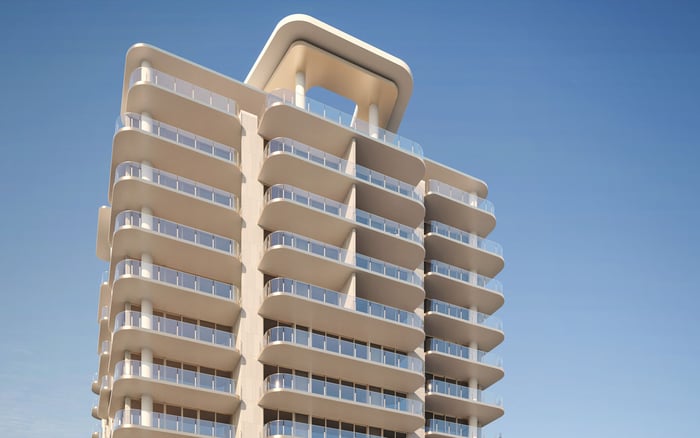
Maison D'Or is marketed at 3705 South Flagler Drive, West Palm Beach, FL 33405. It is described as a 19-story condominium with 39 residences and two furnished guest suites, alongside 24/7 concierge and valet service.
That boutique scale does not establish the legal character or physical configuration of parking. It remains unclear from publicly disclosed information whether rights are deeded or assigned, or whether vehicles are stored conventionally, in stacked or mechanical arrangements, or entirely under valet control.
Ask for the parking plan and a written explanation of the proposed operating model. The explanation should distinguish the entitlement attached to the residence from the procedures governing its use. Buyers with multiple vehicles should also request explicit provisions for additional cars, guest vehicles, and visiting drivers.
The same questions belong in any West Palm Beach comparison involving Alba West Palm Beach. This is a documentation framework, not an assertion that another project's parking arrangements match either development.
Start with the purchase-agreement exhibit and parking plan. Request the number, location, dimensions, and legal character of each entitlement, along with vehicle restrictions and transfer or leasing rules. Have counsel explain how those provisions interact with the declaration and operating rules.
Physical suitability deserves equal attention. Ask about height, width, length, turning clearance, and any restrictions affecting oversized vehicles. If a particular space is identified, confirm whether management can substitute another location and what governs that change.
At Mr. C, charging ports are a disclosed feature, but an owner-specific charging entitlement is not established. Request written details on access, allocation, scheduling, fees, and whether a vehicle must be moved after charging. At Maison D'Or, ask for the applicable charging provisions rather than inferring availability from the valet offering.
When comparing Forté on Flagler West Palm Beach, use the same questions without presuming shared rights or operating systems. Consistency makes the comparison useful.
Overnight key retention, duplicate-fob requirements, and key-storage procedures remain unspecified in Mr. C's public disclosures. Detailed key-custody and vehicle-release policies likewise remain undisclosed for Maison D'Or.
Request a written acceptance and release protocol. It should explain whether keys remain with the valet overnight, whether owners must supply duplicate fobs or digital access, and how custody is recorded between shifts. Ask how keys are stored, who may access them, and how an owner retrieves a key without requesting the vehicle.
For households using chauffeurs, authorization should be explicit. Document how drivers are registered, how identity is checked, and who may add or revoke permission. Distinguish permission to collect a vehicle from permission to enter the garage or hold a resident's keys.
Also obtain the operator's insurance information, incident-reporting procedures, claims process, and any liability waivers or exclusions. Ask who handles a reported loss or damage and what documentation the owner must provide. Security surveillance alone does not establish responsibility or coverage.
A vehicle-release policy is incomplete without a place for the driver to wait. Request a circulation plan identifying pickup and drop-off points, chauffeur waiting areas, permitted waiting times, and garage-access rules.
Confirm whether a porte-cochère, internal staging lane, loading area, service entrance, or overflow arrangement exists and how each may be used. These are facilities to verify, not features to assume at either project.
Separate the scenarios. A resident's chauffeur waiting for departure, a ride-hailing pickup, a delivery, a contractor visit, and a guest arrival may require different arrangements. Ask how the proposed rules handle simultaneous arrivals and whether drivers must leave the property while waiting.
Then walk through your routine with the sales team: an early departure, a guest collecting a car, and a return while deliveries are arriving. Request written procedures and expected retrieval waits for each situation, distinguishing estimates from any contractual service commitment.
For an owner away for extended periods, request rules governing retained keys, authorized drivers, charging, outages, maintenance, and immobilized vehicles. Establish who may approve vehicle movement and how the owner will be contacted when an exception arises.
Keep the declaration, bylaws, rules, parking plan, valet agreement, available service-contract summaries, disclosures, and amendments together. Resolve discrepancies with counsel and obtain written clarification before relying on an assurance. The goal is not merely a polished arrival, but documented control over how your vehicles are stored, handled, and released.
For a considered approach to West Palm Beach residential ownership, explore MILLION.
If branded residences are on your mind — as a home or as an allocation — we would be glad to share what we are seeing, privately.
Begin a quiet conversationMr. C advertises 24-hour valet service for residents and guests. Buyers should confirm in writing whether owners must use valet or may self-park.
Public marketing contains conflicting descriptions of assigned spaces and entirely valet parking without assigned spaces. Buyers should resolve the discrepancy through condominium documents and signed, buyer-specific developer clarification.
Mr. C's disclosed features include an above-ground parking garage with security surveillance and electric-car charging ports. Those features do not establish a buyer's specific parking or charging entitlement.
Maison D'Or advertises 24/7 concierge and valet service. Buyers should obtain written key-custody, vehicle-release, and driver-staging procedures rather than infer them from that service offering.
Buyers should not assume either arrangement. Request the purchase-agreement exhibit, parking plan, and condominium documents to identify the entitlement attached to your residence.
Request the purchase-agreement exhibit and parking plan, together with the declaration, bylaws, rules, disclosures, and amendments. Obtain relevant valet agreements and available service-contract summaries as well.
It should address key acceptance, overnight retention, storage, duplicate-fob or digital-access requirements, and custody between shifts. It should also identify who can authorize and receive a vehicle.
Request written driver-registration, identity-verification, and vehicle-release procedures. Clarify separately whether a driver may enter the garage, hold keys, or wait on the property.
No owner-specific charging entitlement is established by Mr. C's disclosed charging ports alone. Buyers should request written allocation, scheduling, fee, and vehicle-movement rules.
Request a circulation plan showing pickup points, waiting areas, permitted waiting times, and garage access. Confirm separate arrangements for chauffeurs, ride-hailing, deliveries, contractors, and guests.