Miami’s wellness residences promise everything from daily fitness to specialized treatments. For buyers, the distinction between lasting value and an expensive extra comes down to actual use, reliable access, capacity and documented ownership costs.
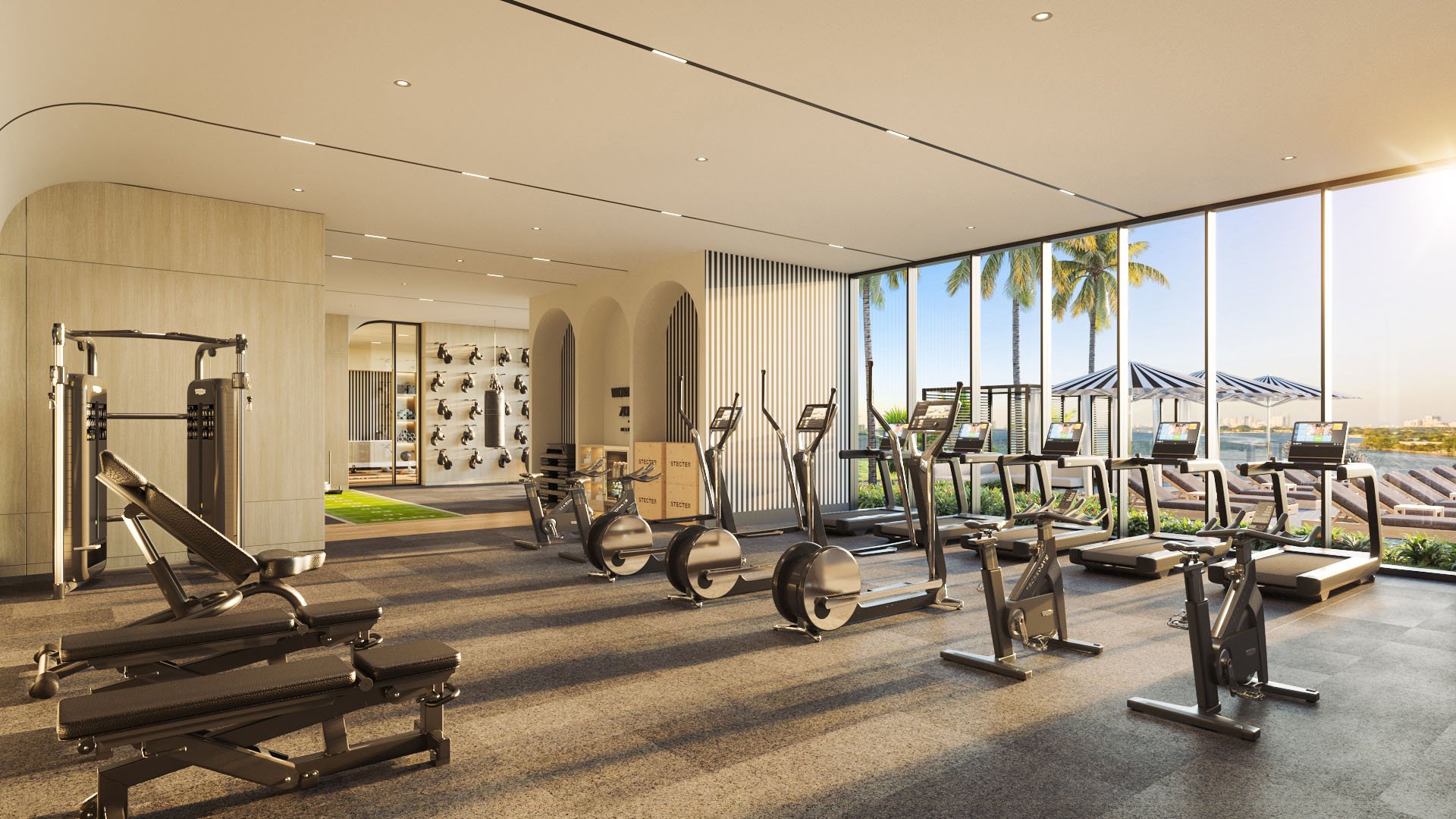
The most persuasive wellness amenity is not necessarily the most elaborate. It is the one that fits an ordinary Tuesday: a properly equipped gym before work, a yoga class at a workable hour, or a quiet place to unwind without another trip across town. In a Miami residence, that convenience can be meaningful. It is not, however, evidence that every wellness feature justifies its ownership cost.
Miami’s marketed wellness residences combine familiar gyms and spas with recovery facilities, organized programming and specialized treatments. The mix varies substantially. Buyers should distinguish between facilities they will use frequently, services they might occasionally purchase and features whose appeal is largely aspirational. A shorter list that supports a consistent routine may be more useful than an impressive collection of rarely visited rooms.
Exercise facilities offer the clearest test of usefulness because buyers can compare them with an existing routine. Consider equipment, studio schedules, instructor availability and the route from the residence to the facility. A beautiful room has limited practical value if it cannot accommodate your preferred workout or opens after you need to leave.
At The Well Coconut Grove on Tigertail Avenue, the advertised offering includes a 13,000-square-foot Wellness Club and a 40,000-square-foot rooftop wellness area. A fitness center, mindful-movement studio and recurring classes give buyers specific facilities and programming to evaluate, rather than a wellness label alone.
The useful questions are operational: which classes are included, how often they run, how reservations work and whether a separate membership applies. Request the current schedule where facilities are operating, or the proposed operating plan where they are not. Advertised descriptions do not confirm that every facility is complete or available.
The advertised amenities at The Standard Residences, Miami Beach include hot and cold plunge pools, a hammam, sauna, steam room and experiential showers, alongside a fitness studio and rooftop pool. These are distinct experiences, not interchangeable measures of value. Someone who already uses thermal facilities may find the combination compelling; someone who prefers swimming should examine the pool’s intended use and access rules instead.
The listed amenities at ELLE Residences Miami include a soaking spa, cold plunge, sauna, steam room, experience shower and salt wall. Its exercise offering includes a gym with branded programming, an outdoor fitness and yoga lawn, and a meditation garden. That range calls for a personal comparison: which spaces would replace an existing activity, and which would simply add another possibility?
For shared wet facilities, request cleaning schedules, maintenance responsibilities and closure policies. Ask whether residents, guests and any outside members use the same spaces. The point is not to discount a beautiful bathhouse, but to understand whether its daily operation matches the private retreat suggested by its design.
Continuum Club & Residences North Bay Village is presented as having 198 ocean-view residences and approximately 50,000 square feet of amenities. Listed wellness facilities include a fitness lawn, outdoor training areas, a yoga studio and a full-service spa. Those details convey breadth, but total amenity area does not reveal the capacity of an individual class or treatment room.
At House of Wellness Brickell, the marketed program pairs a 33-story tower with 656 residences, ranging from studios to two-bedroom configurations. Advertised amenities include a yoga studio, spa and rooftop pool. Buyers should ask how many people can use each facility at once and how peak-period reservations will be managed.
Neither residence count nor square footage alone establishes crowding. Request room capacities, booking limits, guest privileges and any outside-access arrangements. For a second-home buyer, consider whether facilities will be readily available during the periods you actually occupy the residence.
The listed offerings at THE WELL include a hyperbaric chamber, Vitality Lounge and IV therapy, alongside bathhouse amenities such as steam, sauna, cold plunge and a caldarium. These specialized services call for a different buying decision than gym access. An amenity listing does not establish a proven health benefit, personal suitability or an entitlement to included treatments.
Before assigning value, verify the provider, medical oversight where applicable, eligibility requirements, appointment availability and per-use pricing. Personal medical questions belong with an appropriately qualified clinician, not in a property sales presentation. A buyer who would not independently seek a treatment should be cautious about treating its presence as a reason to pay more for a home.
Private features also require unit-specific confirmation. Select THE WELL residences are described as including red-light-therapy closets, affusion spa showers, steam showers and soaking tubs. Do not assume these features are standard in every residence. Confirm the exact specifications, warranties and maintenance obligations for the unit under consideration.
A treatment room is not a prepaid treatment plan. The advertised private room for salon and wellness treatments at ELLE illustrates the distinction: the space is listed, but that does not establish that services are included in ownership costs. Apply the same discipline to classes, spa appointments and club access at any wellness-focused property.
Request written answers to four practical questions:
What does ownership include automatically, and what requires separate enrollment?
Which classes, treatments and guest visits carry additional charges?
Who controls operating hours, booking rules and changes to the program?
What happens to access if the operator or service agreement changes?
Then review the condominium budget, assessments, reserves, maintenance contracts and any separate club agreement with appropriate advisers. The available information does not establish wellness-specific monthly assessments, treatment charges or equipment replacement costs. Without those figures, calling a feature economical or expensive would be premature.
The available information does not establish a measurable resale premium. A wellness identity, extensive spa menu or attractive entry price is not enough to demonstrate one. Compare price per square foot with genuinely comparable nearby residences, accounting for the home itself rather than attributing every difference to amenities.
Build a personal annual budget using documented ownership obligations, any separate membership and the services you realistically expect to purchase. Compare that total with existing spending only where the building’s facilities would genuinely replace it. The strongest choice is the residence whose wellness offering remains useful after the novelty fades: accessible, appropriately managed and aligned with daily life.
For a considered approach to Miami’s wellness-focused residences, explore with MILLION.
If branded residences are on your mind — as a home or as an allocation — we would be glad to share what we are seeing, privately.
Begin a quiet conversationPrioritize facilities that fit an existing routine, such as a gym or regularly scheduled yoga classes. Usefulness depends on frequency of use, convenient access, capacity and documented cost.
Its advertised offering includes a 13,000-square-foot Wellness Club, a 40,000-square-foot rooftop wellness area, fitness facilities, classes and bathhouse amenities. Specialized offerings include a hyperbaric chamber and IV therapy.
Features such as red-light-therapy closets and specialized showers are described for select residences. Buyers should confirm the specification of the particular unit rather than assume they are standard.
The advertised mix includes hot and cold plunge pools, a hammam, sauna, steam room and experiential showers. A fitness studio and rooftop pool are also listed.
No. Total square footage does not establish individual room capacity, class availability or peak-hour access; buyers should examine booking rules and occupancy limits.
With 656 marketed residences, buyers should ask how many residents can use the yoga studio, spa and other facilities simultaneously. Reservation limits and guest access also deserve review.
Do not assume they are. Obtain written confirmation of treatment fees, class charges, membership requirements and any included services.
Verify providers, medical oversight, eligibility, availability and per-use pricing. An advertised amenity does not establish health benefits or personal medical suitability.
Review the condominium budget, assessments, reserves, maintenance contracts and amenity rules. Request any separate club agreement governing access or additional charges.
The available information does not establish a measurable resale premium. Compare genuinely similar nearby residences rather than assuming wellness branding explains a price difference.