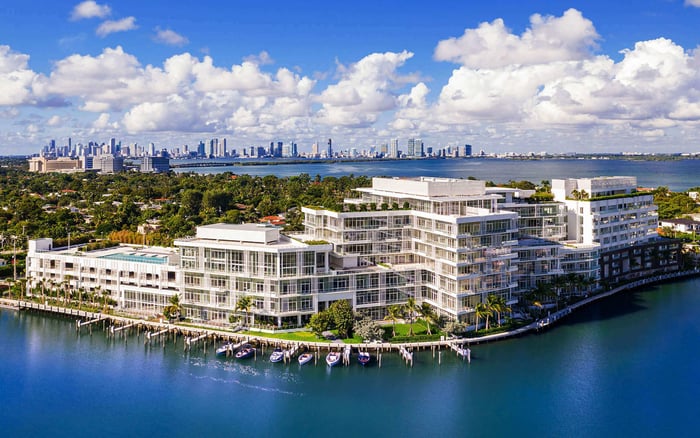
A buyer-focused framework for reviewing flood documentation, wind design, insurance coverage, critical systems, and building standards at The Ritz-Carlton Residences® Miami Beach.

Ownership at The Ritz-Carlton Residences® Miami Beach calls for a careful review of the records that address water, wind, insurance, and building performance. Buyers should rely on current documents for the property rather than general assumptions about Miami Beach waterfront residences or branded developments.
A thorough review can involve legal counsel, an insurance adviser, an engineer, and other qualified professionals. Their analysis should focus on the specific residence, the condominium association, the building’s governing documents, and the records available during due diligence.
Buyers should request the current flood map applicable to the property, together with any available elevation certificate, survey, or related documentation. The review should distinguish between mapped flood information, certified elevations, and any design criteria shown in project records.
The vertical arrangement of the building also matters. Relevant questions may address the elevations and protection of entrances, garages, storage areas, loading areas, and other lower-level spaces. Buyers should also determine where essential equipment is located and whether the available records describe protective measures or storm procedures.
A residence on an upper floor can still depend on shared infrastructure elsewhere in the building. Due diligence should therefore address the documented locations and protection of electrical equipment, generators, telecommunications systems, fire-safety equipment, pumps, and elevator machinery where applicable.
Buyers can request maintenance records, inspection materials, engineering reports, and written emergency procedures that are available for review. Any conclusions about system resilience should come from project-specific documentation and qualified professional analysis.
Wind review should begin with the permitting and construction records available for the building. Buyers may request structural design criteria, applicable code information, facade and roof documentation, glazing specifications, and product approvals.
Descriptions such as impact-resistant glazing should be verified through records identifying the relevant assemblies and installation requirements. The broader review should consider the facade, openings, roof, connections, waterproofing, maintenance history, and any documented repairs rather than treating one component as proof of overall performance.
Buyers should obtain the condominium association’s current insurance declarations and supporting policy materials available for review. Important items can include coverage limits, deductibles, exclusions, named-storm provisions, flood and wind coverage, replacement-cost terms, and the division of responsibility between the master policy and an owner’s policy.
The association’s loss history, open claims, renewal information, and procedures for allocating uninsured or underinsured costs also warrant attention. An insurance adviser can help identify potential gaps and explain how the master program may interact with coverage selected for an individual residence.
Insurance should not be reviewed in isolation. Buyers should examine the current budget, reserve information, recent or pending assessments, maintenance records, engineering materials, and available meeting minutes. Together, these records can help a purchaser evaluate how the association plans for repairs, deductibles, and other shared obligations.
The same document-led framework can support comparisons with The Perigon Miami Beach and The Ritz-Carlton Residences® South Beach. Each property must be evaluated through its own governing, engineering, insurance, and maintenance records.
A practical review file may include flood and elevation documents, permits, code information, structural and envelope records, glazing specifications, critical-system information, insurance policies, claims materials, budgets, reserves, assessments, maintenance records, and relevant association minutes. Buyers should confirm which materials are current, which remain pending, and which require professional interpretation.
This approach does not guarantee future performance or eliminate waterfront risk. It gives a purchaser a more disciplined basis for evaluating the residence, the association’s responsibilities, and the potential ownership obligations.
Which flood documents should a buyer request? Request the current flood map applicable to the property and any available elevation certificate, survey, or related building records.
Why should lower-level spaces be reviewed? Entrances, garages, storage areas, and shared facilities may affect access, operations, and recovery even when the residence is on a higher floor.
Which critical systems deserve attention? Review available records for electrical equipment, generators, telecommunications systems, pumps, fire-safety equipment, and elevator machinery where applicable.
What should a wind-design review include? It may include permitting records, structural criteria, applicable code information, facade documentation, roof records, glazing specifications, and product approvals.
Is impact-resistant glazing enough to evaluate the building envelope? No. Buyers should also review the facade, roof, openings, connections, waterproofing, maintenance history, and documented repairs.
Which master insurance terms matter most? Review coverage limits, deductibles, exclusions, named-storm provisions, flood and wind coverage, replacement-cost terms, and owner responsibilities.
Why is the association’s loss history relevant? Loss history and open claims can provide context for insurance review, renewals, repairs, and potential shared obligations.
How do reserves relate to waterfront due diligence? Reserve information can help buyers evaluate planning for repairs, deductibles, maintenance, and other association expenses.
Should buyers compare this property with other Miami Beach residences? Comparisons can be useful when the same document-based framework is applied, but each building requires its own review.
Which professionals may assist with the review? Depending on the purchaser’s needs, legal counsel, insurance advisers, engineers, inspectors, and other qualified professionals may interpret the available records.
If you'd like a private walkthrough and a curated shortlist, connect with MILLION.
If branded residences are on your mind — as a home or as an allocation — we would be glad to share what we are seeing, privately.
Begin a quiet conversation