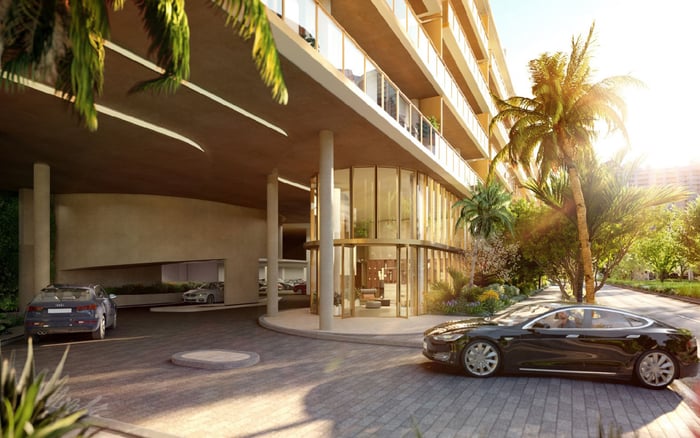
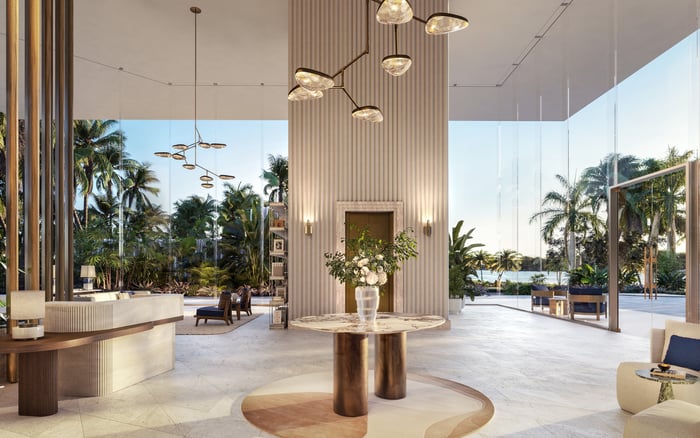
For remote executives buying in South Florida, the strongest residences balance daily walkability with controlled, discreet arrival. The right priority depends on schedule rhythm, family logistics, privacy needs, and how often the home doubles as a boardroom.
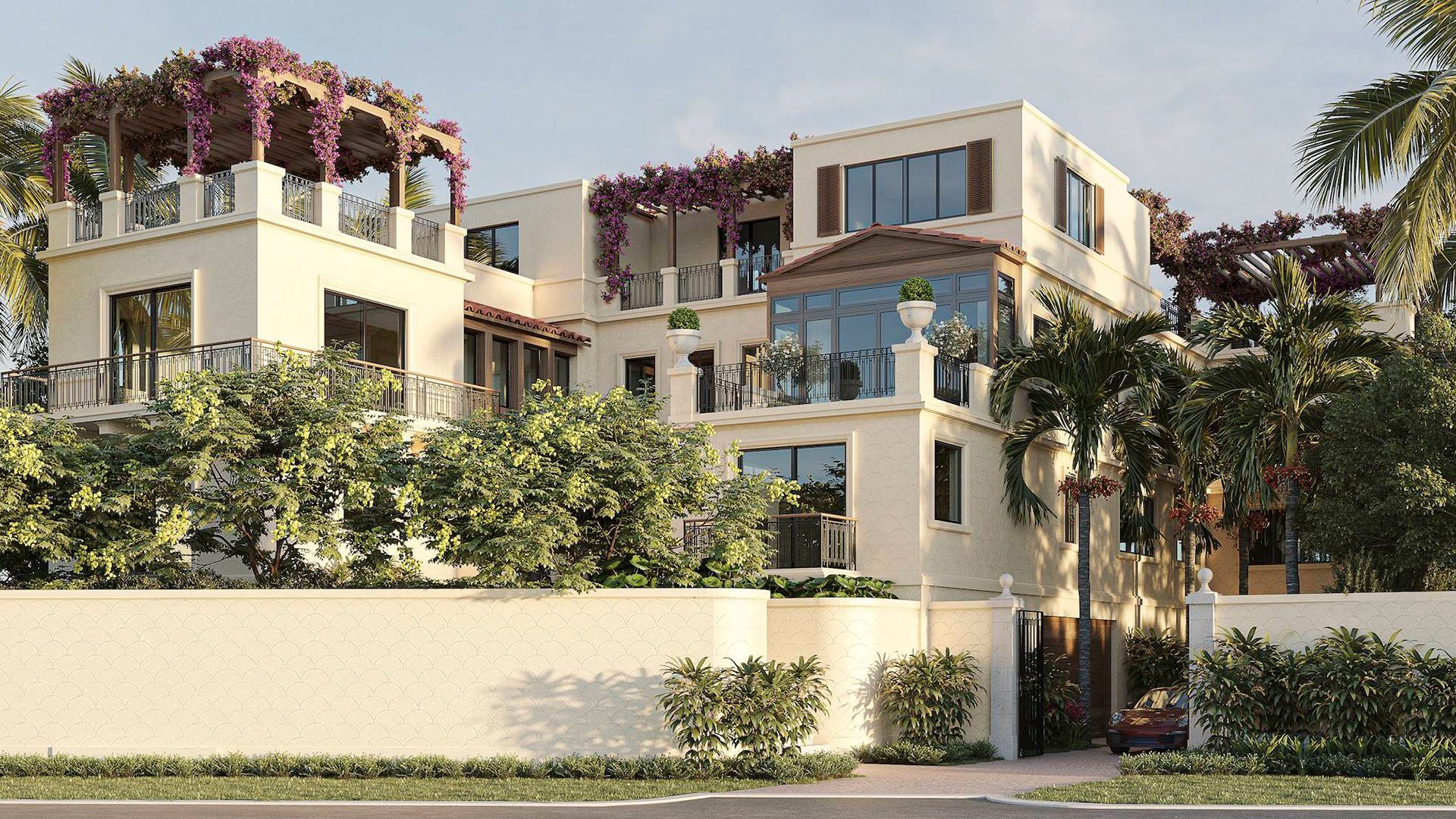
Remote work did not make location irrelevant. It made the home address more strategic. For South Florida’s executive buyer, the residence is no longer simply a place to return to after office hours. It is headquarters, retreat, family base, social salon, wellness platform, and, at times, a confidential meeting room. That is why the old binary of urban convenience versus estate privacy feels too blunt.
The better question is sharper: should a remote executive prioritize walkability, with restaurants, services, schools, wellness, and cultural life close at hand, or private arrival, with controlled entry, discreet circulation, and a calmer threshold between public life and home?
The answer depends less on taste than on operating rhythm. A founder who takes video calls at dawn, trains at midday, and hosts investors at sunset may need a different residential pattern than a principal who travels weekly, receives staff at home, and values the ability to move from car to residence without friction. In South Florida, both preferences can be satisfied, though rarely in identical ways.
Walkability is often described as convenience, but for the remote executive it is really time compression. A walkable address reduces small decisions. Coffee, lunch, fitness, grooming, dining, errands, and informal meetings can become part of the day without requiring a driver, garage retrieval, or a 20-minute buffer.
That matters because the remote executive’s calendar is unusually porous. Work and life overlap. A short walk to dinner after a late call may feel more valuable than an extra room. A neighborhood where one can step out between meetings can restore the day’s tempo. In Brickell, for example, a buyer considering 2200 Brickell is often thinking beyond the residence itself, weighing the ability to live close to the energy of Miami’s business district while preserving a refined private base.
Walkability also supports the household beyond the principal. Partners, children, guests, and visiting colleagues all benefit from an address that does not require constant coordination. At its best, walkability creates independence inside the household, allowing different family members to move through the day without making the residence feel like a logistical command center.
Private arrival is not about grandeur alone. At the top of the market, it is about control. A well-considered arrival sequence protects privacy, supports security, and allows the owner to manage the transition between public exposure and domestic calm.
For remote executives, this can be decisive. Calls may involve confidential material. Visitors may include advisers, colleagues, family office teams, physicians, or high-profile guests. A residence that allows controlled arrival, discreet access, and limited casual exposure gives the owner a margin of comfort that walkability alone cannot provide.
Private arrival also matters psychologically. A quiet handoff from street to lobby, from car to elevator, or from marina to residence can be the difference between feeling observed and feeling at ease. In waterfront and resort-oriented settings, that sense of separation is part of the premium. At The Ritz-Carlton Residences® Miami Beach, the appeal for many buyers is not only being in Miami Beach, but having a composed residential environment that can feel insulated from the intensity around it.
The simplest way to choose between walkability and private arrival is to study the calendar, not the brochure. If the day includes frequent short outings, local lunches, school or activity runs, fitness sessions, and spontaneous entertaining, walkability may carry more practical weight. The home becomes more valuable because the neighborhood functions like an extension of the floor plan.
If the day includes sensitive calls, visiting teams, frequent travel, staff coordination, and a strong preference for low visibility, private arrival may deserve priority. The residence becomes more valuable because it minimizes interruption.
Many executives need both, but not equally. A useful exercise is to rank the top five weekly movements: airport transfer, school run, gym, dinner, office or meeting space, marina, golf, beach, medical appointments, or family visits. The pattern will usually reveal whether proximity or control is the more meaningful luxury.
South Florida offers very different answers within a relatively compact region. Brickell favors energy, access, dining, and a business-forward lifestyle. Miami Beach offers a spectrum, from social walkability to more protected residential enclaves. Coconut Grove provides a village sensibility that appeals to buyers who want trees, restaurants, schools, marina culture, and a less vertical daily rhythm.
In Coconut Grove, Four Seasons Residences Coconut Grove speaks to a buyer who wants a recognized service environment in a neighborhood where daily life can feel softer and more residential. The tradeoff is not simply city versus suburb. It is pace versus privacy, texture versus insulation.
Fort Lauderdale often attracts executives who want boating, beach proximity, and a different relationship to the waterfront. St. Regis® Residences Bahia Mar Fort Lauderdale fits naturally into the conversation for buyers who view arrival by water, beach access, and resort-caliber service as part of the lifestyle calculus. In West Palm Beach, The Ritz-Carlton Residences® West Palm Beach may appeal to executives who want an elegant urban address with a calmer Palm Beach County cadence.
For some, Fisher Island represents the purest expression of private arrival. For others, its separation may feel too deliberate for a daily remote work life that depends on walking out into a neighborhood. The right answer is not universal. It is personal and operational.
The most resilient purchase is often not the most walkable residence or the most private residence. It is the one that gives the owner options. A building or home that allows an executive to move anonymously when desired, entertain gracefully when needed, and access the neighborhood without effort will remain more useful across changing seasons of life.
That is especially important for buyers who split time among multiple homes. A South Florida residence may function as a winter base, family gathering place, wellness reset, or semi-permanent headquarters. Priorities can shift quickly. A younger family may prize walkability to dining and school. A later-stage executive may begin to value controlled access, guest privacy, and service depth more heavily.
The best buying conversations therefore avoid absolutes. Instead of asking whether walkability or private arrival matters more, ask which one must never fail. If the owner becomes frustrated every time dinner requires a car, walkability is not a luxury feature. It is essential. If the owner feels exposed every time a guest or driver approaches the building, private arrival is equally essential.
A polished sales gallery cannot fully answer this question. The buyer should experience the approach at different times of day, noting traffic, valet cadence, lobby exposure, pedestrian comfort, noise, and the quality of the transition from public street to private residence.
For walkability, inspect the real daily path. Is the route shaded, pleasant, and intuitive? Are the places you would actually use close enough to become habits? Does the neighborhood feel comfortable in the morning, after dinner, and during peak seasonal periods?
For private arrival, inspect choreography. How many people can see the entrance? How does a guest arrive? How do staff, packages, cars, and service providers move? Is the arrival experience calm when several residents return at once? Does the sequence preserve the dignity of the home, or does it depend on ideal conditions?
For remote executives in South Florida, walkability wins when the home is meant to plug into a lively daily ecosystem. Private arrival wins when the home must function as a sanctuary with a controlled perimeter. The strongest residences recognize that both are forms of time management. One saves time by reducing distance. The other saves time by reducing friction, exposure, and interruption.
The most sophisticated buyer is not choosing between being connected and being protected. The goal is to define the right threshold between the two.
Is walkability more important than private arrival for remote executives? It depends on daily rhythm. Walkability supports frequent neighborhood use, while private arrival supports discretion and controlled movement.
Which South Florida buyers should prioritize walkability? Buyers who dine out often, take short meetings nearby, rely on wellness routines, or want family independence usually benefit from walkability.
Which buyers should prioritize private arrival? Executives with confidential work, high-profile guests, frequent drivers, or a strong preference for low visibility should weigh private arrival heavily.
Can a residence offer both walkability and privacy? Yes, but the balance varies by building, neighborhood, and arrival design. The best options make both feel natural rather than compromised.
Why does remote work change the buying decision? The home now carries more professional weight. It must support focus, calls, guests, wellness, and family logistics throughout the day.
Is Brickell best for walkability? Brickell is often favored by buyers who want business energy and urban convenience, but the right fit depends on privacy expectations.
Is Miami Beach better for private living? Miami Beach can offer both social access and more composed residential settings, depending on the specific address and building character.
How should buyers compare neighborhoods? They should map actual weekly movements, then test whether each neighborhood reduces friction or adds complexity to those routines.
What should be inspected during a property visit? Buyers should study the arrival sequence, pedestrian routes, valet flow, lobby exposure, noise, and comfort at different times of day.
What is the best long-term choice? The best choice is the residence that protects the buyer’s nonnegotiable priority while preserving flexibility as lifestyle needs evolve.
For a tailored shortlist and next-step guidance, connect with MILLION.
If branded residences are on your mind — as a home or as an allocation — we would be glad to share what we are seeing, privately.
Begin a quiet conversation